
that runs from the Somali border in the north to the Tanzanian boundary in the south, encompassing ancient Swahili port cities, pristine coral reef systems, and some of the finest white-sand beaches in the world. And at the southern end of this coast, approximately 30 kilometres south of Mombasa — Kenya's second city and the historic heart of East African maritime culture — lies the beach that Kenyans themselves regard as the finest on the entire coast: Diani Beach.
Diani Beach stretches for approximately 17 kilometres of uninterrupted white coral sand along Kenya's South Coast, backed by a fringe of coastal forest and fronted by a reef-protected lagoon of extraordinary turquoise clarity. It is consistently voted among the finest beaches in Africa and regularly appears on global lists of the world's most beautiful beaches — and unlike many beaches that carry such reputations, Diani genuinely delivers on the promise. The sand is white and powdery, the water warm and calm inside the reef, and the combination of beach, forest, and ocean creates an environment of rare and complete beauty.
A Diani Beach holiday with Ntungo Wildlife Safaris offers not just a beach experience but a complete coastal immersion — combining the best of Diani's marine wildlife, the cultural richness of Mombasa's Old Town, the extraordinary natural character of the coastal forest, and the relaxed, warm-water pleasure of one of East Africa's most beautiful coastlines.
Diani Beach: The Setting
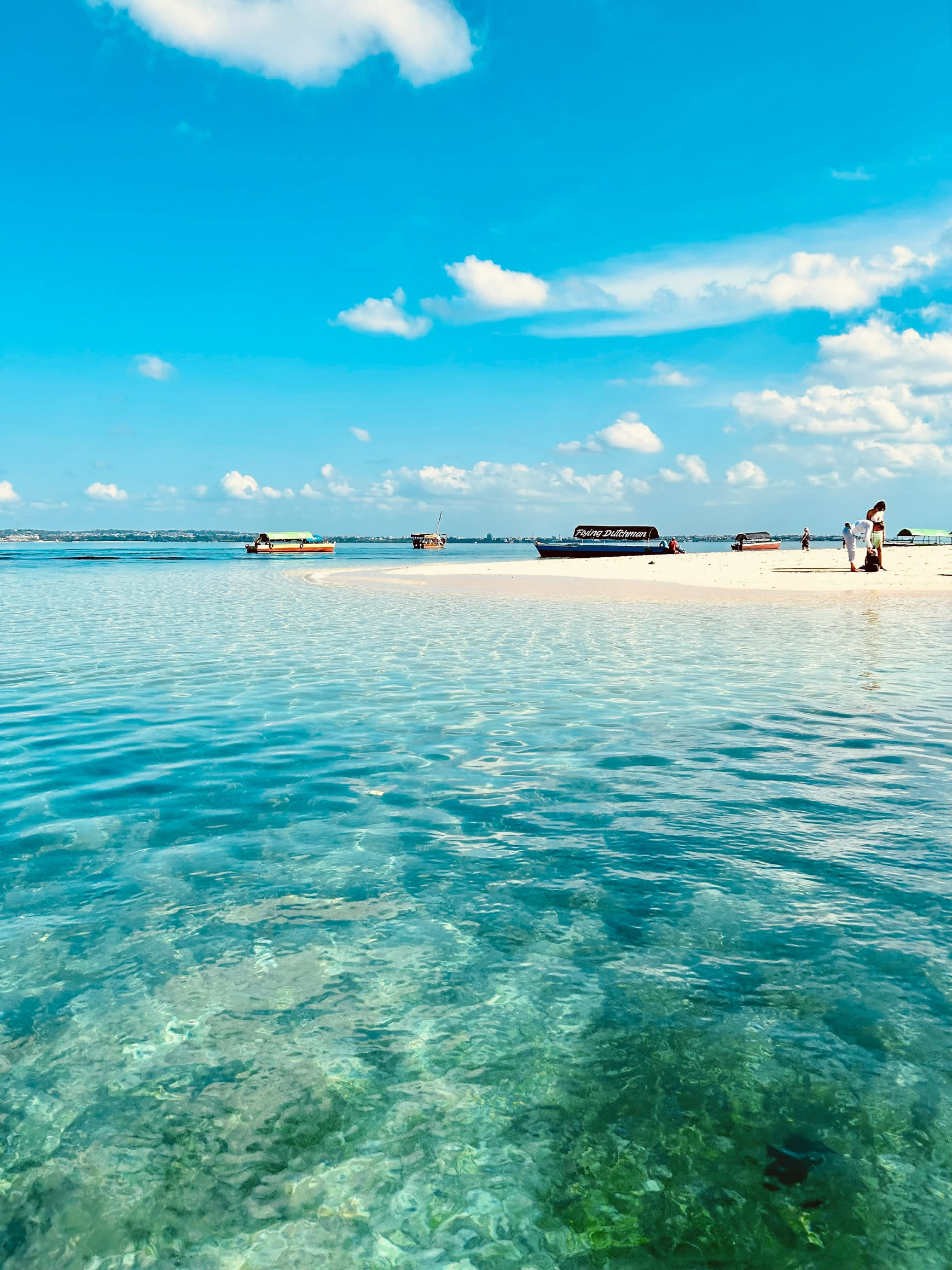
Diani's beach is protected from the open Indian Ocean by an offshore coral reef that runs parallel to the shore and creates a shallow lagoon of calm, warm, crystal-clear water between the reef and the beach. This natural protection means that swimming at Diani is safe, comfortable, and rewarding throughout the year — the lagoon's gentle, reef-filtered water is ideal for families with children, for snorkellers exploring the inner reef, and for the simple, deep pleasure of floating in warm Indian Ocean water with a palm-shaded beach a few strokes away.
The beach itself faces east and catches the morning light beautifully — Diani sunrises, with the first light touching the water and the coral reef glowing in the shallows, are genuinely spectacular. The backing coastal forest provides shade, habitat, and the constant presence of wildlife that makes Diani different from almost any other beach destination in Africa: even lying on the beach, you are likely to hear the distinctive call of the Angolan black and white colobus monkey — one of Africa's most beautiful primates — in the trees above.
The tidal range at Diani is significant, and the exposed reef at low tide creates a fascinating inter-tidal world of rock pools, coral formations, and marine life that rewards exploration on foot. At high tide, the water fills the lagoon completely and conditions for swimming, kayaking, and snorkelling are at their finest.
Wildlife at Diani: Monkeys, Butterflies & Coastal Forest
What distinguishes Diani from most beach destinations in the world — and what makes it particularly appropriate as a complement to a Kenya wildlife safari — is the extraordinary coastal forest that runs along the beach's landward edge, and the wildlife that inhabits it.
The Diani coastal forest is one of the last remaining fragments of the ancient East African coastal forest — one of the world's most threatened and most biodiverse forest types, recognised as a global biodiversity hotspot. The forest supports a remarkable community of wildlife, including several species found nowhere else in East Africa and some that are globally threatened.
The Angolan black and white colobus monkey (Colobus angolensis palliatus) is Diani's most famous and most visible wildlife resident — a strikingly beautiful primate with a long white fringe of hair surrounding its black body, whose acrobatic movement through the canopy and distinctive roaring calls make it an unmissable presence along the beach. The Colobus Conservation organisation based at Diani has been working since 1997 to protect the colobus population and the forest habitat on which it depends, and a visit to their centre provides an excellent introduction to the species and the broader conservation challenges facing Kenya's coastal forest.
The Sykes' monkey (Cercopithecus albogularis) is equally common and considerably bolder — frequently raiding hotel gardens and restaurant terraces for food, and providing a constant entertaining presence for visitors. The vervet monkey completes the primate trio regularly observed in and around the forest edge.
The coastal forest is also exceptional for birdwatching — over 200 species have been recorded along the Diani coastal strip, including several range-restricted coastal forest specialists: the Sokoke scops owl, African coastal flycatcher, spotted ground thrush, Fischer's turaco, little yellow flycatcher, and the stunning Kenya violet-backed starling are among the highlights for dedicated birders.
Butterflies are extraordinarily diverse in the coastal forest — over 250 species have been recorded in the Diani area, and the forest edge habitats in the early morning produce spectacular concentrations of species in all their variety of colour and form.
Marine Wildlife & Ocean Activities
Diani's offshore reef system supports a marine environment of exceptional richness, and the range of ocean activities available from the beach is among the most comprehensive on the East African coast.
Snorkelling & Diving: The inner reef immediately beyond the lagoon is accessible by snorkel from the beach and provides good coral coverage and reef fish diversity even for casual snorkellers. The outer reef — accessed by boat — offers significantly greater depth, coral diversity, and marine life, with sea turtles, moray eels, eagle rays, reef sharks, lionfish, pufferfish, and hundreds of reef fish species regularly encountered. The Kisite-Mpunguti Marine National Park — approximately 40 kilometres south of Diani near the Tanzanian border — is one of Kenya's finest marine protected areas, with exceptional coral reef coverage, dolphin populations, whale sharks (seasonally), and regular humpback whale sightings (July–October) in the open waters beyond the park.
Dolphin Snorkelling: Indo-Pacific bottlenose dolphins and spinner dolphins inhabit the waters around Kisite-Mpunguti year-round, and boat excursions to the marine park regularly offer the opportunity to snorkel alongside these animals in open water — one of East Africa's most joyful and memorable marine wildlife experiences.
Humpback Whales: Between July and September, humpback whales (Megaptera novaeangliae) migrate through the waters off Kenya's south coast on their annual passage between Antarctic feeding grounds and tropical breeding waters. Boat excursions from Diani during these months offer the opportunity to observe these magnificent animals — the largest creatures on the planet capable of breaching completely clear of the water — at relatively close range in conditions that are among the most accessible for whale watching on the East African coast.
Glass-Bottom Boat & Dhow Cruises: For those who prefer to observe the marine world without getting wet, glass-bottom boat tours over the reef provide excellent views of coral and fish from above the water. Traditional Swahili dhow cruises — combining sailing, snorkelling, and fresh seafood lunch on a sandbank — are among Diani's most popular and most enjoyable half-day activities.
Water Sports: Diani's calm lagoon is ideal for kayaking, stand-up paddleboarding, kitesurfing (at the beach's northern and southern ends where conditions are optimal), and windsurfing. Several well-equipped water sports centres along the beach offer rental equipment and instruction for all levels.
Mombasa Old Town: Swahili History & Culture
No Diani beach holiday is complete without a day spent in Mombasa's Old Town — one of the finest surviving examples of Swahili coastal urban culture in East Africa, and a place of extraordinary historical depth and architectural character.
Mombasa has been one of the most important port cities on the East African coast for over a thousand years — a trading hub that connected the African interior with the Arabian Peninsula, the Persian Gulf, the Indian subcontinent, and the Far East in the great web of Indian Ocean commerce that shaped the ancient and medieval world. Its Old Town reflects this extraordinary history in its architecture, its street patterns, and its living culture: carved wooden doors rivalling those of Zanzibar's Stone Town in their elaborateness, coral stone buildings whose facades carry the influence of Arab, Indian, and Portuguese construction traditions, and mosques whose minarets have called the faithful to prayer for centuries.
Fort Jesus — a massive Portuguese fortification built in 1593 to protect the port from the rival Ottoman fleet and subsequently fought over by Portuguese, Omani, and British colonial powers across three centuries of conflict — is now a UNESCO World Heritage Site and houses an outstanding museum of Swahili coastal history, maritime culture, and the remarkably preserved archaeological finds recovered from the wreck of the Santo António de Tanná, a Portuguese frigate that sank during the Omani siege of 1697 and whose cargo of European, Asian, and African trade goods provides an extraordinary window into the Indian Ocean world of the 17th century.
The Old Town's streets — lined with carved-door houses, Indian-owned trading shops, Swahili restaurants, and the occasional crumbling magnificence of a 19th-century merchant's mansion — reward aimless exploration as much as guided tours. The Old Port at the waterfront, where traditional wooden jahazi dhows are still loaded and unloaded with goods from across the coast, provides a living connection to the maritime traditions that made Mombasa great.
Best Time to Visit Diani
October–March (Peak Season): The northeast monsoon (kaskazi) brings dry, sunny, and calm conditions to Kenya's south coast — the finest weather for beach holidays, diving, and dolphin excursions. This is the most popular and busiest period, and accommodation should be booked well in advance.
July–September: The southeast monsoon (kusi) brings stronger winds and occasional rough seas, but this is humpback whale season — one of the most extraordinary marine wildlife experiences available from Diani — and the beach remains beautiful and the diving generally good.
April–June (Long Rains): Kenya's long rains affect the coast, though Diani typically receives less rainfall than inland areas. Some accommodation offers significant rate reductions during this period, and the coast is very quiet — ideal for those seeking solitude and value.
Combining Diani with a Kenya Safari
The Masai Mara and Diani Beach are Kenya's two most celebrated destinations — and combining them into a single itinerary creates a journey that showcases the complete range of Kenya's extraordinary natural and cultural offering. Ntungo Wildlife Safaris specialises in seamlessly connected Kenya safari and Diani beach holiday combinations, managing all transfers, accommodation, and logistics across both destinations.
Flights between Nairobi Wilson Airport and Ukunda Airstrip (Diani's local airport) take approximately 45 minutes and are available daily — making the connection between safari and beach fast, comfortable, and entirely stress-free.
Contact Ntungo Wildlife Safaris to plan your Diani Beach holiday — as a standalone coastal escape or combined with a Masai Mara safari. We offer accommodation from charming boutique beach cottages to exclusive private villas and luxury resort properties along the full length of Diani's beautiful coast.
Where to Visit
-

Karibu KiliFair Experience
0 comments -
Nyungwe Forest National Park Rwanda
1 comments -
Ngorongoro Crater Tanzania
0 comments -
Serengeti National Park Tanzania
0 comments -
Mombasa
0 comments -
Lake Nakuru National Park
0 comments -
Masai Mara Safari Kenya
0 comments -
Kidepo Valley National Park
0 comments -
Bwindi Impenetrable National Park
0 comments -
Murchison Falls National Park
1 comments -
Lake Mburo national park
0 comments -
Akagera National Park
0 comments -
Queen Elizabeth National Park
1 comments