
Lake Nakuru National Park: Africa’s Most Colourful Safari Destination
Imagine a lake turned pink. Not by sunset, but by the wings and feathers of hundreds of thousands of flamingos — lesser and greater — carpeting the alkaline shallows of Kenya’s Great Rift Valley in one of nature’s most jaw-dropping spectacles. That is Lake Nakuru in its full glory, and it is an image that has stopped travellers in their tracks for generations. Nestled 164 kilometres northwest of Nairobi in the floor of the ancient Rift Valley, Lake Nakuru National Park is one of the most scenically dramatic, ecologically rich, and easily accessible safari parks in all of Africa.

The park’s credentials are formidable. A UNESCO World Heritage Site — recognized alongside neighboring lakes Bogoria and Elementaita as part of the Kenya Lake System — Lake Nakuru covers 188 square kilometres of alkaline lake, acacia and euphorbias woodland, open grassland, and dramatic rocky escarpments. It holds the distinction of being Kenya’s first designated rhino sanctuary, today home to a thriving population of around 100 black and white rhinos — making it one of the most reliable places on the continent to see these endangered giants up close. The rare Rothschild’s giraffe, reintroduced here from western Kenya in 1977, moves in stately towers through the yellow-fever acacia forest, while leopards, lions, buffalos, waterbucks, and African wild dogs complete a wildlife roster that routinely delivers Big Five sightings within a single game drive.
With over 450 recorded bird species, sweeping viewpoints from Baboon Cliff and Lion Hill, and a location that makes it ideal for a day trip from Nairobi or a stopover on the road to the Masai Mara, Lake Nakuru National Park rewards every type of traveller — from first-time safari-goers to seasoned wildlife photographers. This guide covers everything you need to plan an unforgettable visit: the best time to go, top wildlife to see, where to stay, and how to get there.
Queen Elizabeth National Park
Queen Elizabeth National Park: Uganda’s Most Diverse Safari Destination
Located in western Uganda, stretching across the districts of Kasese, Rubirizi, and Kamwenge, lies one of Africa’s most iconic wildlife destinations—Queen Elizabeth National Park. Known for its incredible biodiversity, scenic landscapes, and unique wildlife encounters, this park offers one of the most rewarding safari experiences in East Africa.
From tree-climbing lions to boat cruises on the Kazinga Channel, Queen Elizabeth National Park combines classic savannah safaris with stunning water-based wildlife viewing and volcanic scenery.
Introduction to Queen Elizabeth National Park
Queen Elizabeth National Park is Uganda’s second-largest national park, covering approximately 1,978 square kilometers. Established in 1952, it was originally named Kazinga National Park before being renamed in honor of Queen Elizabeth II’s visit to Uganda.
The park is uniquely positioned between Lake Edward and Lake George, connected by the famous Kazinga Channel, which forms the heart of its ecosystem.
This rich combination of savannah, wetlands, crater lakes, and forests makes it one of the most biologically diverse parks in Africa.
Location and How to Get There
Queen Elizabeth National Park is located about 6–7 hours’ drive from Kampala via the Masaka–Mbarara highway.
By Road
The journey is scenic, passing through rolling hills, tea plantations, and traditional villages. Many travelers combine this route with stops at Lake Mburo National Park.
By Air
Domestic flights from Entebbe to Kasese or Mweya airstrips offer a faster and more comfortable alternative.
Wildlife in Queen Elizabeth National Park
Queen Elizabeth National Park is home to over 95 mammal species, making it one of Uganda’s richest wildlife areas.
Key Wildlife Highlights:
- Tree-climbing lions in the Ishasha sector
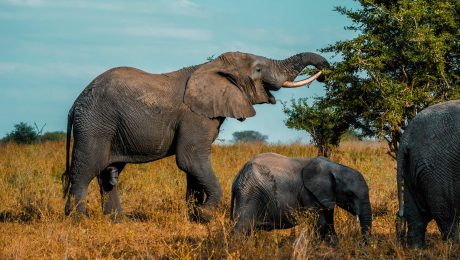
- African elephants roaming freely across savannah plains
- Buffaloes, Uganda kobs, and waterbucks
- Leopards and hyenas
- Hippos and crocodiles along the Kazinga Channel
The park also supports chimpanzees in Kyambura Gorge, a lush forested ravine often referred to as the “Valley of Apes.”
The Famous Tree-Climbing Lions of Ishasha
One of the most unique attractions in Queen Elizabeth National Park is the population of tree-climbing lions found in the Ishasha sector.
Unlike typical lions, these predators are often seen resting on fig tree branches during hot afternoons. Scientists believe they climb trees to escape heat and biting insects, although it remains one of Africa’s most fascinating wildlife behaviors.
This rare sighting makes Ishasha one of the most sought-after safari experiences in Uganda.
Boat Safari on the Kazinga Channel
The Kazinga Channel is a natural waterway connecting Lake Edward and Lake George, and it is one of the best places in Africa for a boat safari.
What You’ll See:
- Massive hippo pods in the water
- Nile crocodiles basking on the shores
- Elephants and buffaloes drinking at the banks
- Abundant birdlife including kingfishers and fish eagles
The boat cruise offers close-range wildlife viewing and incredible photography opportunities.
Crater Lakes and Scenic Landscapes
Queen Elizabeth National Park is famous for its stunning volcanic crater lakes, especially in the Kasenyi and Katwe areas.
These crater lakes were formed by ancient volcanic activity and now create breathtaking landscapes surrounded by rolling hills and savannah plains.
The Katwe Salt Lake is particularly famous for traditional salt mining activities that have been practiced for centuries.
Game Drives in Queen Elizabeth National Park
Game drives are best conducted in the Kasenyi plains and Ishasha sector.
Best Times:
- Early morning for predator sightings
- Evening for grazing herbivores
During game drives, visitors often encounter large herds of Uganda kobs, elephants, and buffaloes, as well as predators like lions and leopards.
Chimpanzee Tracking in Kyambura Gorge
Kyambura Gorge offers a completely different ecosystem within the park.
This underground forest is home to a small population of chimpanzees, along with other primates and bird species. The gorge’s lush vegetation and dramatic landscape make chimpanzee tracking here a unique experience.
Birdwatching Paradise
Queen Elizabeth National Park is one of the best birding destinations in Africa, with over 600 recorded bird species—the highest of any national park in Uganda.
Notable Birds:
- African fish eagle
- Saddle-billed stork
- Flamingos in crater lakes
- Martial eagle
- Pelicans and kingfishers
The diversity of habitats makes it a year-round birdwatching hotspot.
Best Time to Visit
The best time to visit Queen Elizabeth National Park is during the dry seasons:
- June to September
- December to February
These months offer easier game viewing and better road conditions.
However, the wet season brings lush greenery and excellent birding opportunities.
Accommodation Options
Queen Elizabeth National Park offers a wide range of accommodations:
Luxury Lodges
- Located along the Kazinga Channel
- Offer panoramic views and premium services
Mid-Range Lodges
- Comfortable and affordable options near key sectors
Budget Camps
- Simple lodges and campsites for budget travelers
Why Visit Queen Elizabeth National Park?
Queen Elizabeth National Park stands out because it offers:
- Tree-climbing lions in Ishasha
- Boat safaris on the Kazinga Channel
- Rich biodiversity and varied ecosystems
- Chimpanzee tracking in Kyambura Gorge
- Scenic crater lakes and volcanic landscapes
It is one of the most complete safari destinations in Uganda.
Combining Queen Elizabeth with Other Parks
Many travelers include Queen Elizabeth in longer safari circuits such as:
- Bwindi Impenetrable National Park for gorilla trekking
- Lake Mburo National Park for short safaris
- Murchison Falls National Park for waterfalls and savannah wildlife
This combination offers a full Ugandan safari experience.
- Published in National Parks, Wildlife Safaris