
Karibu KiliFair Experience
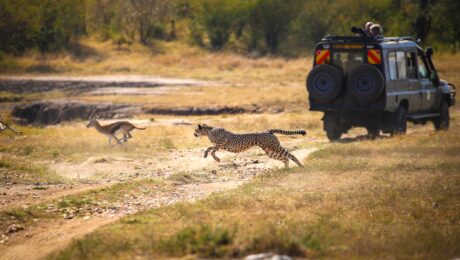
Karibu Kilifair Experience By Ntungo Wildlife Safaris
Author; Mabel Nabulya
Is it important to trace every cup of coffee you sell?
Let’s look at it this way.
It’s 2026. The world has changed, and so have consumers. Wealth is increasingly shifting into the hands of younger generations. Today, there are more young entrepreneurs, investors, and high-income earners under 25 than ever before. And one thing defines this generation: they ask questions.
For every $4 cup of coffee sold, a customer is increasingly likely to ask:
“Who grew these beans?”
“Were the farmers paid fairly?”
“What impact did my purchase have on the community?”
Perhaps you already know the answers. But in today’s market, knowing isn’t enough. You have to prove it.
Consumers no longer buy coffee based on taste alone. They buy stories. They buy transparency. They buy authenticity.
This is where Ntungo Wildlife Safaris comes in.
We design immersive coffee origin and sourcing tours that connect coffee buyers directly with the people behind every bean.
Our journeys begin in the coffee gardens, where you’ll experience the crop in its natural environment. Walk through the farms alongside the people who grow your coffee, meet farming families, and hear their personal stories. You’ll gain a deeper understanding of how your purchases impact their livelihoods and communities. These authentic encounters also provide an opportunity to document real stories that can become powerful content for your brand, allowing your customers to connect with the true origin of every cup.
From the farms, we take you through the next stages of the coffee journey. Visit washing stations and processing facilities to witness how Uganda’s specialty coffee is transformed from freshly harvested cherries into export-ready green beans. Experience every stage of the journey, from seed to cup.
The experience doesn’t stop there.
We arrange meetings with some of Uganda’s most respected coffee exporters, giving you the opportunity to discuss crop seasons, pricing, quality specifications, certifications, availability, and long-term sourcing opportunities. You’ll meet their production, quality control, and logistics teams to understand how they consistently deliver export-grade coffee.
To complete the sourcing journey, we introduce you to freight forwarders and shipping partners, allowing you to understand the logistics of exporting coffee from Uganda to your destination. By the time you leave, you’ll have established relationships across the entire coffee value chain, from farmer to exporter to shipper, giving you confidence when you’re ready to source Ugandan specialty coffee.
Our coffee origin tours are thoughtfully curated to combine serious coffee sourcing with unforgettable travel experiences, including mountain gorilla trekking, chimpanzee tracking, wildlife safaris, and cultural encounters. It’s the perfect balance of business and adventure, allowing you to build meaningful partnerships while discovering one of Africa’s most remarkable destinations.
Whether you’re a coffee roaster, café owner, importer, trader, or simply passionate about specialty coffee, our tours provide the confidence that comes from seeing your supply chain with your own eyes.
Beyond coffee, your journey becomes an unforgettable Ugandan experience. Track mountain gorillas through ancient forests, encounter chimpanzees, enjoy spectacular wildlife safaris, cruise along the Nile, and experience the warmth and hospitality of local communities.
Because the best coffee partnerships are built on trust.
And trust begins at origin.
Ready to discover where your coffee story begins? Contact Ntungo Safaris to plan your next coffee origin and sourcing tour in Uganda.
Related links
- Published in Destinations, Exhibitions
Nyungwe Forest National Park Rwanda
Nyungwe Forest National Park: Rwanda’s Ancient Rainforest Kingdom
There is a forest in southwestern Rwanda that has been standing since before the last ice age.
While the glaciers advanced and retreated across the northern hemisphere, while the great grassland ecosystems of East Africa expanded and contracted with the shifting climate, while the Sahara transformed from savannah to desert and back again across geological timescales that dwarf human history — this forest stood. Unchanged in its fundamental character. Continuous in its canopy. Ancient in ways that the word ancient barely begins to capture.
Nyungwe Forest is estimated to be over two million years old — one of the oldest surviving forest ecosystems in Africa, a biological archive of extraordinary depth and richness whose unbroken continuity across geological time has allowed the accumulation of a biodiversity that is, in its concentration and its uniqueness, almost without parallel on the continent.
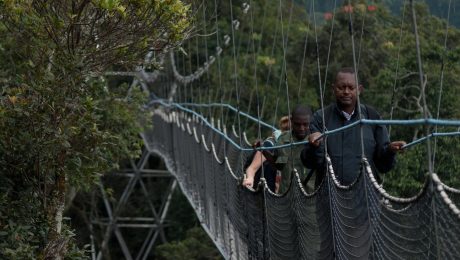
Standing at the edge of the canopy walkway in Nyungwe’s interior — the suspension bridge swaying gently beneath your feet, the ancient forest stretching in every direction below and around you, a troop of Ruwenzori black and white colobus monkeys moving through the canopy fifty metres away in a cascade of white fringe and acrobatic grace — you are standing in a place that has been precisely what it is for longer than our species has existed. The trees below you were old when the first humans walked upright on the African savannah. The primates in their canopy are the descendants of populations that have inhabited this forest without interruption for longer than evolutionary time can easily comprehend.
Nyungwe Forest National Park covers 1,019 square kilometres of montane rainforest in Rwanda’s southwestern corner — the largest remaining montane forest in Central Africa and one of the most important conservation areas on the continent. It is home to 13 primate species, over 300 bird species including 29 Albertine Rift endemics, hundreds of butterfly species, and a botanical diversity of extraordinary richness. It offers some of East Africa’s finest chimpanzee tracking, the most spectacular canopy walk in Rwanda, and a quality of ancient, immersive wilderness that is entirely distinct from any other experience in the country.
A visit to Nyungwe Forest with Ntungo Wildlife Safaris is not simply a wildlife experience. It is an encounter with deep time — and it will stay with you long after you leave.
The Forest: Understanding Two Million Years of Continuity
What Makes Nyungwe Ancient?
The concept of an ancient forest is more specific than it might first appear. Most forests in Africa — even large, apparently pristine ones — have been significantly disturbed, fragmented, or replaced by grassland at various points in the past two million years, particularly during the glacial periods when the African climate was cooler and drier and the extent of forest vegetation contracted dramatically.
Nyungwe survived these contractions. Its position in the Albertine Rift — the western arm of Africa’s Great Rift Valley, a region of exceptional topographic complexity whose varied elevation, aspect, and microclimate created refugia where forest could persist even when the surrounding landscape was becoming progressively drier — protected it from the climatic forces that eliminated or severely reduced forest cover across much of the continent.
This unbroken continuity is the source of Nyungwe’s extraordinary biodiversity. The species that live here today — the primates, the birds, the plants, the insects, the fungi — have had two million years of uninterrupted time to specialise, to diversify, to evolve into the niches that this specific forest environment provides. The result is an ecosystem of biological depth and uniqueness that no young forest — however large, however well-protected — can replicate.
The Forest Zones
Nyungwe’s 1,019 square kilometres encompass a range of altitude from approximately 1,600 metres at its lowest margins to 2,950 metres at its highest peaks — a vertical range that creates significant variation in temperature, rainfall, and vegetation character across the park’s extent.
The lower montane forest — the richest and most biologically productive zone — occupies the park’s mid-altitude areas and is the habitat of the majority of Nyungwe’s primate and bird species. The canopy here reaches 30 to 40 metres in height, with emergent trees rising above the general canopy level and creating the vertical structure that supports the extraordinary diversity of species distributed across different canopy layers.
The upper montane forest — above approximately 2,200 metres — transitions gradually toward a more open, mossy character: tree ferns, giant heathers, and dense mosses covering every surface in a landscape that feels distinctly different from the lush lower forest, more atmospheric, more enclosed, and in misty conditions almost otherworldly in its beauty.
The bamboo zone — occurring in patches across the park’s higher elevations — provides critical habitat for several of Nyungwe’s specialist species and creates a visual and acoustic environment entirely distinct from the broadleaved forest: the hollow percussion of bamboo stems moving in the wind, the dense, almost impenetrable quality of the bamboo interior, and the particular species — including the mountain gorilla in the few areas of suitable habitat — that depend on bamboo as a primary food source.
The Albertine Rift: A Global Biodiversity Hotspot
Nyungwe’s extraordinary biodiversity is not accidental — it is the product of the park’s position in the Albertine Rift, one of the world’s most important centres of biological endemism. The Albertine Rift — the western branch of the East African Rift system, running from Uganda’s Lake Albert in the north to Tanzania’s Lake Tanganyika in the south — is characterised by the combination of exceptional topographic complexity, high rainfall, and the geological instability that has created the isolation conditions for speciation across millions of years.
The Albertine Rift harbours 39 endemic bird species found nowhere else on earth, more Albertine Rift endemic bird species than any comparable area in Africa. It supports the highest primate diversity of any region in Africa. And it contains, in Nyungwe Forest and the adjacent Kibira Forest of Burundi (with which Nyungwe shares a continuous canopy in some areas), the largest remaining block of Albertine Rift montane forest — the habitat upon which the majority of these endemic species depend.
To visit Nyungwe is to visit the heart of one of the world’s most important biodiversity hotspots — and every bird, every primate, and every plant you encounter here is part of a biological story of extraordinary evolutionary significance.
Chimpanzee Tracking in Nyungwe: Into the Forest with our Closest Relatives
Nyungwe Forest National Park is one of East Africa’s finest destinations for wild chimpanzee tracking — an experience that combines the physical adventure of moving through ancient forest with the emotional and intellectual impact of encountering, at close range, the animal that shares more of our DNA than any other species on earth.
The Chimpanzees of Nyungwe
Nyungwe’s chimpanzee population is estimated at approximately 500 individuals — one of the largest remaining chimpanzee populations in Rwanda and one of the most significant in the broader Albertine Rift region. The population is organised into several communities that occupy different territories within the forest, and two of these communities — in the Cyamudongo sector and the main Nyungwe forest — have been habituated to human presence through years of patient, careful contact that has allowed the animals to become accustomed to human observers without altering their natural behaviour.
The Cyamudongo Forest — a small but extraordinary forest fragment connected to the main Nyungwe block — contains a habituated chimpanzee community that offers particularly reliable and particularly intimate tracking experiences. The forest’s smaller size means that the chimps’ movements are somewhat more predictable than in the vast main forest block, and the quality of encounter — in terms of proximity, duration, and behavioural observation — is consistently exceptional.
The Tracking Experience
Chimpanzee tracking in Nyungwe begins with an early morning briefing at the park headquarters — typically at Uwinka for the main forest community or at the Cyamudongo trailhead for the forest fragment community. Rwanda Development Board rangers divide visitors into small groups and provide detailed guidance on chimpanzee behaviour, tracking protocols, health requirements (respiratory illness can be transmitted to chimpanzees, whose immune systems are not adapted to human pathogens), and physical preparation for the trail.
The tracking itself is a genuine forest adventure — Nyungwe’s terrain is steep, the trails sometimes narrow and muddy, and the chimpanzees’ movement through the forest is rapid and unpredictable. Unlike mountain gorillas, which are relatively slow-moving and tend to stay within a defined area during the observation hour, chimpanzees cover ground at speed — swinging through the canopy, descending to the forest floor, calling across the forest in vocalisations of extraordinary volume and complexity, and occasionally moving in sudden bursts of speed that challenge observers to keep pace.
When the tracking team locates the chimpanzee community, the experience is immediately, viscerally electric. The noise alone is extraordinary — the chimpanzee community’s vocalisations, including the famous pant-hoot calls that carry for kilometres through the forest, create a soundscape of primal intensity that is unlike anything else in East African wildlife experience. The energy of the group — the social interactions, the dominance displays, the grooming sessions, the play of juveniles, the nursing of infants — creates a scene of biological richness and behavioural complexity that hours of observation barely begin to exhaust.
The proximity is genuinely remarkable. Habituated chimpanzees at Nyungwe have become accustomed to the presence of human observers to the point where the minimum required distance (typically 8 metres) is frequently reduced voluntarily by the chimpanzees themselves — individuals approaching the observation group out of curiosity, juveniles pausing to study the observers with the frank, unselfconscious interest of young animals encountering something new, and adult females moving through the group’s vicinity with the confident indifference of animals who have decided that human observers are neither a threat nor a significant source of interest.
The one hour permitted with the chimpanzee community passes with extraordinary speed — the complexity and energy of the encounter filling every minute with something new — and the return through the forest to the trailhead is invariably quieter and more reflective than the outward journey, the forest’s sounds and the morning’s memories combining in a quality of experience that most visitors describe as one of the most profound wildlife encounters of their lives.
Chimpanzee Trekking vs Habituation Experience
For visitors seeking an even more extended and more immersive chimpanzee experience, Nyungwe offers a chimpanzee habituation experience — a full-day programme that accompanies the Rwanda Development Board’s habituation team as they work with a partially habituated chimpanzee community, gradually extending the animals’ tolerance of human presence through regular, patient contact.
The habituation experience involves a full day in the forest (compared to the standard tracking experience’s one hour with the habituated community), following the partially habituated group through the forest as the team works to establish the trust that will eventually allow full habituation. The experience is physically more demanding and behaviourally more complex than the standard tracking encounter — the partially habituated animals are less predictable, more reactive to human presence, and more likely to display the full range of natural behaviours that a fully habituated community moderates in response to observer presence.
For visitors with a deeper interest in chimpanzee behaviour, conservation methodology, or the science of habituation, this experience provides an extraordinary window into both the lives of the chimpanzees and the extraordinary patient work of the researchers and rangers who are expanding Nyungwe’s habituated chimpanzee population.
The Canopy Walk: Nyungwe from Above
If the chimpanzee tracking experience takes you into the forest’s depths, the Igishigishigi Canopy Walk takes you above it — and the perspective it provides on Nyungwe’s ancient ecosystem is one of the most extraordinary and most memorable experiences available anywhere in Rwanda.
The Walk
The Igishigishigi trail begins at the Uwinka Visitor Centre — Nyungwe’s principal visitor facility, situated on a ridge with panoramic views across the forest canopy — and descends through increasingly dramatic forest terrain to the canopy walk structure. The name Igishigishigi refers to the giant tree ferns (Cyathea species) that line the trail — ancient, prehistoric-looking plants whose enormous fronds create a tunnel of green along the path and whose presence is a reminder of the forest’s extraordinary antiquity. Tree ferns are among the oldest plant forms on earth, their basic structure virtually unchanged for hundreds of millions of years, and walking through their fronds in Nyungwe’s misty forest creates an atmosphere of profound temporal displacement — as though the modern world has been temporarily suspended.
The trail descends gradually through the forest, crossing streams and passing through sections of particularly dense and beautiful forest, before reaching the canopy walk structure — a series of suspension bridges connecting elevated platforms built into the canopy trees at heights of up to 50 metres above the forest floor.
The Suspension Bridge Experience
The main suspension bridge stretches 160 metres between its anchor points in the canopy trees — a significant span that sways gently underfoot as you cross it, the forest floor invisible far below through the lattice of your footing, the canopy spreading away in every direction at eye level.
The view from the bridge is extraordinary. The Nyungwe canopy — seen from below, it appears as a more or less continuous green surface — reveals itself from above as a complex, three-dimensional world of immense complexity: different tree species at slightly different heights creating a mosaic of canopy texture and colour, the emergent trees rising well above the general canopy level with their upper branches hosting the largest birds and the most arboreal primate species, and the horizontal complexity of interlocking branches, hanging lianas, and epiphytic plants creating a habitat of extraordinary richness that is entirely inaccessible from the ground.
On clear days, the view extends across the canopy to the distant shores of Lake Kivu to the west — the lake’s great blue expanse visible through gaps in the forest, the hills of the Democratic Republic of Congo rising beyond it, and the whole scene creating a panoramic perspective on Rwanda’s southwestern landscape that few visitors ever experience.
Wildlife on the Canopy Walk
The canopy walk provides wildlife observation opportunities that ground-level forest exploration cannot — bringing the observer into the habitat zone that the majority of Nyungwe’s birds and arboreal mammals occupy permanently.
Ruwenzori black and white colobus monkeys — arguably Nyungwe’s most spectacular and most photogenic primate — are frequently observed from the canopy walk platforms and bridge. These extraordinary animals — with their long white fringe of hair dramatically contrasting with their jet black bodies — move through the canopy with the extraordinary grace of species perfectly adapted to arboreal life, their acrobatic leaps between trees carrying them distances that seem impossible for animals of their size. A colobus group in the canopy at eye level from the suspension bridge, their white fringes streaming behind them as they leap, is one of Nyungwe’s most magnificent wildlife sightings.
Forest birds are accessible from the canopy walk in ways that ground-level birding cannot match — sunbirds feeding at flowering epiphytes at eye level, warblers and flycatchers moving through the mid-canopy at viewing distance, and the various turacos whose vivid plumage is most fully visible from above the dense understorey that conceals them at ground level.
The morning light on the canopy — particularly in the first hour or two after sunrise when the mist is lifting and the light is finding its way through the canopy layers in brilliant shafts — creates photographic conditions of extraordinary beauty. The canopy walk is at its most atmospheric at this time of day, and arriving at the structure early — typically requiring a pre-dawn departure from your lodge — rewards visitors with a quality of light and atmosphere that the midday visit cannot provide.
Primates of Nyungwe: 13 Species in One Forest
The 13 primate species recorded in Nyungwe Forest National Park constitute one of the richest primate communities in Africa — a concentration of diversity that reflects the forest’s extraordinary antiquity, its ecological complexity, and its position in the Albertine Rift’s centre of primate endemism and speciation.
Ruwenzori Black and White Colobus Monkey
The Ruwenzori black and white colobus (Colobus angolensis ruwenzorii) is Nyungwe’s most spectacular primate and one of the most visually extraordinary animals in Africa. Endemic to the Albertine Rift and found nowhere else in the world outside this specific region, the Ruwenzori colobus is distinguished from other colobus subspecies by its particularly long and particularly dramatic white fringe — a cascade of white hair surrounding the face, extending along the sides of the body and across the tail, and contrasting with the jet-black body and face in a pattern of extraordinary visual impact.
Nyungwe is home to one of the largest remaining populations of Ruwenzori colobus in the world — estimated at over 400 individuals organised into large groups that can number over 300 individuals in a single troop, making them the largest primate groups in Africa outside of savannah baboon populations. Encountering a large colobus group in Nyungwe — dozens of animals moving through the canopy simultaneously, their white fringes catching the light, their calls echoing through the forest — is one of the most spectacular wildlife experiences in Rwanda.
L’Hoest’s Monkey
The L’Hoest’s monkey (Allochrocebus lhoesti) is one of Nyungwe’s most characteristic and most sought-after primates — a distinctive Albertine Rift endemic species with a dark grey-brown body, white bib, and a striking dark facial mask that gives it an appearance of considerable dignity and personality. L’Hoest’s monkeys are terrestrial in behaviour relative to many forest primates — spending significant time on the forest floor and in the lower undergrowth rather than the canopy — and their habit of foraging on the ground makes them more accessible to ground-level observers than the canopy-dwelling species.
Grey-Cheeked Mangabey
The grey-cheeked mangabey (Lophocebus albigena) — a large, dark, shaggy-coated monkey with a distinctive crest of long hair on its crown — moves through the middle and upper canopy of Nyungwe’s lower montane forest in groups of 15 to 30 individuals. Their loud, far-carrying calls — a series of deep whoops and gurgles — are one of the forest’s most distinctive sounds and serve as an effective acoustic location system for birders and primate trackers moving through the forest.
Olive Baboon
Olive baboons (Papio anubis) inhabit the forest margins and the more open sections of Nyungwe’s interior — their large size, bold character, and highly visible social interactions making them one of the park’s most easily observed primate species. Large troops move through the forest edge and adjacent tea plantation margins, their social dynamics — grooming, dominance interactions, infant play, and the complex negotiations of a hierarchically organised community — providing endlessly compelling behavioural observation for visitors willing to spend time in their company.
Other Primate Species
The remaining primate species of Nyungwe — including the blue monkey, red-tailed monkey, dent’s mona monkey, vervet monkey, potto, eastern needle-clawed bushbaby, and the mountain gorilla (present in small numbers in the bamboo zones of the park’s higher elevations) — represent a diversity of evolutionary lineages, ecological specialisations, and behavioural characters that makes Nyungwe one of Africa’s most remarkable primate destinations for the serious observer.
Birdwatching in Nyungwe: 300 Species and 29 Albertine Rift Endemics
For dedicated birders, Nyungwe Forest National Park is one of the most important and most rewarding destinations in East Africa — a site whose combination of forest antiquity, Albertine Rift position, and ecological complexity has produced a bird community of extraordinary diversity and exceptional endemism significance.
The Albertine Rift Endemics
The 29 Albertine Rift endemic bird species recorded in Nyungwe represent the core of the park’s ornithological significance — species found nowhere else on earth outside the Albertine Rift region, and in many cases nowhere else within the Rift as reliably and as accessibly as in Nyungwe.
Rwenzori turaco (Gallirex johnstoni) — one of the most spectacular birds in the Albertine Rift, a large forest turaco with vivid green and blue plumage, crimson wing patches visible in flight, and a call that is one of the most distinctive sounds of the montane forest. Present and regularly encountered in Nyungwe’s middle altitude forest.
Handsome francolin (Pternistis nobilis) — a large, beautifully patterned francolin of the Albertine Rift montane forest, encountered on the forest floor and in dense undergrowth. The male’s bold black, white, and chestnut plumage makes it one of the most attractive of Africa’s numerous francolin species and a priority target for birders visiting Nyungwe.
Rwenzori batis (Batis diops) — a tiny, exquisitely patterned flycatcher-like species of the montane forest canopy, found in mixed-species flocks that move through the upper forest levels. The male’s black, white, and rufous pattern makes it immediately recognisable when encountered in the flickering movement of a mixed-species flock.
Grauer’s warbler (Graueria vittata) — one of Africa’s most sought-after and most elusive forest warblers, a large, skulking species of dense undergrowth and bamboo that is more often heard than seen and that ranks among the most challenging of the Albertine Rift endemics to achieve a satisfactory observation.
Stripe-breasted tit (Melaniparus fasciiventer) — a distinctive small tit of the montane forest canopy, its bold streaked breast pattern and active, restless foraging behaviour making it one of the more accessible of the Albertine Rift endemics when located in the appropriate habitat.
Red-throated alethe (Chamaetylas poliophrys) — a beautiful, terrestrial thrush-like species of the forest floor, its combination of olive-brown upperparts and rich rufous throat making it one of the most attractive birds of the Nyungwe undergrowth.
Blue-headed sunbird (Cyanomitra alinae) — one of the most beautiful of Nyungwe’s numerous sunbird species, the male’s combination of metallic blue-green head, olive back, and yellow underparts making it immediately distinctive and a source of considerable photographic delight when encountered feeding at flowering trees along the forest trails.
Other Forest Bird Highlights
Beyond the Albertine Rift endemics, Nyungwe’s broader bird community includes a remarkable diversity of forest specialists:
African green broadbill (Pseudocalyptomena graueri) — one of the most sought-after birds in East Africa, a tiny, jewel-green species of the montane forest canopy found reliably only in the Albertine Rift and numbering among the most visually extraordinary birds on the continent.
Purple-breasted sunbird (Nectarinia purpureiventris) — a spectacular large sunbird with iridescent purple breast and metallic green upperparts, encountered feeding at flowering forest trees and epiphytes throughout Nyungwe’s middle and upper forest zones.
Strange weaver (Ploceus alienus) — a peculiar and genuinely strange weaver of the Albertine Rift montane forest, its odd combination of plumage characters and its exclusively forest habitat making it one of the most unexpected birds for visitors accustomed to the open-country weavers of the savannah.
Mountain masked apalis (Apalis personata) — a small, active warbler of the upper montane forest, its black mask and white underparts making it immediately recognisable when it pauses briefly in the canopy foliage.
Dusky crimsonwing (Cryptospiza jacksoni) — a beautiful small finch of the forest floor and dense undergrowth, the male’s deep crimson plumage making it one of the most vivid colour surprises of the Nyungwe forest interior.
Birding the Nyungwe Trails
Nyungwe’s extensive trail network — over 130 kilometres of maintained trails through different sections of the park — provides systematic access to the forest’s different habitat zones and their respective bird communities. Several trails are particularly productive for specific species groups:
The Karamba Trail — a longer trail through the lower montane forest zone, excellent for L’Hoest’s monkeys, grey-cheeked mangabeys, and the lower-altitude forest bird community including several of the Albertine Rift endemics.
The Igishigishigi Trail — the canopy walk trail, excellent for colobus monkeys, forest raptors, and the canopy-level bird species accessible from the elevated bridge platforms.
The Bigugu Trail — leading to Nyungwe’s highest accessible peak at approximately 2,950 metres, excellent for upper montane forest species including the montane sunbirds, highland cisticolas, and the bamboo zone specialists.
The Kamiranzovu Trail — leading through the park’s spectacular Kamiranzovu Marsh — a highland swamp of extraordinary beauty surrounded by montane forest — excellent for marsh-associated species including the globally threatened Grauer’s rush warbler (Bradypterus graueri), one of the most sought-after birds in the entire Albertine Rift.
The Kamiranzovu Marsh: Nyungwe’s Hidden Wonder
Deep within Nyungwe’s interior, accessible via a full-day guided hike of considerable physical demand but extraordinary reward, the Kamiranzovu Marsh is one of Rwanda’s most beautiful and most biologically significant wetland habitats — a highland swamp of approximately 1,000 hectares surrounded by montane forest at an altitude of approximately 2,100 metres.
The marsh is fed by the springs and rainfall of the surrounding highland forest and supports a community of highly specialised marsh and swamp vegetation — sedges, rushes, papyrus, and the extraordinary Lobelia wollastonii (giant lobelia) whose tall, candelabra-like flowering spikes rise metres above the marsh surface in one of the most dramatic botanical spectacles in Rwanda.
The Kamiranzovu Marsh is the primary Rwandan site for the critically endangered Grauer’s rush warbler — a tiny, brown, skulking warbler of papyrus and sedge marshes that is one of the most range-restricted and most conservation-threatened birds in the Albertine Rift, its global population estimated at fewer than 1,500 individuals and declining due to wetland drainage and habitat degradation across its limited range. Nyungwe’s Kamiranzovu Marsh is one of the most reliable sites in the world for this species, and for dedicated birders the hike to the marsh is among the most important and most rewarding single birding experiences available in Rwanda.
Beyond the Grauer’s rush warbler, the marsh supports African snipe, African water rail, lesser moorhen, little rush warbler, and various other wetland species — a bird community entirely distinct from the surrounding forest and providing a remarkable contrast to the forest birding of the approach trail.
The hike to Kamiranzovu is long — typically 4 to 6 hours return depending on pace — and physically demanding on trails that can be steep, muddy, and genuinely challenging in wet conditions. It is one of Nyungwe’s most rewarding experiences for those willing to invest the physical effort, and the combination of forest hiking, wildlife observation, and the marsh’s extraordinary botanical landscape creates a day of safari adventure that stands entirely on its own merits.
Tea Plantations: The Human Landscape at Nyungwe’s Edge
The landscape surrounding Nyungwe Forest is one of Rwanda’s most distinctive and most photographed — a vast, manicured expanse of tea plantations that covers the hills immediately adjacent to the national park in an almost continuous green carpet of carefully tended tea bushes, their neat rows following the contours of the hills in patterns of extraordinary visual regularity.
Rwanda is one of East Africa’s most important tea producing countries — the highland climate of the southwestern region, with its reliable rainfall, cool temperatures, and rich volcanic soils, creates ideal conditions for the cultivation of high-quality tea, and the estates surrounding Nyungwe are among the most productive in the country.
The tea plantations serve as a visual and ecological buffer between the national park’s ancient forest and the agricultural and settlement landscape of the broader region. They are not wilderness, but they are beautiful — the vivid green of the tea bushes against the darker green of the forest behind them, the workers moving through the rows with their traditional baskets, and the distant views across the plantation landscape to Lake Kivu and the hills of the DRC creating a scene of considerable human and natural beauty.
The Gisakura Tea Estate — adjacent to the park’s principal visitor facilities at Gisakura — offers guided tea estate walks that provide an excellent introduction to the cultivation, processing, and tasting of Rwanda’s famous tea. The walk through the plantation, the visit to the processing factory, and the concluding tea tasting with estate-produced tea combine into a genuinely rewarding cultural and agricultural experience that complements the wildlife activities of the park itself.
The tea plantation landscape also supports its own wildlife community — particularly birds of the forest edge and open country that use the plantation’s structure for feeding and nesting. Sunbirds visit the plantation’s flowering shrubs. Cisticolas inhabit the grass margins between tea rows. African harrier-hawks patrol the plantation edge. And the contact zone between the plantation and the forest margin — the most ecologically productive transition zone in any landscape — is frequently productive for species that use both habitats at different times of day or in different seasons.
The Cyamudongo Forest: Nyungwe’s Little Sister
Approximately 10 kilometres from the main Nyungwe Forest block, separated by agricultural land and tea plantation but connected by an important wildlife corridor, the Cyamudongo Forest is a small but extraordinarily productive forest fragment of approximately 1,000 hectares that serves as the home of one of Nyungwe’s most accessible and most reliably tracked habituated chimpanzee communities.
Cyamudongo’s small size is both its limitation and its advantage for wildlife visitors: the forest’s compact extent means that the chimpanzee community’s movements are more predictable and the tracking experience more reliably productive than in the vast main forest block, where the chimps’ wide ranging movements can make tracking more challenging and the time to encounter more variable.
The Cyamudongo Forest also holds its own complement of forest birds — several Albertine Rift endemics are regularly recorded in the fragment, and its forest edge character makes it particularly productive for the species that prefer the transition between closed forest interior and more open forest margin habitat.
A visit to Cyamudongo is most commonly combined with the main Nyungwe tracking programme as a two-day chimpanzee experience — tracking in the main forest on day one and in Cyamudongo on day two, or vice versa — providing both the scale and atmosphere of the main forest and the intimacy and accessibility of the forest fragment.
Lake Kivu: The Perfect Nyungwe Complement
Nyungwe Forest National Park and Lake Kivu are two of Rwanda’s finest and most complementary destinations — and their proximity (the lake’s eastern shore is approximately 30 to 45 minutes from the park’s main visitor facilities) makes combining them into a single southwest Rwanda itinerary both logical and enormously rewarding.
Lake Kivu — one of Africa’s Great Lakes, straddling the border between Rwanda and the Democratic Republic of Congo — is a lake of extraordinary beauty: its deep blue waters surrounded by steep, terraced hills whose lower slopes meet the lakeshore in a series of small beaches, fishing villages, and resort towns. The lakeside town of Gisenyi (Rubavu) in the north and Kibuye (Karongi) in the centre offer comfortable accommodation, boat cruises, and the relaxed pleasure of the lake’s warm-water environment after the exertion of Nyungwe’s forest trails.
A typical Nyungwe and Lake Kivu itinerary combines 2 to 3 nights in or adjacent to the forest — allowing chimpanzee tracking, the canopy walk, and a forest bird walk — with 1 to 2 nights on the lake shore, providing rest, boat cruises, and the sensory contrast of the open lake after the enclosed, immersive forest.
Accommodation in and Around Nyungwe Forest
Midrange
Top View Hill Hotel — Situated on the ridge above the Gisakura tea estate with sweeping views across the plantation and the forest, Top View Hill Hotel offers comfortable accommodation, reliable food, and the most convenient possible access to Nyungwe’s visitor facilities. A solid, well-positioned midrange option that delivers good value for its location.
Gisakura Guest House — The most affordable accommodation option near the park, Gisakura Guest House provides basic but clean and comfortable rooms within walking distance of the park’s main entrance and visitor centre. Ideal for budget-conscious visitors who want to prioritise spending on activities rather than accommodation.
Nyungwe Top View Hill Hotel — Offering comfortable rooms with forest and plantation views, this property provides a reliable midrange base for Nyungwe activities at a reasonable price point.
Midrange Nyungwe safari from USD 350 per person per night, including accommodation, chimpanzee tracking permit, canopy walk fee, and guided trail.
Luxury
One&Only Nyungwe House — Nyungwe’s most celebrated and most spectacular accommodation property — a converted tea plantation manor house of extraordinary elegance, set within the Gisakura Tea Estate directly adjacent to the national park. The property’s combination of colonial-era architectural character, magnificent grounds, outstanding food, exceptional service, and seamless access to the park’s activities makes it one of the finest boutique hotels in Rwanda.
The One&Only Nyungwe House offers 22 individually designed rooms and suites, each with private veranda overlooking the tea plantation or the forest beyond. The property’s swimming pool — positioned at the plantation’s edge with the forest as its backdrop — is one of the most dramatically situated hotel pools in East Africa. And the quality of the guiding programme, developed in partnership with Rwanda Development Board and Nyungwe’s specialist wildlife team, ensures that every activity — chimpanzee tracking, canopy walk, birding walk, tea estate tour — is conducted with the expertise and attentiveness that the property’s luxury positioning demands.
Luxury Nyungwe safari from USD 1,200 per person per night at One&Only Nyungwe House, including accommodation, private guiding, chimpanzee tracking, canopy walk, and all meals.
Practical Information for Nyungwe Forest
Chimpanzee Tracking Permits: Permits for chimpanzee tracking in Nyungwe Forest must be booked in advance through the Rwanda Development Board. The standard tracking experience allows one hour with the habituated community. The habituation experience (full day) is available at a premium and must be booked well in advance. Permits are included in all Ntungo Wildlife Safaris Nyungwe packages.
Physical Requirements: Chimpanzee tracking in Nyungwe involves hiking on trails that can be steep, muddy, and physically demanding. A reasonable level of fitness is recommended. The canopy walk involves an uphill hike to the suspension structure and requires a reasonable head for heights. The Kamiranzovu Marsh trail is a serious full-day hike recommended only for physically fit visitors with a genuine commitment to the experience.
What to Wear: Long trousers and long-sleeved shirts protect against vegetation and insects. Waterproof hiking boots are essential — the forest trails can be muddy year-round. A waterproof jacket or poncho is strongly recommended. Garden gloves are useful for pushing through dense undergrowth on some trails.
Best Time to Visit: Nyungwe can be visited year-round. The dry seasons (June–September and December–February) offer the most comfortable hiking conditions and generally clearer visibility across the canopy and toward Lake Kivu. The wet seasons (March–May and October–November) bring heavy afternoon rain but lush, vivid forest conditions and excellent birdlife. The forest is genuinely beautiful in all seasons — Nyungwe in the mist is one of Rwanda’s most atmospheric and most photographically rewarding landscapes.
Getting There: Nyungwe Forest is approximately 220 kilometres southwest of Kigali — a 3 to 4 hour drive along a good road that passes through Rwanda’s spectacular southern highlands, the tea estates of the southwest, and the shores of Lake Kivu. The drive itself is one of Rwanda’s most scenic and most rewarding journeys, with numerous stops for views and photography.
Combining Nyungwe with Other Rwanda Destinations
Nyungwe + Volcanoes National Park (Gorilla Trekking): Rwanda’s two signature wildlife experiences — chimpanzee tracking in the ancient southern rainforest and mountain gorilla trekking in the northern volcanic highlands — combined in a single Rwanda itinerary. Typically 2 nights at Nyungwe followed by 2 nights at Volcanoes, connected via Kigali or on the longer but more scenic direct route through the southwest.
Nyungwe + Lake Kivu: As described above — the forest’s ancient, immersive wilderness experience combined with the lake’s beauty, boat cruises, and lakeside relaxation. One of Rwanda’s most satisfying short itineraries.
Nyungwe + Akagera + Volcanoes: The complete Rwanda wildlife circuit — southern rainforest, eastern savannah Big Five, and northern gorilla trekking — covering the full geographic and ecological range of Rwanda’s extraordinary wildlife heritage in a single comprehensive itinerary.
Nyungwe + Bwindi (Uganda): For travellers combining Rwanda and Uganda, the route between Nyungwe and Bwindi Impenetrable Forest crosses the southwestern corner of Rwanda — a journey of approximately 3 to 4 hours through the border town of Kisoro — making a combined Nyungwe chimpanzee and Bwindi gorilla itinerary both logistically straightforward and ecologically compelling.
Why Nyungwe Deserves a Place at the Centre of Every Rwanda Itinerary
Rwanda’s wildlife narrative has long been dominated by a single, incomparably powerful story: the mountain gorillas of Volcanoes National Park. And that story deserves every superlative it receives — gorilla trekking in Volcanoes is one of the most extraordinary wildlife experiences on earth.
But Rwanda is more than its gorillas. And Nyungwe Forest — ancient, vast, extraordinarily biodiverse, ecologically unique, and home to a wildlife experience of its own that stands entirely on its own merits — is the most compelling evidence of that larger truth.
The chimpanzees of Nyungwe are not a consolation prize for travellers who cannot afford a gorilla permit. They are a world-class primate encounter in their own right — dynamic, electric, behaviourally complex, and emotionally affecting in ways that are entirely distinct from the gorilla experience and entirely equal to it in their impact.
The canopy walk is not a theme park attraction. It is a genuinely extraordinary encounter with one of Africa’s most ancient and most biologically significant ecosystems — seen from a perspective that almost no human being has ever experienced.
The forest itself — two million years old, continuous, teeming with life at every level from the forest floor to the emergent canopy — is one of the natural world’s great treasures: a place whose continued existence is both a remarkable piece of good fortune and a responsibility of the highest order.
Come to Rwanda for the gorillas. Stay for Nyungwe. Leave with the full story of what this extraordinary country has to offer.
The ancient forest is waiting. The chimpanzees are calling. The canopy is above you.
Contact Ntungo Wildlife Safaris to incorporate Nyungwe Forest National Park into your Rwanda safari itinerary — as a standalone forest experience, combined with Lake Kivu, or as part of a complete Rwanda wildlife journey connecting Nyungwe with Volcanoes National Park and Akagera. We offer itineraries across all accommodation tiers with expert guiding, chimpanzee tracking permit reservation, and seamless logistics throughout Rwanda.
📩 info@ntungosafaris.com 🌐 www.ntungosafaris.com 📞 +256 771 399299 / +256 706 772990
One&Only Nyungwe House — Nyungwe’s finest accommodation property — books up significantly in advance. Early reservation is strongly recommended, particularly for peak season travel between June and September.
- Published in Destinations, National Parks, Wildlife Safaris
Ngorongoro Crater Tanzania
Ngorongoro Crater: The World’s Greatest Wildlife Arena
There is a moment — and every person who has experienced it will tell you it arrives without warning, regardless of how many photographs you have seen or how many documentaries you have watched — when you crest the Ngorongoro Crater rim for the first time and the world simply stops.
You have been driving upward through the cool, forested highlands of the Ngorongoro Conservation Area, the road climbing steadily through giant heather and podocarpus trees draped in old man’s beard lichen, the air growing noticeably cooler and cleaner with every hundred metres of altitude gained. And then the forest opens. The road crests. And there it is.
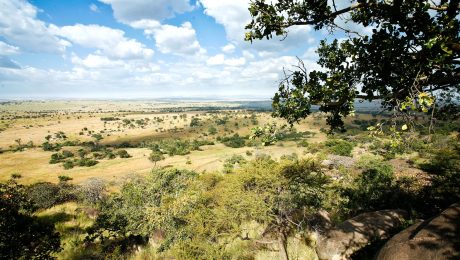
Six hundred metres below you. Nineteen kilometres across. Two hundred and sixty square kilometres of self-contained, perfectly bounded wilderness laid out like a painting in a frame so vast that the eye cannot process it all at once. The grassland floor is gold and green in the morning light. The dark patches of the Lerai Forest and the silvery gleam of Lake Magadi break the surface of the plains. Tiny shapes — wildebeest, zebra, the barely visible movement of a distant herd — confirm that what you are looking at is not a landscape painting but a living ecosystem, operating at this moment exactly as it has operated for two million years.
This is the Ngorongoro Crater. And it is one of the most extraordinary places on the surface of the earth.
What Is the Ngorongoro Crater? The Geology of a Wonder
The Ngorongoro Crater is the world’s largest intact and unflooded volcanic caldera — a distinction that requires a moment’s explanation, because the word crater is technically misleading. This is not a crater in the ordinary sense of a depression formed by impact or simple volcanic eruption. It is a caldera — formed not by explosion outward but by collapse inward.
Between two and three million years ago, a massive volcano occupied this location — a volcanic mountain that geologists estimate stood at approximately 4,500 to 5,800 metres above sea level, making it potentially taller than Kilimanjaro at its peak. Over an extended period, as the volcano’s magma chamber beneath it was drained by successive eruptions, the structural support beneath the volcano’s summit was progressively removed. And then, in a geological event of extraordinary violence, the summit collapsed inward — falling into the evacuated magma chamber below and creating the vast, circular depression that we see today.
The result is a caldera of almost perfect geometry: approximately 19 kilometres in diameter, 610 metres deep from rim to floor, with walls steep enough to contain a largely self-sustaining wildlife ecosystem and to prevent most animal populations from leaving or entering freely. The floor covers approximately 260 square kilometres — an area large enough to support permanent populations of all of East Africa’s major savannah species, including every member of the Big Five.
The Ngorongoro Conservation Area, which encompasses the crater and the surrounding highlands, was designated a UNESCO World Heritage Site in 1979 — one of the first sites in Africa to receive this designation — recognised for its outstanding universal value as both a natural wonder of extraordinary beauty and an archaeological landscape of exceptional importance. The surrounding highlands contain Oldupai Gorge (also known as Olduvai Gorge) — one of the most significant palaeontological sites in the world, where the Leakey family’s excavations in the mid-20th century recovered fossil remains that fundamentally reshaped our understanding of human evolution. Hominid fossils dating back 3.6 million years have been found in the Conservation Area — making this not only one of the world’s great wildlife destinations but one of the most important sites in the story of humanity itself.
Inside the Caldera: A World Entirely Its Own
The Ngorongoro Crater floor is, in the most literal sense, a world within a world — an enclosed ecosystem of approximately 25,000 large mammals that live permanently within the caldera’s boundaries, sustained by the springs, streams, and grassland that the crater’s unique microclimate produces year-round.
The crater floor is not a single, uniform habitat. It comprises several distinct ecological zones, each with its own wildlife community, and understanding these zones is fundamental to appreciating the full richness of a Ngorongoro game drive.
The Open Grassland Plains
The majority of the crater floor is covered by open short-grass and medium-grass savannah — a gently undulating grassland that supports the crater’s enormous populations of grazing herbivores. Wildebeest herds of hundreds move across the plains in constant, purposeful grazing. Zebra graze alongside them in classic Serengeti fashion. Grant’s and Thomson’s gazelles are everywhere — their elegant, fast-moving presence a constant backdrop to the slower movements of the larger herbivores. Eland — the largest of Africa’s antelopes — move in small groups across the more open sections. Warthogs trot comically with their tails held vertically upright, kneeling to graze in the short grass with the cheerful indignity of animals that have made a complete peace with their own appearance.
This is the terrain where the crater’s lion prides operate most visibly — hunting in the open where every pursuit is fully visible from the vehicle, moving between the grassland and the forest edge in the daily rhythm of a predator community that has inhabited this enclosed paradise for generations.
The Lerai Forest
In the southwestern section of the crater floor, the Lerai Forest is one of Ngorongoro’s most beautiful and most biologically important habitats — a grove of yellow fever acacia trees (Vachellia xanthophloea) whose distinctive lime-yellow bark and spreading canopies create an atmosphere of dappled, cathedral-like beauty entirely different from the open grassland of the surrounding plains.
The yellow fever tree’s extraordinary colouring — a vivid, almost fluorescent lime-green and yellow that intensifies in the morning and evening light — gives the Lerai Forest a visual quality unlike any other woodland in East Africa, and the grove provides critical habitat for several of the crater’s most sought-after species.
Leopards inhabit the Lerai Forest’s trees and margins — the dense canopy and the proximity to both forest cover and open hunting ground making it ideal territory for this most cryptic of the big cats. Sightings in the Lerai are more reliable than in most East African parks, particularly in the early morning when leopards are returning from nocturnal hunts and occasionally visible in the lower branches of the acacias.
African elephants — predominantly old bulls of impressive stature and ivory, since the steep crater walls make the journey down less attractive to family groups with young calves — feed in the Lerai Forest with the measured deliberation of animals that have known this grove for decades. The sight of a large-tusked elephant bull feeding in the yellow fever grove, the light filtering through the acacia canopy above him, is one of Ngorongoro’s most magnificent and most photographed wildlife moments.
Hippos inhabit the pools and streams within and adjacent to the Lerai, their presence adding an unexpected dimension of aquatic wildlife to what is primarily a woodland habitat. The hippopotamus pool within the Lerai Forest is one of the crater’s most reliably productive wildlife viewpoints — the hippos’ social interactions, territorial disputes, and the extraordinary sound of their calls at close range providing wildlife entertainment of considerable quality.
Lake Magadi and the Flamingos
In the crater’s southwestern floor, the shallow, alkaline Lake Magadi is one of Ngorongoro’s most visually spectacular features — and during productive periods, one of East Africa’s most extraordinary wildlife spectacles.
The lake’s alkaline chemistry — produced by volcanic minerals leaching into the water from the surrounding geology — supports the growth of the blue-green algae that is the primary food source of the lesser flamingo (Phoeniconaias minor). When conditions are right, tens of thousands of flamingos gather along the lake’s margins, their extraordinary rose-pink plumage reflecting in the shallow alkaline water to create a doubling of the colour that makes the whole scene almost implausibly beautiful.
The flamingo concentrations at Lake Magadi vary significantly with the lake’s water level and chemistry — at their peak they are one of Tanzania’s most spectacular natural phenomena, and even at lower concentrations the presence of flamingos in the crater adds a vivid splash of colour to the already extraordinary landscape.
Beyond the flamingos, Lake Magadi’s margins attract an outstanding diversity of waterbirds: great white pelicans in breeding plumage, yellow-billed storks wading in elegant slow motion, African spoonbills sweeping their extraordinary bills through the shallows, African sacred ibis, hadada ibis, pied avocets, and numerous wading species that use the exposed mud margins during the dry season.
The Ngoitokitok Springs
On the eastern side of the crater floor, the Ngoitokitok Springs — a permanent freshwater source fed by underground springs from the crater wall — create a permanent wetland oasis that attracts and concentrates wildlife from across the crater floor, particularly in the dry season when other water sources become unreliable.
The springs and their associated hippo pool are one of the crater’s most reliably productive wildlife viewpoints — the permanent water attracting not only hippos and waterbirds but also the full complement of the crater’s grassland wildlife coming to drink, and the predators that follow the prey to water. Lions are regularly encountered near the springs, particularly in the early morning when they are still active from overnight hunts in the surrounding grassland.
The springs also support one of the crater’s most important Maasai cultural sites — a traditional livestock watering point that reflects the unique and complex arrangement of the Ngorongoro Conservation Area, where Maasai pastoralists have the right to graze their cattle on the crater floor, creating a human-wildlife coexistence that is simultaneously challenging and extraordinary.
The Big Five in the Ngorongoro Crater
The Ngorongoro Crater is one of very few places in Africa where all five members of the Big Five — lion, elephant, Cape buffalo, leopard, and rhinoceros — can be encountered in a single day’s game drive. This concentration of iconic species within a compact, accessible, and extraordinarily scenic environment is the primary reason the crater is consistently ranked among the world’s top wildlife destinations.
Lion
The crater’s lion population is one of the most studied and most celebrated in Africa — approximately 60 to 70 individuals organised into several prides that hold established territories across the crater floor. The enclosed nature of the caldera means that the lions are permanent residents — unlike the Serengeti’s more wide-ranging prides, Ngorongoro’s lions are unlikely to leave the crater, and their familiarity with both the terrain and with safari vehicles allows an extraordinary quality of close observation that visitors consistently describe as among the finest lion experiences of their lives.
The crater’s lion prides are known for their bold, unhurried behaviour in the presence of vehicles — a characteristic of long-habituated populations that allows the kind of sustained, intimate observation of natural behaviour that wildlife photographers and wildlife lovers travel the world to experience. Watching a pride move across the open grassland in the early morning light, a sub-adult male practising the roar that will one day announce his territorial ambitions, or a lioness beginning a hunt with the focused intensity of an apex predator in full command of her environment — these are experiences of extraordinary richness that the crater’s combination of open terrain and habituated lions provides with rare reliability.
The genetic consequences of the crater’s enclosed population are also of considerable scientific interest: the relative isolation of the crater’s lion gene pool has produced a population with significantly reduced genetic diversity compared to the Serengeti’s lions, and the mane development of Ngorongoro males — some of them carrying the darkest and most impressive manes in East Africa, possibly as a result of the cooler crater temperatures and selective pressures unique to the enclosed population — is itself a wildlife spectacle worth travelling for.
Black Rhinoceros
The black rhinoceros (Diceros bicornis) is the Ngorongoro Crater’s most significant and most conservation-important resident — and an encounter with one of the crater’s rhinos is one of the most profound wildlife experiences available anywhere in Africa.
The global black rhinoceros population was devastated by poaching between the 1960s and 1990s — reduced from an estimated 70,000 individuals to fewer than 2,500 in less than three decades, a catastrophic decline of over 96% driven entirely by the illegal horn trade. Tanzania’s black rhino population suffered particularly severely during this period, and the crater’s population — which once numbered in the tens — was reduced to critically low levels before intensive protection measures stabilised and gradually rebuilt it.
Today, the crater supports approximately 25 to 30 black rhinoceros — a small but slowly recovering population that is among the most intensively monitored and most rigorously protected in Africa. Each individual is known to the conservation team by name, their movements tracked daily, their health monitored closely, and their protection prioritised above almost all other conservation concerns in the crater.
Finding a black rhino on the crater floor requires patience, local knowledge, and a guide who understands the animals’ movement patterns and preferred habitat areas. The rhinos tend to favour the longer grass areas of the western crater margins and the forest edge — their browsing diet of leaves and woody vegetation draws them away from the open short-grass plains preferred by the grazing species. When located, the encounter is extraordinary: the prehistoric bulk of the animal, its distinctive prehensile upper lip, the great horn for which it has been so catastrophically persecuted, and the knowledge that fewer than 6,000 of these animals remain alive anywhere in the world — all combine to create a wildlife moment of deep emotional resonance that goes far beyond the visual spectacle.
A black rhino sighting in the Ngorongoro Crater is not simply a wildlife experience. It is an encounter with the consequences of human greed and the possibilities of human determination — a reminder of what we have almost destroyed and what careful, sustained, committed conservation can protect.
Cape Buffalo
Cape buffalo (Syncerus caffer) are among the crater’s most abundant and most visible large mammals — enormous herds of hundreds move across the open grassland in the classic formation of a species that relies on collective vigilance and collective defence for survival in a landscape full of lions.
The crater’s buffalo herds are a constant and compelling wildlife presence — their dust clouds visible from great distances, their collective sound audible on still mornings as a continuous low rumble of hooves and movement, their interactions with the crater’s lion prides providing some of the most dramatic predator-prey encounters in Ngorongoro. A buffalo herd that turns to defend an attacked individual — the entire herd suddenly reversing direction, the lions scattering before hundreds of tonnes of collective bovine determination — is one of the African savannah’s most extraordinary wildlife reversals, and it occurs regularly enough in the Ngorongoro Crater that any visitor spending a full day on the floor has a reasonable chance of witnessing it.
The crater also supports significant numbers of bachelor buffalo bulls — old, solitary, or small-group males that have left the main herd and spend their days in the forest margins and stream courses of the crater floor. These individuals — often carrying impressive horns and displaying the characteristic scarring and worn hide of an animal that has survived decades of predator pressure and social competition — are among the crater’s most characterful and most photographic wildlife subjects.
Leopard
The leopard (Panthera pardus) is the Ngorongoro Crater’s most elusive Big Five species and consequently the most satisfying to find. The crater’s Lerai Forest, its rocky crater walls, and the dense acacia woodland of the floor’s margins provide ideal leopard habitat — abundant cover, reliable prey, and the vertical dimension of trees and rocky outcrops that this most arboreal of the big cats exploits with extraordinary skill.
The crater’s leopards are resident rather than transient — the enclosed nature of the caldera means that individuals establish permanent territories within specific sections of the floor and walls, and their movements become known over time to experienced guides who work the crater regularly. Female leopards with dependent cubs are the most reliably located — their relatively restricted movement patterns, tied to the security of a specific denning area, make them more predictable than the wider-ranging adult males.
A leopard in the Lerai Forest — resting in the fork of a yellow fever tree in the dappled morning light, or moving purposefully through the undergrowth at dusk with the fluid, boneless grace that makes this the most beautiful of Africa’s large cats — is a Ngorongoro sighting of the highest order.
African Elephant
African elephants in the Ngorongoro Crater are predominantly large adult bulls — the steep, 600-metre crater walls present a physical challenge that families with young calves tend to avoid, meaning that the crater floor’s elephant population is skewed toward the large, long-tusked males that have negotiated the descent and made the crater floor part of their regular range.
These old bulls — some carrying ivory of extraordinary length and mass, a product of decades of uninterrupted growth in a protected environment — are among the most magnificent individual animals in East Africa. The contrast between their enormous size and the delicacy of their movement through the Lerai Forest’s yellow fever acacias, the extraordinary reach of their trunks as they feed in the canopy, and the quality of ancient authority that large old elephant bulls carry in their bearing and their behaviour — all of this creates wildlife encounters of exceptional beauty and power.
Ngorongoro’s Human Story: Maasai, Archaeology & Evolution
The Ngorongoro Conservation Area is unique among African protected areas in that it is not a conventional national park from which human settlement is excluded. It is a multiple land-use area in which the Maasai people — who were displaced from the Serengeti when it was gazetted as a national park in 1959 — retain the right to live and to graze their cattle within the Conservation Area boundaries, including on the crater floor itself.
This arrangement creates both challenges and extraordinary opportunities. The challenges are real: human-wildlife conflict, overgrazing pressure, and the complex management questions that arise whenever livestock and wildlife share the same landscape are all ongoing concerns. But the opportunities are equally real: the Ngorongoro Conservation Area is one of the only protected areas in Africa where visitors can witness the ancient, living coexistence of Maasai pastoralism and wild savannah wildlife in the same landscape — a coexistence that predates the conservation movement by centuries and that represents a genuinely different model of the human-wildlife relationship from the exclusionary approach of the conventional national park.
Oldupai Gorge: The Cradle of Humankind
Approximately 45 kilometres west of the crater rim, accessible as a half-day excursion from the Ngorongoro area, Oldupai Gorge (Olduvai Gorge) is one of the most important archaeological sites in the world — a deep ravine cut by an ancient river through layers of volcanic sediment that have preserved the fossil record of human evolution with extraordinary completeness.
It was here that Louis and Mary Leakey made the discoveries that transformed our understanding of human origins — most significantly, the 1959 discovery of Australopithecus boisei (initially named Zinjanthropus), a hominid skull approximately 1.75 million years old, and the subsequent discovery of Homo habilis — the first species attributed to the genus Homo — from deposits approximately 1.9 million years old. The gorge has also yielded the famous Laetoli footprints — preserved in volcanic ash approximately 3.6 million years old, the oldest known hominid footprints in the world, providing direct evidence that our ancestors walked upright nearly four million years ago.
The Oldupai Gorge Museum and Visitor Centre provides an excellent introduction to the site’s archaeological significance, with displays of fossil casts, geological explanations, and the extraordinary palaeontological context that makes Ngorongoro one of the most important places in the entire story of human evolution. A guided walk along the gorge rim with a knowledgeable local guide brings the landscape’s geological history to life in ways that the museum alone cannot provide.
Visiting Oldupai Gorge in conjunction with a Ngorongoro Crater game drive connects the wildlife experience of the present with the evolutionary story of the deep past — a combination available nowhere else in East Africa and one that gives the Ngorongoro Conservation Area a dimension of significance that extends far beyond the extraordinary wildlife within its boundaries.
The Maasai Cultural Experience
The Maasai communities of the Ngorongoro highlands offer some of the most authentic and most contextually rich cultural experiences available anywhere in Kenya and Tanzania — a living encounter with a pastoral civilisation that has maintained its fundamental character and values across centuries of external pressure and change.
Visits to Maasai manyattas (traditional village enclosures) in the Ngorongoro highlands — arranged respectfully and with direct benefit to the communities involved — provide insight into the age-set system that organises Maasai society from childhood through the moran (warrior) stage to elderhood, the construction and social organisation of the traditional homestead, the extraordinary ecological knowledge embedded in a pastoral people who have read the landscape and its wildlife for generations, and the complex relationship between the Maasai and the conservation system that simultaneously protects their land and restricts their land use options.
The Engikaret Maasai Cultural Boma near the crater rim is one of the more responsibly managed cultural visit sites in the Conservation Area — with transparent benefit-sharing arrangements, community ownership, and a genuine attempt to share cultural knowledge rather than perform it.
Birdwatching in the Ngorongoro Crater
With over 500 recorded bird species across the Ngorongoro Conservation Area as a whole and approximately 350 species recorded specifically on the crater floor, Ngorongoro is a world-class birding destination that adds an extraordinary ornithological dimension to the wildlife experience.
The crater floor’s open grassland supports outstanding large bird diversity: the kori bustard — Africa’s heaviest flying bird — stalks the short grass with prehistoric gravity. The grey crowned crane — Tanzania’s national bird — moves in pairs across the grassland with extraordinary elegance. Secretary birds hunt their snake and lizard prey with characteristic stamping kicks. Ostriches stride across the open plains. Martial eagles and bateleur eagles soar on the thermals above the crater walls with the effortless mastery of birds built for high-altitude soaring.
The lake and wetland margins produce the flamingo concentrations described above, alongside outstanding waterbird diversity: goliath herons, great white pelicans, African spoonbills, yellow-billed storks, sacred ibis, and the remarkable African black-winged stilt in the shallower margins.
The Lerai Forest holds a distinct woodland bird community: the African green pigeon feeds on fig fruits in the canopy, the Ross’s turaco moves through the upper canopy in flashes of crimson and green, the silvery-cheeked hornbill calls noisily from the treetops, and the African paradise flycatcher trails its extraordinary long tail feathers through the dappled woodland light.
The crater rim forest — the montane forest of the crater’s upper slopes — supports a completely different bird community from the floor below: Hartlaub’s turaco, African hill myna, hunter’s cisticola, Kikuyu white-eye, and numerous montane sunbird species all inhabit the cool, misty forest of the crater rim, and a dawn walk along the rim path before descending to the floor is an excellent way to add rim forest species to the day’s list.
The Ngorongoro Crater Rim: Staying Above the Wonder
The accommodation options on the Ngorongoro Crater rim are among the most dramatically positioned in Africa — lodges and camps perched directly above the caldera, with the vast crater spread below and the distant plains of the crater floor visible through the morning mist as it clears with the rising sun.
Midrange
Ngorongoro Sopa Lodge — A well-appointed lodge on the eastern crater rim offering comfortable rooms, reliable food, and good crater views. A solid midrange option for first-time visitors to the Conservation Area.
Ngorongoro Wildlife Lodge — A classic property on the crater rim with good access to the descent road, comfortable accommodation, and outstanding sunset views across the caldera.
Rhino Lodge — A community-owned property operated by the Ngorongoro Conservation Area Authority, offering good value accommodation with genuine crater rim views and direct financial benefit to the local community.
Midrange Ngorongoro safari from USD 800 per person for 2 nights, including accommodation, crater descent fees, guiding, and conservation area fees.
Luxury
Ngorongoro Serena Safari Lodge — Built to blend architecturally with the crater rim’s landscape, Ngorongoro Serena offers exceptional crater views, outstanding food, and comfortable, well-appointed rooms that have established it as one of the Conservation Area’s most respected properties.
Sanctuary Ngorongoro Crater Camp — A beautifully designed tented camp on the western crater rim, Sanctuary Ngorongoro offers an intimate, exclusive experience with exceptional guiding, outstanding views, and the sense of being genuinely embedded in the crater’s wild atmosphere.
&Beyond Ngorongoro Crater Lodge — One of the most architecturally extraordinary safari properties in Africa — a baroque, theatrical lodge of extraordinary opulence positioned on the crater rim above the western wall, with views directly down into the caldera and an interior design that has been described as a cross between a Maasai village and a Venetian palace. The accommodation, food, and service are exceptional, and the experience of having breakfast on your private veranda with the entire crater spread 600 metres below you is one of African safari travel’s most memorable moments.
The Highlands — A luxury tented camp positioned at altitude on the outer slopes of the crater, offering exceptional design, outstanding views, and a walking and 4WD exploration programme that reveals the broader highlands landscape beyond the crater itself.
Luxury Ngorongoro safari from USD 2,500 per person for 2 nights, including accommodation, crater descent fees, private guiding, conservation area fees, and Oldupai Gorge excursion.
Practical Information for Ngorongoro Crater
Crater Descent Hours: Vehicle access to the crater floor is permitted between 06:00 and 18:00. All vehicles must exit the crater by 18:00. The descent road is one-way in the morning (descent) and the ascent road is one-way in the afternoon (ascent) — the two roads are separate, reducing congestion on the steep, narrow tracks.
Vehicle Limits: The Ngorongoro Conservation Area Authority limits the number of vehicles permitted on the crater floor at any one time — typically around 60 vehicles — to reduce congestion and environmental impact. In the high season (July–October), the crater can feel busy around the most popular wildlife sightings, particularly at lion and rhino locations. Arriving at the descent road at opening time (06:00) and spending a full day on the floor generally allows the majority of the day in relatively uncrowded conditions.
Conservation Fees: The Ngorongoro Conservation Area charges a daily conservation fee per person and a crater service fee per vehicle in addition to the standard conservation area entrance fee. These fees are included in all Ntungo Wildlife Safaris packages.
Physical Requirements: The crater descent and ascent roads are steep, unpaved, and require a 4WD vehicle. No hiking on the crater floor is permitted (with the exception of the Ngoitokitok Springs picnic site area). Visitors with mobility concerns should note that game drives on the crater floor involve standard safari vehicle access with no significant physical demands beyond entry and exit from the vehicle.
Best Time to Visit: The Ngorongoro Crater is excellent year-round — its enclosed, self-sustaining ecosystem means that the wildlife is present regardless of season. The dry seasons (June–September and December–February) offer the most reliable weather and the clearest views. The wet seasons (March–May and October–November) bring lush green crater floor vegetation and excellent birdlife but can produce morning mist on the rim and occasionally heavy afternoon rain on the floor.
Duration: A minimum of one full day (2 nights at the rim) is required for a comprehensive crater floor experience. Two full days (3 nights) allows a more relaxed game drive programme and time for an Oldupai Gorge excursion.
Combining Ngorongoro with Other Tanzania Destinations
The Ngorongoro Conservation Area sits at the heart of Tanzania’s northern safari circuit — ideally positioned between the wildlife riches of Tarangire National Park to the southeast and the vast expanse of the Serengeti to the northwest. The standard northern circuit — Tarangire, Ngorongoro, Serengeti — is the most popular and most rewarding multi-destination Tanzania safari itinerary, and Ngorongoro Crater provides the geological and ecological centrepiece of that journey.
Ngorongoro + Serengeti: The most natural and most popular combination — the Serengeti’s vast, open ecosystem and its extraordinary migration spectacle paired with the concentrated, enclosed perfection of the crater. Typically 2 nights at Ngorongoro combined with 3–4 nights in the Serengeti.
Ngorongoro + Tarangire: The crater’s enclosed Big Five experience combined with Tarangire’s elephant herds and ancient baobab landscape — a compelling two-park combination for shorter itineraries.
Ngorongoro + Serengeti + Tarangire + Lake Manyara: The complete northern circuit — typically 7–10 days — covering the full breadth of Tanzania’s northern wildlife destinations with Ngorongoro Crater as the dramatic geological centrepiece.
Ngorongoro + Zanzibar: The crater’s ancient volcanic world followed by Zanzibar’s turquoise Indian Ocean and Spice Island culture — one of the most satisfying complete Tanzania journeys available, combining wildlife, geology, history, and beach in a single seamlessly connected itinerary.
Why the Ngorongoro Crater Stands Apart
In a continent of extraordinary wildlife destinations — the Serengeti’s endless plains, the Masai Mara’s migration drama, the Okavango’s waterworld, the Kruger’s southern grandeur — the Ngorongoro Crater occupies a unique and irreplaceable position.
It is not the largest wildlife area in Africa. It is not the place where you are most likely to see the greatest number of different species. It is not the most remote or the most pristine.
What it is — and what no other place in Africa can replicate — is the most complete wildlife experience in the world: every major savannah species, every major predator, the most significant conservation success story of the past half-century, an archaeological site that reaches back to the dawn of humanity, a living Maasai culture maintaining its ancient relationship with the land, and all of it enclosed within the walls of a geological wonder of such perfect scale and beauty that standing on its rim and looking down produces, in almost everyone who experiences it, a quality of wonder that they carry for the rest of their lives.
The Ngorongoro Crater is not a wildlife destination. It is a place where the earth’s story — geological, evolutionary, ecological, and human — is told in the most concentrated and the most beautiful possible way.
Go down into it. Stay as long as you can. Leave different from how you arrived.
Contact Ntungo Wildlife Safaris to plan your Ngorongoro Crater safari — as a standalone experience, combined with the Serengeti and Tanzania’s northern circuit, or extended with a Zanzibar beach holiday. We offer itineraries across all accommodation tiers with private guiding, expert local knowledge, and seamless logistics from Arusha to departure.
📩 info@ntungosafaris.com 🌐 www.ntungosafaris.com 📞 +256 771 399299 / +256 706 772990
Ngorongoro Crater accommodation — particularly the luxury rim lodges — books up significantly in advance during peak season (July–October and December–February). Early reservation is strongly recommended.
- Published in Destinations, National Parks, Wildlife Safaris
Serengeti National Park Tanzania
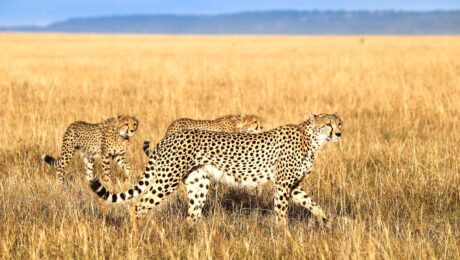
Serengeti National Park: The Endless Plains of Tanzania
There is a word in the Maasai language — siringet — that means the place where the land runs on forever. The people who gave this name to the landscape they had inhabited for centuries were not speaking poetically. They were speaking with the literal accuracy of people who had walked every inch of it and knew exactly what they were describing.
The Serengeti is the place where the land runs on forever.
Standing on the open plains of Tanzania’s most celebrated national park — the grass stretching to every horizon, the sky enormous above, a distant kopje rising from the flatness like a forgotten island — you understand immediately why this landscape has captured the human imagination more completely than almost any other place on earth. There is something in the scale of it, in the quality of the light, in the way the wind moves through grass that seems to extend without boundary in every direction, that connects you to something older and deeper than ordinary travel experience.
And then the wildebeest appear. First a few, then hundreds, then thousands, then a number beyond counting — a living, moving, breathing river of animals that extends from the horizon behind you to the horizon ahead, their collective calling a sound that you feel as much as hear, their hooves on the baked earth a vibration that rises through the ground and into your body.
This is the Great Serengeti. And nothing — no documentary, no photograph, no account however vivid — prepares you for the reality of being inside it.
Serengeti National Park covers approximately 14,763 square kilometres of northern Tanzania — an area roughly the size of Northern Ireland or the state of Connecticut — and forms the core of the larger Serengeti ecosystem, which together with Kenya’s Masai Mara, the Ngorongoro Conservation Area, and several surrounding game reserves and conservancies protects one of the last truly intact large-mammal ecosystems remaining on the planet. The park was designated a UNESCO World Heritage Site in 1981, recognised for its extraordinary natural beauty and its exceptional importance as the stage for the most spectacular animal migration in the world.
A Serengeti safari with Ntungo Wildlife Safaris is not simply a game drive. It is an immersion in a living, breathing, ancient ecosystem that operates on scales of time and space that human civilisation rarely encounters. Come prepared to be humbled — and to leave transformed.
The Landscape: Five Ecosystems in One Park
The Serengeti’s reputation for open, featureless grassland is only partially accurate — and visitors who understand the park’s genuine ecological diversity arrive better prepared to appreciate the full range of what it offers.
The Short-Grass Plains: The Serengeti’s Southern Heart
The short-grass plains of the southern and southeastern Serengeti — stretching from the Ngorongoro Conservation Area boundary northward toward Seronera — are the landscape most closely associated with the Serengeti in the global imagination. These are the Serengeti plains of the documentaries: open, flat, almost treeless, their grass cropped short by the enormous herbivore populations that graze them, their surface punctuated only by the scattered granite kopjes that rise from the flatness like geological afterthoughts.
The short-grass plains are the calving grounds of the wildebeest migration — the area where, between January and March, the herds congregate in their millions and the extraordinary annual drama of mass calving takes place. They are also the habitat of the Serengeti’s cheetah populations — the open terrain providing both the visibility for hunting and the speed corridor that allows the cheetah’s explosive acceleration to be deployed to full effect.
During the migration season, the short-grass plains are covered by wildebeest herds of extraordinary density — a living carpet of animals that stretches beyond visual range in every direction and creates an experience of biological abundance that has no equivalent anywhere else on earth.
The Central Serengeti: Seronera and the Kopjes
The central Serengeti around the Seronera Valley — the park’s operational heart and the location of most of its internal infrastructure — is where the Serengeti’s ecological diversity reaches its greatest concentration. The Seronera Valley is a year-round water source that attracts and retains wildlife throughout the seasonal cycle, and the combination of the permanent Seronera River, the varied terrain of the surrounding area, and the extraordinary kopje formations that punctuate the central plains creates one of the most productive and most diverse wildlife areas in Africa.
The kopjes — pronounced koppies, from the Afrikaans for small heads — are ancient granite outcroppings that protrude through the overlying soil and sediment of the plains, their surfaces shaped by millions of years of weathering into extraordinary forms: smooth domes, balanced boulders, creviced towers, and cave-like overhangs that provide shelter, vantage points, and territorial markers for a remarkable community of species. Lion prides use the kopjes as the permanent anchors of their territories — generations of the same family resting on the same rocks, marking the same boulders with scent, hunting the same surrounding plains that their grandmothers hunted before them. Leopards inhabit the fig and sausage trees that grow in the kopjes’ sheltered crevices. Rock hyrax colonies occupy every available rocky surface, their alarm calls warning of approaching predators. Klipspringers stand on the highest points of the kopjes with extraordinary poise. And Verreaux’s eagle and augur buzzard soar above them, riding the thermals that rise from the sun-heated rock.
The Western Corridor: The Grumeti River
The western corridor of the Serengeti — a narrow arm of protected land extending westward toward Lake Victoria — contains the Grumeti River, one of the migration’s two principal river crossing obstacles. The Grumeti is a smaller river than the Mara, but it harbours some of the largest Nile crocodiles in East Africa — enormous, ancient individuals that can exceed five metres in length and that wait with terrible patience for the migration herds to arrive at the crossing points between May and July.
The western corridor is significantly less visited than the central and northern Serengeti — its remoteness from the park’s main access points means that game drives here have a quality of solitude and exclusivity that is increasingly rare in popular safari destinations. The wildlife is excellent, the vegetation more varied than the open plains, and the Grumeti River crossing — while less famous than the Mara crossings further north — can be extraordinarily dramatic when the migration herds are present.
The Northern Serengeti: The Mara River and the Migration’s Apex
The northern Serengeti — the sector of the park closest to the Kenyan border and the Masai Mara — is where the migration reaches its most dramatic and most internationally celebrated moment. The terrain here is different from the open plains of the south: gently rolling, more varied, punctuated by small rivers, occasional hills, and the spectacular Lobo and Nyati kopjes that rise dramatically from the surrounding landscape.
The Mara River forms the northern boundary of the Serengeti, crossing into Kenya’s Masai Mara beyond the park boundary, and it is here — at the principal river crossing points between the Tanzanian and Kenyan sides of the ecosystem — that the migration crossings occur in their most spectacular form between July and October.
The northern Serengeti receives substantially fewer visitors than the central and southern sectors, its distance from the park’s main gates creating a natural barrier that self-selects for more experienced and more committed safari travellers. The reward for the extra distance is an experience of the Serengeti at its most exclusive — game drives with few or no other vehicles, wildlife encounters of extraordinary intimacy, and the particular quality of attention that comes from being in a vast landscape without the distraction of other vehicles competing for the same sighting.
The Ndutu Area: Gateway to the Calving Season
The Ndutu area — technically within the Ngorongoro Conservation Area but ecologically and experientially part of the Serengeti system — is the southernmost section of the greater Serengeti ecosystem and the principal calving ground of the wildebeest migration. Between January and March, as the short rains green the southern plains and the wildebeest herds concentrate in their millions, the Ndutu area becomes the stage for one of the most remarkable events in the natural world: the mass calving season.
Approximately 500,000 wildebeest calves are born within a period of just three to four weeks — a biological strategy known as predator swamping, in which the simultaneous production of enormous numbers of vulnerable young animals overwhelms the capacity of the predator community to take a significant proportion. The calving plains are simultaneously a nursery of extraordinary tenderness — newborn calves standing within minutes of birth, taking their first tentative steps on legs that seem impossibly long and uncertain — and a hunting ground of breathtaking predatory intensity, as the Serengeti’s lions, cheetahs, leopards, hyenas, and wild dogs capitalise on the abundance of vulnerable prey.
The Ndutu calving season is one of East Africa’s most extraordinary wildlife experiences — a spectacle of life, death, and the relentless forward momentum of biological existence that is as profound in its emotional impact as any wildlife encounter in Africa.
The Great Migration: The Serengeti’s Defining Story
The Great Wildebeest Migration is the largest overland animal migration on earth and the ecological event around which the entire Serengeti ecosystem is organised. Understanding it — not just as a spectacle to be witnessed at a single dramatic moment, but as a continuous, year-round process that shapes the entire Serengeti experience — is essential for getting the most from a Serengeti safari.
The Numbers
- 1.5 million wildebeest (Connochaetes taurinus)
- 400,000 Burchell’s zebra (Equus quagga)
- 200,000 Thomson’s gazelle (Eudorcas thomsonii)
- Total annual distance covered: approximately 3,000 kilometres
- Total ecosystem area: approximately 40,000 square kilometres
These are the participants in the migration — and the numbers, while impressive on paper, only acquire their full meaning when you are standing in the middle of a herd that extends beyond visual range in every direction.
The Annual Cycle
The migration follows a broadly clockwise circuit around the Serengeti-Mara ecosystem, driven by the seasonal rains and the growth of the fresh grass that the herds must follow to survive. The circuit is not a simple loop — it is a dynamic, continuously adjusting response to rainfall patterns that vary from year to year, and its precise timing and geography change accordingly. What follows is a general guide:
January — March: The Southern Plains and the Calving Season
The herds are concentrated on the short-grass plains of the southern Serengeti and the Ndutu area, drawn by the nutritious grass that grows here during and after the short rains. This is the calving season — the most biologically intense period of the migration’s annual cycle, with half a million calves born in the space of a few weeks and the predator community operating at maximum intensity. The short-grass plains in January and February are one of the most extraordinary wildlife environments on earth — wildebeest herds covering the landscape from horizon to horizon, newborn calves taking their first steps, cheetahs and lions hunting in the open where every pursuit is visible from beginning to end.
April — May: The Long Rains and the Northward Movement
As the long rains arrive and the short-grass plains become saturated, the herds begin their northward movement — a broad, loosely organised drift that gradually concentrates into more defined columns as the animals move toward the central Serengeti and the Seronera Valley. This is one of the Serengeti’s less visited periods — the rain can make some tracks challenging — but the green, luminous landscape and the enormous moving herds create a photographic and experiential environment of extraordinary beauty for visitors willing to embrace the wet season.
June — July: The Central Serengeti and the Western Corridor
The herds move through the central Serengeti and the western corridor in June and July, with significant concentrations around the Seronera Valley and the Grumeti River. The Grumeti crossings — smaller and less publicised than the Mara crossings but harbouring some of the largest crocodiles in Africa — begin to occur as the leading edge of the migration reaches the western corridor. The central Serengeti in June and July combines excellent migration herds with the full complement of the park’s resident wildlife — one of the most comprehensively productive periods in the Serengeti calendar.
August — October: The Northern Serengeti and the Mara River
The migration’s northern push — driven by the dry season’s gradual depletion of the central Serengeti’s grass — brings the herds northward through the Loliondo and Lobo areas toward the Mara River. This is the period of the famous Mara River crossings — the most dramatic single spectacle of the migration and the event that has made the Serengeti-Mara ecosystem world-famous. The crossings occur as the migration herds encounter the river’s barrier and must cross into Kenya’s Masai Mara to access fresh grazing, then recross southward as the short rains begin.
The northern Serengeti between August and October offers some of the finest safari experiences in East Africa: the crossing drama, the resident wildlife of the northern sector, the low visitor density, and the extraordinary landscape of the Mara River valley all combining to create a safari of exceptional quality.
November — December: The Return South
As the short rains begin in November, greening the southern plains and triggering the grass growth that will support the calving season, the herds begin their return southward — a broad movement that reverses the northward drift of the preceding months and deposits the animals back on the southern plains in time for the calving season to begin again in January. The return south is a quieter, less dramatic phase of the migration than the calving season or the river crossings, but the sight of enormous herds moving purposefully across the Serengeti landscape in the fresh green of the short rains is beautiful and moving in its own understated way.
Wildlife Beyond the Migration: The Serengeti’s Resident Community
The Great Migration dominates the Serengeti’s reputation — but the park’s extraordinary wildlife extends far beyond the migrating herds and their attendant predators. The Serengeti’s resident wildlife community is remarkable in its own right and ensures that every Serengeti safari, regardless of season, delivers wildlife experiences of the highest quality.
Lions
The Serengeti National Park supports an estimated 3,000 lions (Panthera leo) — one of the largest lion populations in Africa and the most studied in the world. The Serengeti Lion Project, established in 1966 by the pioneering researcher George Schaller and continued by Craig Packer and his colleagues for over five decades, has produced the most comprehensive long-term study of lion behaviour, ecology, and population dynamics ever conducted, and the insights it has generated have shaped our understanding of lion society in ways that extend far beyond the Serengeti itself.
The Serengeti’s lions are organised into prides — social groups of related females, their cubs, and associated adult males — whose territories are defined by the landscape’s features: the kopjes that serve as territory markers, the river courses that provide boundaries, and the prey populations that determine the minimum viable territory size. A single Serengeti lion pride may hold a territory of 50 to 400 square kilometres, depending on prey density and the competitive landscape of the surrounding pride system.
Encounters with Serengeti lions are among the most reliable and most spectacular in Africa. The park’s habituation of its lion population to vehicle presence — accumulated over decades of scientific research and safari tourism — allows extraordinary close observation of natural behaviour: dawn hunts on the short-grass plains, pride interactions at kopje resting sites, territorial boundary marking, and the endlessly compelling social dynamics of a family group that has shared the same landscape for generations.
Leopards
The leopard (Panthera pardus) is the Serengeti’s most elusive and most independently magnificent predator — a solitary, cryptic, and nocturnal hunter that conceals itself so effectively in the riverine forest and kopje vegetation that its presence in a landscape is often suspected long before it is confirmed. The Serengeti’s leopard population inhabits the riverine forest along the Seronera, Grumeti, and Mara rivers, the fig and sausage trees of the kopje systems, and the rocky ridgelines of the northern sector.
Finding a leopard in the Serengeti requires a combination of local knowledge, patience, and the kind of attentive, systematic observation of the environment that distinguishes an expert guide from a competent one. The reward — a leopard draped along a fig tree branch above the river, a kill cached in the fork of a sausage tree, or a female moving through the long grass in the last light of the afternoon — is one of the Serengeti’s most coveted and most photographic wildlife moments.
Cheetahs
The cheetah (Acinonyx jubatus) is the Serengeti’s most visible and most behaviourally dynamic large cat — its preference for open grassland terrain, its diurnal hunting activity, and the extraordinary spectacle of its high-speed pursuits make it one of the park’s most consistently exciting wildlife encounters. The Serengeti supports a significant cheetah population concentrated primarily on the short-grass plains of the south and the open grassland of the central sector, and the park’s resident cheetah coalitions — groups of two to five male cheetahs that hunt cooperatively and hold shared territories — are among the most studied and most reliably encountered in Africa.
A cheetah hunt on the Serengeti plains — the stalk, the explosive acceleration, the pursuit, and the outcome — is a wildlife experience of pure, visceral intensity. The cheetah accelerates from a standing start to over 100 kilometres per hour in approximately three seconds, and the Serengeti’s open terrain allows the full drama of the pursuit to unfold in complete visibility from the vehicle — a privilege of observation that is simply not available in more densely vegetated wildlife environments.
African Wild Dogs
The African wild dog (Lycaon pictus) is one of Africa’s most endangered and most behaviourally extraordinary carnivores — a highly social, pack-hunting species with one of the highest hunt success rates of any African predator, a complex and deeply cooperative social structure, and a charismatic appearance (their mottled black, brown, and white coats are unique among African mammals) that makes them instantly recognisable and deeply appealing to wildlife observers.
The Serengeti’s wild dog population is relatively small and wide-ranging — their enormous territory requirements and the pressure of competition from the park’s large lion and hyena populations mean that wild dog encounters in the Serengeti are genuinely rare and correspondingly precious. When a Serengeti wild dog pack is located — particularly during a hunt, when their extraordinary cooperative pursuit tactics and breathtaking speed are in full display — it is one of the most extraordinary wildlife encounters available anywhere in Africa.
Elephants
African elephants (Loxodonta africana) move through the Serengeti in family groups, feeding across the woodland margins of the western corridor, the riverine forest of the Seronera Valley, and the open savannah of the central plains. The Serengeti’s elephant population — while not as large as those of parks specifically known for elephant concentration such as Amboseli or Tarangire — provides consistently excellent and often extended elephant encounters, particularly in the western corridor and central woodland areas where family groups feed in the relative shade of the acacia canopy.
Hippopotamus & Nile Crocodile
The hippopotamus (Hippopotamus amphibius) and the Nile crocodile (Crocodylus niloticus) are the dominant large animals of the Serengeti’s river systems — and both are encountered in extraordinary numbers and at extraordinary close range during the migration river crossings.
The Seronera River pools hold permanent hippo populations that are viewable year-round — their territorial disputes, social interactions, and the endlessly surprising sound of a hippo yawn at close range providing wildlife entertainment of considerable quality even outside the crossing season. The Grumeti River holds some of the largest Nile crocodiles in Tanzania — individuals whose size (some exceeding five metres) and evident age give them an almost geological quality of ancient permanence that is both impressive and slightly unnerving to observe from the vehicle.
The Serengeti’s Buffalo Herds
Cape buffalo (Syncerus caffer) move through the Serengeti in herds that can number in the hundreds — enormous, dense aggregations of large, unpredictable animals whose collective confidence in the face of even lion aggression makes them one of the savannah’s most formidable social forces. The interaction between Serengeti buffalo herds and lion prides — in which the roles of predator and prey can reverse dramatically when a herd rallies to defend an attacked individual — is one of the most dramatic ongoing wildlife narratives in the park.
Birdwatching in the Serengeti: Over 500 Species
With over 500 recorded bird species, the Serengeti National Park is one of Tanzania’s most important and most rewarding birding destinations — a fact that is sometimes overlooked in the emphasis on the mammal wildlife, but that adds an extraordinary dimension of interest to every game drive for observers of any level of ornithological experience.
The open grassland supports spectacular large birds: the kori bustard — Africa’s heaviest flying bird, weighing up to 19 kilograms — stalks the short-grass plains with prehistoric gravity. The secretary bird hunts snakes and lizards in the long grass with characteristic stamping kicks that are both effective and extraordinarily entertaining to observe. The grey crowned crane — Tanzania’s national bird — moves in pairs and family groups across the savannah, its golden crown plume catching the light in brief brilliant flashes. Ostriches stride across the open plains in pairs and small groups, their extraordinary speed (up to 70 kilometres per hour) occasionally demonstrated when disturbed.
The kopjes support their own distinctive bird community: Verreaux’s eagle, augur buzzard, klipspringer — not a bird, but an antelope that occupies the same rocky habitat — and the extraordinary lammergeier (bearded vulture) that soars above the highest kopjes in spectacular long-winged display. The riverine forest holds African fish eagle, giant kingfisher, malachite kingfisher, pied kingfisher, African grey hornbill, silvery-cheeked hornbill, Narina trogon, and numerous sunbird, weaver, and warbler species.
The migration season adds a further dimension of avian spectacle — the concentrations of vultures above crossing points and kills are among the most visually impressive bird gatherings in Africa, with white-backed, Rüppell’s, hooded, lappet-faced, and white-headed vultures all present and the dynamics of vulture feeding hierarchies providing a compelling behavioural study in their own right.
The Serengeti Hot Air Balloon Safari
The Serengeti hot air balloon safari is one of East Africa’s most iconic and most sought-after experiences — a pre-dawn ascent above the plains that offers a perspective on the ecosystem available in no other way and creates memories of extraordinary beauty and emotional resonance.
The balloon launches in darkness — the envelope glowing against the night sky as the gas heater inflates it, a small sun of orange and gold light in the pre-dawn blackness. As the basket lifts clear of the ground and the roar of the burner settles into silence between heating cycles, the Serengeti spreads below in the slowly brightening grey of the African pre-dawn: the plains extending to every horizon, the kopjes rising as dark shapes from the flatness, the Seronera River a darker line through the landscape, and in every direction, wildlife moving in its morning patterns.
The flight typically lasts 60 to 90 minutes, drifting with the wind at altitudes between 50 and 300 metres — low enough to observe individual animals clearly, high enough to comprehend the scale of the landscape and the herds within it. A million wildebeest viewed from 200 metres altitude is a different experience from a million wildebeest viewed from the ground — the scale becomes comprehensible in a way that ground-level observation cannot provide, and the silence of the balloon flight (broken only by the periodic roar of the burner) creates a quality of presence and attention that is profoundly different from the game drive experience.
Landing is wherever the wind dictates — typically in open grassland, where the ground crew awaits with the balloon’s support vehicle and the famous champagne bush breakfast: tables laid in the field, silver service, fresh fruit and hot food, cold champagne, and the morning’s memories still fresh and vivid as the sun climbs above the Serengeti horizon. It is among the most civilised and most perfectly situated meals in Africa.
The balloon safari is available year-round from the central Serengeti and is strongly recommended as an enhancement to any Serengeti itinerary of three nights or more.
Serengeti Accommodation: From Comfortable to Extraordinary
The Serengeti’s accommodation landscape has evolved dramatically over the past two decades — from a relatively limited selection of standard lodges to one of the most diverse and most impressive collections of safari accommodation in Africa, ranging from excellent midrange tented camps to some of the most acclaimed luxury properties on the continent.
Midrange
Kubu Kubu Tented Lodge — In the central Serengeti near Seronera, Kubu Kubu offers comfortable, well-appointed tented accommodation with excellent wildlife access and a strong guiding programme. An ideal base for central Serengeti game drives and balloon safaris.
Serengeti Serena Safari Lodge — A well-established lodge in the central Serengeti’s Nyaruboru area, offering panoramic views over the surrounding plains and reliable access to the central corridor’s wildlife.
Maramboi Tented Lodge — On the edge of the Serengeti ecosystem near Lake Manyara, Maramboi provides an excellent value option for travellers combining the Serengeti with the northern Tanzania circuit.
Midrange Serengeti safari from USD 1,400 per person for 3 nights, including accommodation, guiding, park fees, and transfers.
Luxury
Four Seasons Safari Lodge Serengeti — A landmark luxury property in the central Serengeti, the Four Seasons combines exceptional accommodation standards with outstanding wildlife access, a remarkable swimming pool with wildlife viewable from the deck, and the service quality of one of the world’s most respected hotel brands.
Melia Serengeti Lodge — Perched on a kopje in the central Serengeti with panoramic views across the surrounding plains, Melia Serengeti offers architecturally extraordinary accommodation, exceptional food, and some of the finest sunset views in the park.
&Beyond Klein’s Camp — In a private concession on the northeastern edge of the Serengeti adjoining the Masai Mara, Klein’s Camp offers exclusive access, exceptional guiding, and the extraordinary combination of Serengeti wildlife and Mara River proximity in a single property.
Singita Grumeti — On the Grumeti River in the western corridor, Singita’s Grumeti properties represent the absolute pinnacle of Serengeti luxury accommodation — exclusive, beautifully designed, with exceptional food, extraordinary guiding, and the most productive western corridor wildlife access available.
Sanctuary Kichakani Serengeti Camp — A mobile camp that moves seasonally to follow the migration, Kichakani offers the ultimate migration-following experience: waking up each morning in the location where the action is currently most intense, with a camp that has relocated to be there.
Luxury Serengeti safari from USD 3,800 per person for 3 nights, including accommodation, private guiding, park fees, transfers, and balloon safari.
When to Visit the Serengeti
The Serengeti rewards visitors in every month of the year — but matching your travel timing to your specific wildlife priorities dramatically enhances the quality of the experience.
| Month | Migration Location | Key Experience | Visitor Levels |
|---|---|---|---|
| January | Southern plains/Ndutu | Calving season begins | Moderate |
| February | Southern plains/Ndutu | Peak calving season | High |
| March | Southern plains, northward movement | Late calving, predator intensity | Moderate |
| April | Central Serengeti | Long rains, green landscape | Low |
| May | Central/Western corridor | Grumeti area, lush scenery | Low |
| June | Western corridor/Grumeti | Grumeti crossings begin | Moderate |
| July | Central to Northern | Northern migration, first Mara crossings | High |
| August | Northern Serengeti | Peak Mara River crossings | Very High |
| September | Northern Serengeti/Mara | Mara crossings continue | Very High |
| October | Northern, return south | Late crossings, return movement | High |
| November | Central, southward | Short rains, herds dispersing south | Moderate |
| December | Southern plains | Herds arriving on southern plains | Moderate |
Getting to the Serengeti
By Air (Strongly Recommended): Daily scheduled flights operate from Arusha Airport and Kilimanjaro International Airport to multiple Serengeti airstrips including Seronera, Grumeti, Kogatende (northern Serengeti), Ndutu, and Lobo. Flight times range from 45 minutes (Arusha to Seronera) to approximately 90 minutes (Arusha to Kogatende). Flying between airstrips within the Serengeti is also available and strongly recommended for itineraries covering multiple sectors.
By Road: The drive from Arusha to the Serengeti takes approximately 7–8 hours via the Ngorongoro Conservation Area — a spectacular road journey across the crater highlands with a stop at the Ngorongoro rim. The road is good tarmac to the crater area and reasonable graded track within the Conservation Area. Road transfer is most appropriate for itineraries combining the Serengeti with Ngorongoro Crater and Tarangire as part of a complete northern circuit.
Planning Your Serengeti Safari with Ntungo Wildlife Safaris
The Serengeti is a destination that rewards expertise — the difference between a good Serengeti safari and an extraordinary one lies almost entirely in the quality of the guiding, the knowledge of the ecosystem’s seasonal dynamics, and the choice of accommodation relative to the migration’s current position. These are precisely the elements that Ntungo Wildlife Safaris brings to every Serengeti itinerary we design.
We have guided extensively throughout the Serengeti’s different sectors and seasons. We know which camps offer the best central access in the calving season, which northern sector properties position guests optimally for Mara River crossings, and which western corridor lodges provide the most exclusive and most productive Grumeti experience. We understand the migration’s rhythms well enough to build itineraries that maximise the probability of witnessing the specific spectacle you have travelled to see — whether that is the calving season’s extraordinary predator intensity, the river crossing drama, or the vast assembled herds of the central plains.
We also know that the Serengeti is more than its migration. We build itineraries that allow time for the kopje leopards, the morning cheetah hunts, the hippo pool observations, and the balloon flight — because the Serengeti’s full richness is revealed only to those who spend enough time inside it to look beyond the headline spectacle.
The land runs on forever. Come and find your place inside it.
Contact Ntungo Wildlife Safaris to begin planning your Serengeti safari — standalone, combined with Ngorongoro Crater and Tarangire on the northern circuit, or extended with a Zanzibar beach holiday. We offer itineraries across all accommodation tiers with private guiding, expert seasonal knowledge, and seamless logistics from arrival in Arusha to departure.
📩 info@ntungosafaris.com 🌐 www.ntungosafaris.com 📞 +256 771 399299 / +256 706 772990
Peak season accommodation in the Serengeti — particularly the northern sector during the Mara River crossing period of August to October — books up 6 to 12 months in advance. Early reservation is strongly recommended.
- Published in Destinations, National Parks, Wildlife Safaris
Mombasa

Mombasa: Kenya’s Ancient City of the Indian Ocean
There are cities that accumulate history quietly — layer upon layer of human story deposited over centuries like geological strata, visible only to those who know how to read the signs. And then there are cities like Mombasa, where history announces itself at every turn: in the carved wooden doors of a merchant’s house built four centuries ago, in the cannon-studded walls of a Portuguese fort that has changed hands more times than most countries have changed governments, in the call to prayer rising from a mosque whose foundation stones were laid before Columbus reached the Americas, in the smell of cloves and cardamom drifting from a spice vendor’s stall in a market that has operated continuously for a thousand years.
Mombasa is Kenya’s second city and its oldest — a place of extraordinary historical depth, cultural complexity, and sensory richness that has been drawing traders, travellers, conquerors, and explorers to its shores since at least the 8th century AD. It sits on a coral island connected to the mainland by bridges and a causeway, surrounded by the warm waters of Kilindini Harbour to the west and the open Indian Ocean to the east, and its position at the intersection of the African interior and the maritime world of the Indian Ocean has shaped its character, its architecture, its cuisine, and its people in ways that make it one of the most genuinely cosmopolitan cities in East Africa.
For the safari traveller arriving from the savannah — from the dust and drama of the Masai Mara or the volcanic grandeur of Amboseli — Mombasa offers something entirely different: the cool sea breeze off the Indian Ocean, the shade of ancient coral stone streets, the flavours of a cuisine shaped by a thousand years of maritime trade, and the particular pleasure of a city that wears its history not as a museum exhibit but as a living, breathing, daily reality.
This is Mombasa. And it is unlike anywhere else in Kenya.
A City Built by the Indian Ocean Trade
To understand Mombasa, you must first understand the Indian Ocean trade network — the great maritime web that for over two thousand years connected the coastlines of East Africa, Arabia, Persia, India, Southeast Asia, and China in a continuous exchange of goods, ideas, religions, and peoples that shaped the modern world more profoundly than almost any other historical force.
The monsoon winds of the Indian Ocean — the northeast monsoon (kaskazi) blowing from November to March and the southeast monsoon (kusi) blowing from April to October — created a natural highway that skilled sailors could use to make the crossing between Arabia and East Africa in both directions with extraordinary reliability. Arab and Persian traders began making regular visits to the East African coast at least as early as the 8th century AD, establishing trading relationships with the coastal Bantu communities they found there — exchanging textiles, ceramics, metalwork, and glass beads for ivory, gold, iron, and enslaved people drawn from the African interior.
From these interactions, the Swahili civilisation emerged — a coastal culture that was neither purely African nor purely Arab but a genuine synthesis of both, expressed in the Swahili language (a Bantu language with significant Arabic vocabulary), the Swahili architectural tradition of coral stone construction with carved wooden doors and inner courtyard layouts drawn from the Arab world, and the Swahili Islamic faith that blended the universal requirements of Islam with distinctly African cultural practices.
Mombasa was one of the great nodes of this network — a deep natural harbour on an island that provided both security and strategic position, a freshwater supply from the mainland, and a hinterland rich in the goods that the Indian Ocean world desired. By the 12th century, Mombasa was already a prosperous and significant city. By the 15th century, it was one of the most important ports on the entire East African coast, trading with Arabia, Persia, India, and as far as Ming Dynasty China — whose blue-and-white porcelain has been found in archaeological sites up and down the Swahili coast.
And then, in 1498, the Portuguese arrived — and everything changed.
Fort Jesus: Where Empires Fought Over a Harbour
Standing at the entrance to the Old Port on Mombasa’s northeastern shoreline, the massive coral stone walls of Fort Jesus are the most dramatic physical testament to the centuries of imperial competition that shaped the city’s modern character. Built by the Portuguese between 1593 and 1596 to designs attributed to the Italian military architect Giovanni Battista Cairati, Fort Jesus was conceived as the anchor of Portugal’s East African maritime empire — the fortification from which control of the strategically critical Mombasa harbour could be maintained against the growing power of the Omani Arabs to the north.
The story of Fort Jesus over the following three centuries is one of the most dramatic in the history of East African colonialism — a succession of sieges, occupations, and conquests that reads like a condensed history of Indian Ocean imperial competition. The Portuguese held it (with interruptions) from 1593 to 1698. The Omanis besieged it from 1696 to 1698 — a 33-month siege that is one of the longest in East African history, ending with the fort’s fall and the massacre of its remaining Portuguese and African defenders. The Omanis held it until 1728, when the Portuguese retook it briefly. The Omanis recaptured it in 1729. And it remained under Omani and subsequently Zanzibari Sultanate control until the British arrived in the late 19th century and converted it, with the particular institutional imagination of the colonial administration, into a prison.
Today, Fort Jesus is a UNESCO World Heritage Site — designated in 2011 for its outstanding universal value as a testimony to the interchange of human values across four centuries of Portuguese, Omani, and East African cultural interaction. Its massive walls, built from the coral ragstone quarried from the reef, enclose a museum of extraordinary quality: the Fort Jesus Museum houses one of the finest collections of Swahili coastal archaeology in East Africa, including the remarkable finds recovered from the wreck of the Santo António de Tanná — a Portuguese frigate that sank in the harbour during the Omani siege of 1697 and whose preserved cargo of European weapons, Chinese porcelain, Indian textiles, and African trade goods provides an unparalleled window into the material world of the 17th-century Indian Ocean.
Walking the walls of Fort Jesus — the cannon still pointing over the harbour entrance, the sea glittering below, the old city spread behind — is one of the most evocative historical experiences in Kenya. The scale of the fort, the thickness of its walls, and the layers of inscription and graffiti left by its successive occupants across four centuries create a physical archive of the city’s extraordinary history that no museum display can fully replicate.
Practical information: Fort Jesus is open daily. An experienced local guide is strongly recommended and significantly enhances the experience — the fort’s history is complex and multi-layered, and a knowledgeable guide brings the stones to life in ways that independent exploration cannot. Allow a minimum of 2 hours; a half-day with guide is ideal.
Old Town Mombasa: A Living Museum of Swahili Culture
Adjacent to Fort Jesus and extending northward along the island’s eastern shore, Mombasa’s Old Town is one of the finest surviving examples of Swahili coastal urban culture in East Africa — a dense, organic maze of narrow coral stone streets, overhanging wooden balconies, and the extraordinary carved wooden doors that are the city’s most celebrated and most photographed architectural feature.
The Old Town has been continuously inhabited for at least 600 years, and its street pattern — winding, irregular, designed for pedestrians and donkeys rather than vehicles — reflects the organic growth of a pre-modern city shaped by topography, property boundaries, and the social geography of a community organised around mosques, markets, and the extended family networks of Swahili merchant dynasties. Walking through it today, you are following routes that traders from Arabia and India walked five centuries ago, passing buildings whose foundations were laid before the Portuguese arrived, and breathing air that carries the same mixture of sea salt, spice, and incense that perfumed the city’s streets in the age of the dhow.
The Carved Doors
The carved wooden doors of Mombasa’s Old Town are the city’s most iconic architectural feature and one of the most extraordinary expressions of decorative craft in East Africa. There are hundreds of them — each one unique, each one a statement of the owner’s wealth, status, faith, and cultural identity, expressed through a visual language of carved motifs whose meanings are specific, intentional, and deeply rooted in the Swahili artistic tradition.
The doors are made from teak, mvule, or other hardwoods, carved in shallow or deep relief with patterns drawn from a rich vocabulary of Islamic, Indian, and African decorative sources. Lotus flowers — derived from Indian artistic tradition via the Gujarati merchants who settled on the coast from the 15th century onwards — appear on many of the finest doors. Fish and marine motifs reflect the coastal identity of the culture. Chains and rope patterns suggest security and permanence. Quranic inscriptions invoke divine protection. And brass studs — originally borrowed from the tradition of studding doors in India to deter elephant attacks, but retained in the Swahili context as pure ornament — add a tactile and visual richness to the most elaborate examples.
The finest doors in Mombasa’s Old Town date from the 18th and 19th centuries — the period of greatest prosperity under Omani rule — and several of them are protected as historical monuments. A guided walk through the Old Town with a knowledgeable local guide who can interpret the door motifs transforms what might otherwise be a pleasant architectural stroll into a genuinely illuminating encounter with the visual culture of a civilisation that expressed its values, its connections, and its aspirations in wood and carving.
The Mosques
Mombasa’s Old Town contains numerous historic mosques — some dating back several centuries — that are among the finest examples of Swahili Islamic architecture in Kenya. The Mandhry Mosque, built in 1570 and one of the oldest surviving mosques in Kenya, stands near the waterfront in the heart of the Old Town. The Basheikh Mosque and the Memon Mosque — the latter reflecting the Gujarati Indian Muslim community’s architectural traditions — are among the other significant religious buildings visible from the Old Town streets.
The relationship between Islam and Swahili culture is deep, long-standing, and nuanced — Mombasa has been a Muslim city for over a thousand years, and the call to prayer (adhan) that rises from the Old Town’s minarets five times daily is not a tourist attraction but a living expression of a faith that has shaped the city’s identity, its social organisation, and its artistic traditions across a millennium of continuous practice.
Non-Muslim visitors are welcome to view the exteriors of the mosques and, in some cases with appropriate prior arrangement, the interiors — always with respectful dress (covered shoulders, covered knees, and shoes removed before entering) and the guidance of a local host.
The Old Port
At the northern tip of the Old Town, the Old Port (Mombasa Old Harbour) is one of East Africa’s most evocative historical sites and one of its most undervisited. This is the harbour where the dhows have loaded and unloaded since the city’s earliest trading days — where Arab merchants discharged their cargoes of dates, dried fish, and textiles from Oman and Gujarat, and loaded East African ivory, mangrove poles, and spices for the return journey on the northeast monsoon.
Today, the Old Port remains operational — wooden jahazi dhows from the Kenyan and Tanzanian coast still tie up here, loading and unloading goods with the same manual labour and the same social organisation that characterised the port five centuries ago. The smell of the port — fish, rope, salt water, diesel, and the particular woody scent of old dhow timbers — is one of Mombasa’s most distinctive sensory experiences, and watching the loading and unloading operations from the seawall provides a direct, unmediated connection to the maritime traditions that made the city great.
The annual dhow races — traditional sailing competitions held in the harbour — are one of Mombasa’s most celebrated cultural events and a spectacular expression of the living Swahili maritime tradition.
Mombasa’s Cultural Tapestry: A City of Many Peoples
One of Mombasa’s most distinctive and most rewarding characteristics is the extraordinary cultural diversity of its population — a diversity that reflects the city’s history as a meeting point of the Indian Ocean world and that expresses itself in the city’s food, its architecture, its festivals, its languages, and the daily social life of its streets.
The Swahili
The Swahili people — the indigenous coastal community whose culture and language emerged from the centuries-long interaction between Bantu African and Arab influences — are the city’s founding population and its cultural heart. The Swahili of Mombasa — sometimes called the Twelve Tribes (Wa-Amu wa Mombasa) in reference to the original clans that organised the city’s social structure — have maintained a distinct cultural identity across centuries of foreign rule and immigration, and their traditions, their cuisine, their music, and their extraordinary architectural legacy continue to define the character of the Old Town.
The Arab and Omani Community
The Arab community of Mombasa — predominantly of Omani, Yemeni, and Hadhrami origin — arrived in successive waves from the 17th century onwards, initially as conquerors and administrators of the Omani Sultanate’s East African domain and subsequently as permanent settlers who intermarried with the Swahili population and contributed significantly to the city’s architectural, commercial, and cultural development. The Omani architectural influence is visible throughout the Old Town in the design of the courtyard houses, the style of the carved doors, and the layout of the mosques.
The South Asian Community
The South Asian community of Mombasa — comprising Gujarati Hindu, Bohra Muslim, Ismaili, and other groups — arrived primarily in the 19th and early 20th centuries, initially as traders and subsequently as railway workers, craftsmen, and merchants who built the commercial infrastructure of colonial Mombasa. Their presence is visible throughout the city in the temple architecture of the Hindu community — the Shree Swaminarayan Temple and the Shiva Shakti Mandir among the most visually striking — and in the extraordinary contribution of South Asian culinary traditions to the city’s food culture.
The African Hinterland Communities
Mombasa’s population also includes significant communities from Kenya’s hinterland — Kikuyu, Luo, Kamba, Taita, and others — who arrived during the colonial period and after independence in search of economic opportunity in the port city, and whose presence adds further layers of language, music, and cuisine to the city’s already extraordinary cultural complexity.
This diversity is not merely a historical fact — it is a living daily reality, expressed in the three or four languages that a typical Mombasa resident might use in the course of a single day (Swahili, English, Arabic, Gujarati, and various Kenyan languages all have their place in the city’s social fabric), in the extraordinary range of religious festivals celebrated in the city across the year, and in the food.
Mombasa Cuisine: The Taste of a Thousand Years of Trade
If there is a single experience that most completely captures the essence of Mombasa’s cultural identity, it is the food — a cuisine of extraordinary depth and variety that reflects every layer of the city’s history and every culture that has contributed to its development.
Swahili cooking is the foundation: a cuisine built on the staples of the coastal environment — rice, coconut, fish and seafood, cassava, plantain, and the spices — cloves, cardamom, cinnamon, turmeric, cumin, and chilli — that arrived with the Arab and Indian traders and became so thoroughly incorporated into the coastal culinary tradition that they now feel entirely indigenous.
Signature Dishes
Pilau — fragrant spiced rice cooked with whole spices, meat (typically beef or goat), and aromatics in the one-pot method introduced from the Arabian Peninsula — is perhaps the most important dish in the Swahili culinary repertoire. The spice blend that defines pilau varies by family and by cook, and the quality difference between a great pilau and a mediocre one is immediately apparent.
Biryani — the Indian subcontinent’s great rice dish, arrived on the Swahili coast with the Gujarati merchants and adapted over centuries to incorporate local spices, local seafood, and local flavour preferences — is as important in Mombasa as it is in Mumbai or Hyderabad, and the coastal version has developed a character distinctly its own.
Samaki wa kupaka — fish grilled over charcoal and basted with a rich coconut milk and spice sauce — is the Swahili coast’s most celebrated seafood preparation: the charred exterior and the fragrant, creamy sauce creating a combination of textures and flavours that is wholly characteristic of coastal Kenyan cooking.
Wali wa nazi — rice cooked in coconut milk — is the Swahili coast’s everyday staple, served alongside grilled fish, stewed meat, or vegetable preparations. Its mild sweetness and coconut fragrance are the background flavour of Mombasa’s domestic cooking.
Mahamri — a slightly sweet, cardamom-scented deep-fried dough that is the Swahili coast’s answer to the doughnut — is the definitive Mombasa breakfast, eaten with chai ya tangawizi (ginger tea) from one of the Old Town’s small tea shops in the early morning hours when the city is just waking up and the streets are still cool.
Urojo — Mombasa’s famous street food soup, also known as Mombasa mix — is a tangy, spiced, tamarind-soured broth laden with fried dough fritters, boiled potato, mango pieces, crispy bhajia, and a complex seasoning that varies by vendor. It is sold from pushcarts and small stalls throughout the city and is one of the most distinctive and most discussed street foods in Kenya — locals argue passionately about who makes the best urojo in town, a debate that has no definitive resolution and enormous entertainment value.
Where to Eat
The Old Town’s tea houses and small restaurants — particularly along Ndia Kuu Road and the streets around the Mandhry Mosque — offer the most authentic Swahili cooking in the city. Early morning chai and mahamri in one of the Old Town’s traditional tea shops, sitting on a wooden bench while the city wakes up around you, is one of Mombasa’s most quietly pleasurable experiences.
Forodhani-style waterfront eating — grilled seafood, freshly caught and cooked to order over charcoal on the waterfront in the evening — is available at several locations along the Mombasa waterfront and provides the best possible setting for the freshest possible fish.
The city’s South Asian restaurants — particularly in the area around Digo Road and Biashara Street — offer outstanding Indian and Swahili-Indian fusion cooking, from traditional Bohra Muslim cuisine to the various Gujarati Hindu vegetarian traditions, all reflecting the centuries of South Asian influence on the city’s food culture.
Mombasa’s Beaches: The Indian Ocean on the City’s Doorstep
Mombasa is not merely a historical and cultural destination — it is also the gateway to some of the finest beaches in Kenya, with the celebrated South Coast and North Coast beach destinations extending in both directions from the city and accessible within 30 to 60 minutes of the city centre.
South Coast: Diani & Beyond
Diani Beach — approximately 30 kilometres south of Mombasa, reached by road via the Likoni Ferry that connects Mombasa island to the mainland — is Kenya’s most celebrated beach destination: 17 kilometres of uninterrupted white coral sand, a turquoise reef-protected lagoon, and a backing coastal forest that shelters Angolan black and white colobus monkeys, Sykes’ monkeys, and over 200 bird species. The combination of outstanding beach and genuine wildlife presence makes Diani unlike almost any other beach destination in Africa.
The Likoni Ferry — a short, free, continuously operating passenger and vehicle ferry connecting Mombasa island’s southern tip to the mainland — is itself a Mombasa experience: the crossing takes just five minutes, but the scene of hundreds of commuters, vendors, cyclists, and vehicles loading and unloading is a vivid slice of the city’s daily life.
Further south toward the Tanzanian border, Galu Beach, Msambweni, Shimba Hills, and the extraordinary Kisite-Mpunguti Marine National Park — offering outstanding coral reef diving and snorkelling alongside resident dolphin populations, seasonal humpback whales, and whale sharks — extend the South Coast’s appeal well beyond Diani itself.
North Coast: Nyali, Bamburi & Shanzu
The North Coast — accessible via the Nyali Bridge connecting Mombasa island’s northeastern edge to the mainland — offers a different character from the wilder, more spacious South Coast: a succession of resort beaches at Nyali, Bamburi, and Shanzu that are closer to the city, more developed, and more convenient for visitors wanting easy access to Mombasa’s Old Town alongside beach time.
Nyali Beach — the closest north coast beach to the city, approximately 5 kilometres from the Old Town — is a broad, reef-protected stretch of white sand with calm, shallow water ideal for swimming and water sports, and a well-developed infrastructure of hotels, restaurants, and beach facilities. The Haller Park nature reserve near Bamburi — a remarkable rehabilitation project that transformed a degraded coral quarry into a productive wildlife habitat over four decades — offers an unexpected and delightful wildlife experience within minutes of the beach, with giraffes, hippos, crocodiles, bushbuck, and numerous bird species all resident in what was once a barren industrial wasteland.
The Mombasa Tusks: Kenya’s Most Iconic Street Monument
No description of Mombasa is complete without mention of the Mombasa Tusks — the pair of enormous aluminium elephant tusks that arch over Moi Avenue, the city’s main commercial thoroughfare, forming the most photographed landmark in Mombasa and one of the most recognisable images in all of Kenya.
The tusks were erected in 1952 to commemorate the visit of Princess Elizabeth (who became Queen Elizabeth II during the visit, on the death of her father George VI) — four tusks in total forming two pairs of crossing arches over the road, their scale and boldness making them an immediately striking landmark in the urban landscape.
For all their familiarity as a photographic subject, the Mombasa Tusks are a genuinely impressive urban monument — their sweeping aluminium curves catching the light beautifully at different times of day, and their position on Moi Avenue placing them at the symbolic heart of the modern city in a way that connects the contemporary commercial centre with the city’s long identity as a place defined by its relationship with Africa’s wildlife and natural heritage.
Festivals and Events: Mombasa’s Cultural Calendar
Mombasa’s extraordinary cultural diversity finds its most vivid public expression in the city’s rich calendar of festivals and cultural events — celebrations that draw on the Swahili, Arab, Indian, and African traditions woven into the city’s social fabric.
Mombasa Carnival — held annually in November — is Kenya’s largest street carnival, a multi-day celebration of the city’s cultural diversity featuring street processions, live music, traditional dance performances, food festivals, and cultural exhibitions that draw participants and visitors from across Kenya and beyond. The carnival’s processions along Moi Avenue — with costumed performers representing the city’s various cultural communities — are among the most visually spectacular public events in East Africa.
Maulid al-Nabi — the celebration of the Prophet Muhammad’s birthday, observed by Mombasa’s large Muslim community with mosque gatherings, communal meals, and public processions — is one of the most important events in the city’s religious and cultural calendar, and the celebrations in the Old Town’s mosques and streets are among the most atmospheric expressions of Mombasa’s Islamic identity.
Lamu Cultural Festival — while centred on Lamu Island 340 kilometres to the north, this annual celebration of Swahili culture draws significant participation from Mombasa’s Swahili community and provides an opportunity to experience the full richness of coastal Kenyan culture in its most concentrated and most authentic expression.
Getting Around Mombasa
Mombasa is a compact island city whose key attractions are concentrated in the Old Town and Fort Jesus area, making much of the most important sightseeing accessible on foot with a knowledgeable guide.
On foot: The Old Town is best explored on foot — the narrow streets are not accessible by vehicle in many sections, and the detail of the architecture, the doors, the street life, and the small shops and tea houses is only fully experienced at walking pace. A minimum of half a day on foot in the Old Town is recommended; a full day allows comprehensive coverage.
Tuk-tuks: The motorised three-wheeled tuk-tuks that proliferate throughout Mombasa are the most convenient and most entertaining way to move between the Old Town, Fort Jesus, Moi Avenue, and other city-centre attractions. Agree on the fare before departure.
Matatus: Mombasa’s shared minibus taxis operate on fixed routes throughout the island and to the North Coast via the Nyali Bridge, providing an authentic and affordable public transport experience for the adventurous traveller.
Taxis and private vehicles: For transfers to the beaches, to the Likoni Ferry, and for any journey requiring a specific schedule, private taxis and Ntungo Wildlife Safaris’ own ground transport vehicles are the most reliable option.
Combining Mombasa with a Kenya Safari
Mombasa is the natural and most complete finale to a Kenya safari — the transition from the savannah’s dust and drama to the Indian Ocean’s warmth and colour that makes a Kenya journey truly comprehensive.
Masai Mara + Mombasa: Kenya’s two most celebrated destinations in a single itinerary. Typically 3–4 nights in the Mara followed by 3–4 nights in Mombasa and/or Diani — the complete Kenya experience, connecting the continent’s greatest wildlife spectacle with its finest coastal culture and beaches.
Amboseli + Mombasa: Kilimanjaro’s snow-capped peaks and elephant herds followed by the Indian Ocean’s turquoise waters and Swahili culture — a Kenya journey of extraordinary contrasts.
Samburu + Mombasa: The remote, dramatic landscapes of Kenya’s north — with their exclusive northern wildlife species and spectacular desert scenery — followed by the ancient port city and its pristine beaches.
Connections: Daily flights operate between Nairobi Wilson Airport and Mombasa Moi International Airport (flight time approximately 1 hour). Direct flights from Masai Mara airstrips to Mombasa are also available on some routes. Road transfer from Nairobi takes approximately 8–9 hours along the Nairobi–Mombasa highway — a scenic but long journey best considered only when time allows.
Practical Information
Currency: Kenyan Shilling (KES). USD widely accepted in hotels, upmarket restaurants, and tourist facilities. ATMs available throughout the city.
Language: Swahili is the primary language of daily life in Mombasa; English is widely spoken in tourist facilities, hotels, and with educated residents. Basic Swahili phrases are warmly appreciated by residents.
Climate: Mombasa has a tropical climate — warm and humid year-round, with average temperatures between 25°C and 32°C. The long rains (April–June) and short rains (October–November) bring heavy afternoon and evening showers but rarely disrupt morning activities. The dry seasons (July–September and December–March) offer the most reliably sunny beach weather and the calmest Indian Ocean conditions.
Health: Mombasa is a malaria risk area — antimalarial prophylaxis is strongly recommended for all visitors. Yellow fever vaccination is required for entry into Kenya for travellers arriving from yellow fever endemic countries. Consult your travel health clinic before departure.
Safety: Mombasa is generally safe for tourists in the main tourist areas. As in any city, standard precautions are recommended — avoid displaying expensive equipment or jewellery in crowded areas, use reputable transport, and follow your guide’s local knowledge on areas and times to avoid.
Why Mombasa Belongs in Every Kenya Itinerary
Kenya’s greatest mistake would be to visit it for its wildlife alone — extraordinary as that wildlife is. The country’s full story includes the ancient, layered, extraordinary human civilisation of its coast, and Mombasa is where that story is most completely and most compellingly told.
Fort Jesus and the carved doors of the Old Town are not footnotes to a Kenya safari. They are equal chapters in the story of an extraordinary country — one that has been shaped by the Indian Ocean as much as by the savannah, by the dhow as much as by the wildlife, and by a thousand years of maritime trade as much as by the Great Migration.
Come for the safari. Stay for the coast. Leave having experienced Kenya in its complete and magnificent entirety.
The Indian Ocean is waiting. The Old Town is waiting. And the mahamri are freshest in the early morning.
Contact Ntungo Wildlife Safaris to include Mombasa in your Kenya itinerary — as a standalone city and beach experience, as a safari extension, or as part of a complete Kenya journey combining wildlife, culture, and coast. We offer accommodation recommendations, guided Old Town tours, Fort Jesus experiences, beach hotel bookings, and seamless transfers between Mombasa and all Kenya safari destinations.
📩 info@ntungosafaris.com 🌐 www.ntungosafaris.com 📞 +256 771 399299 / +256 706 772990
Peak season accommodation in the Masai Mara sells out 6–12 months in advance. Early booking is strongly recommended for travel between July and October.
- Published in Destinations, National Parks, Wildlife Safaris
Lake Nakuru National Park
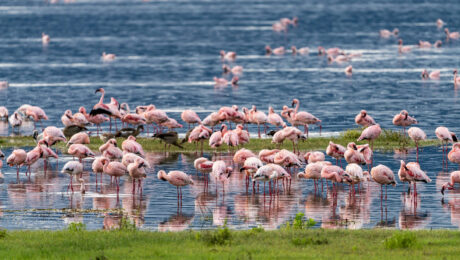
Lake Nakuru National Park: The Jewel of Kenya’s Rift Valley
There is a moment at Lake Nakuru that stops even the most seasoned safari traveller in their tracks. You are standing on the raised viewpoint above the lake’s southern shore — the water spread below you in a wide, shallow, alkaline expanse — and the entire shoreline is pink. Not partially pink. Not pink in patches. Pink from one end of the visible horizon to the other, a solid, continuous, living band of colour that shifts and ripples and occasionally lifts in great rosy clouds as something disturbs the flock.
You are looking at flamingos. Hundreds of thousands of them. Perhaps more than a million. Standing in water so shallow their legs are visible to the knee, their heads down in constant feeding motion, their extraordinary rose-pink plumage reflecting in the lake’s alkaline surface to create a doubling of the spectacle that makes the whole scene feel, for a moment, almost implausibly beautiful.
This is Lake Nakuru at its most iconic — and it is one of the natural world’s great visual experiences.
But Lake Nakuru is considerably more than its flamingos. Lake Nakuru National Park — a compact, fenced, remarkably productive wildlife sanctuary encircling the lake in Kenya’s Great Rift Valley — is one of the most diverse and most accessible wildlife destinations in East Africa. Within its 188 square kilometres, the park supports the Big Five, a remarkable rhino sanctuary protecting both black and white rhinoceros, large populations of lions and leopards, Rothschild’s giraffes introduced to protect a globally endangered subspecies, and over 450 recorded bird species that make it one of Kenya’s premier birding destinations.
The park sits just 160 kilometres northwest of Nairobi — a comfortable 2-hour drive on good tarmac — making it one of the most accessible major wildlife destinations in Kenya and an ideal destination for travellers with limited time, for those combining Nakuru with the Masai Mara or Amboseli, or for anyone seeking an exceptionally rewarding wildlife experience within easy reach of the capital.
A Lake Nakuru safari with Ntungo Wildlife Safaris delivers the full breadth of this extraordinary park — the flamingo spectacle, the rhino sanctuary, the predator-rich forest and grassland, and the stunning Rift Valley scenery — in a seamlessly guided experience that makes the most of every hour in the field.
The Lake: An Alkaline Marvel of the Rift Valley
Lake Nakuru is a shallow, saline-alkaline lake occupying the floor of the Great Rift Valley at an elevation of approximately 1,754 metres above sea level. It is one of a chain of soda lakes running along the Rift Valley floor through Kenya and Tanzania — including Lakes Bogoria, Elementaita, Magadi, and Natron — whose alkaline chemistry, driven by volcanic minerals leaching into the water from the surrounding geology, creates conditions hostile to most forms of aquatic life but extraordinarily productive for the blue-green algae (Arthrospira fusiformis) that grows in vast quantities in the warm, shallow, highly alkaline water.
This algae is the foundation of everything. It is the primary food source for the lesser flamingo (Phoeniconaias minor) — the smaller and more numerous of Africa’s two flamingo species — which filters it from the water using a uniquely designed bill that operates as a specialised pump, drawing water through fine lamellae that trap the algae while expelling the water. A single lesser flamingo consumes approximately 60 grams of algae per day; a flock of a million flamingos processes an extraordinary quantity of biological material from the lake’s surface, making the flamingo population one of the most ecologically significant forces in the Rift Valley’s aquatic ecosystem.
The greater flamingo (Phoenicopterus roseus) — larger, paler, and less numerous — feeds alongside the lesser in the shallower margins, its diet including invertebrates and organic matter in addition to algae. The two species are distinguishable at even moderate distance: the lesser is a deeper, more saturated pink, while the greater is predominantly white with pink wing highlights and a distinctive pink-and-black bill.
The lake’s flamingo population fluctuates significantly over time — driven by changes in water level, algal productivity, and the birds’ own movement patterns between the Rift Valley’s soda lakes. At its peak, Lake Nakuru has hosted over 2 million lesser flamingos simultaneously — the largest flamingo gathering ever recorded anywhere in the world, a spectacle of such biological abundance that it was described by Sir David Attenborough as “one of the world’s greatest wildlife sights.” Numbers today are typically lower than historical peaks — partly due to rising water levels that have diluted the lake’s alkalinity and reduced algal growth — but concentrations of several hundred thousand flamingos remain common, and the spectacle they create is extraordinary by any standard.
Recent years have seen the lake’s water level fluctuate significantly — at times rising to flood previously dry areas of the surrounding woodland, at others receding to concentrate the remaining water and its dependent wildlife in smaller areas. These fluctuations are natural features of Rift Valley lake systems and are accommodated by the wildlife that depends on them, with flamingo populations moving fluidly between Nakuru and the other soda lakes of the system as conditions change.
The Rhino Sanctuary: Kenya’s Most Important Conservation Achievement
If the flamingos are Lake Nakuru’s most visually spectacular residents, the rhinoceros — both species, both present, both actively protected — represents its most profound conservation significance.
Lake Nakuru National Park is one of Kenya’s most important rhino sanctuaries, and a visit here to encounter these extraordinary animals is not simply a wildlife experience. It is an encounter with one of conservation’s most hard-fought and most meaningful ongoing battles — and a reminder, in the most direct and personal way possible, of what we stand to lose and what sustained, determined effort can protect.
Black Rhinoceros
The black rhinoceros (Diceros bicornis) is one of the world’s most critically endangered large mammals. At the height of the poaching crisis in the 1970s and 1980s, the global black rhino population collapsed from an estimated 70,000 individuals to fewer than 2,500 — a decline of over 96% in two decades, driven entirely by poaching for the international horn trade. Kenya’s black rhino population was almost completely eliminated during this period, and the animals that survived did so largely in protected sanctuaries like Lake Nakuru, where anti-poaching enforcement and physical fencing provided a degree of protection unavailable in open landscapes.
Today, Lake Nakuru National Park’s black rhino population — carefully managed, individually monitored, and protected by dedicated ranger teams — is one of the most important in East Africa. The park’s fenced boundary, while a compromise from a purist conservation perspective, has been essential to the black rhino’s survival in this landscape, and the population here contributes significantly to Kenya’s gradual national recovery.
Encountering a black rhinoceros at Lake Nakuru — typically in the park’s more forested western and southern sectors, where the dense acacia and euphorbia woodland provides the cover this species prefers — is an experience of genuine rarity and weight. The black rhino is smaller and more agile than its white cousin, with a distinctive prehensile upper lip adapted for browsing leaves and twigs from woody vegetation rather than grazing grass. It is famously more solitary and more temperamental, and the experience of finding one moving through dense bush — the prehistoric bulk of it, the extraordinary horn, the sudden awareness of being in the presence of an animal that has existed almost unchanged for millions of years but now exists in such desperately reduced numbers — is deeply moving.
White Rhinoceros
The white rhinoceros (Ceratotherium simum) is the larger of the two species — the second-largest land animal in Africa after the elephant, with adult males weighing up to 2,300 kilograms — and a conservation success story of remarkable proportions. The southern white rhinoceros (C. s. simum), once reduced to fewer than 50 individuals at the end of the 19th century, has recovered to a global population of approximately 18,000 through one of the most successful large mammal conservation programmes in history — though the species remains threatened by continuing poaching pressure.
Lake Nakuru’s white rhinoceros population — introduced from South Africa as part of a deliberate restocking programme — grazes the park’s open grassland areas in family groups and as solitary adult males, and is considerably easier to observe than the black rhinoceros. White rhinos are grazers, preferring short grassland habitat, and they are typically found in the park’s northern and eastern sectors where open grassland is most extensive. Their enormous size, squared-off lips adapted for cropping grass, and relatively placid temperament make close observation in open terrain both possible and extraordinary — a white rhino family grazing in the morning light, their great grey forms moving with surprising grace across the short-grass plains, is one of Lake Nakuru’s most magnificent and most photographic wildlife encounters.
Having both rhino species in the same park — available to observe on a single game drive — is a rare privilege that only a handful of destinations in Africa can offer. Lake Nakuru is one of them.
Lions & Leopards: Nakuru’s Predator Story
The introduction of a security fence around Lake Nakuru National Park in the 1980s and 1990s — primarily to protect the rhino population from poaching — had an unexpected and far-reaching effect on the park’s broader ecology: it created a contained, self-sustaining predator-prey system that has produced some of the most reliable and most spectacular predator encounters in Kenya.
Lions
Lake Nakuru’s lion population — resident within the fenced park boundary — has access to a prey base of extraordinary abundance: the park’s large populations of buffalo, waterbuck, zebra, warthog, and impala support a significant lion population that is consistently and reliably encountered on game drives throughout the park.
The park’s varied terrain — open grassland in the north and east, dense euphorbia and acacia woodland in the west and south, rocky escarpments along the park’s elevated margins — creates a diversity of lion habitat that supports multiple pride territories with different hunting strategies and behavioural patterns. Lions in the open grassland areas are easily spotted in classic savannah fashion, particularly in the early morning when they are still active from the night’s hunting. Lions in the woodland and escarpment areas are more cryptic but reward patient searching, particularly along rocky ridgelines where prides rest in the shade during the hottest hours of the day.
The contained nature of the park means that lion densities are relatively high and encounters are among the most reliable in Kenya — a significant advantage for visitors with limited time who want to maximise the quality and frequency of predator sightings.
Leopards
Lake Nakuru is one of Kenya’s finest destinations for leopard encounters — a fact less widely publicised than the flamingos and rhinos but well-known among experienced Kenya safari guides. The park’s dense woodland and rocky escarpment habitat is ideal leopard territory, and the relatively small size of the park combined with a concentrated, well-monitored leopard population makes sightings more predictable than in larger, more open wildlife areas.
Leopards in Lake Nakuru are most frequently encountered in the Makalia and Nderit areas of the park’s southern woodland, where the combination of dense acacia cover, rocky outcrops, and proximity to the lake’s shoreline provides the full range of habitat that leopards require. Dawn and late afternoon drives in these areas — when leopards are most active and most visible — consistently produce sightings, and the park’s several well-known individual leopards, including females with cubs that have become habituated to vehicle presence, allow extended observations of natural behaviour that are among the most rewarding predator encounters in Kenya.
Rothschild’s Giraffe: A Conservation Introduction
Among Lake Nakuru’s most remarkable wildlife stories is the presence of a population of Rothschild’s giraffe (Giraffa camelopardalis rothschildi) — one of the world’s most endangered giraffe subspecies, with fewer than 2,000 individuals remaining in the wild.
Rothschild’s giraffe is distinguished from the more common Maasai giraffe by its paler, more defined coat pattern, its lack of markings below the knee (giving the appearance of wearing white stockings), and by the presence of five ossicones (horn-like protrusions on the head) rather than the usual two. It is a larger subspecies than the Maasai giraffe, and its extraordinarily distinctive appearance makes it immediately recognisable in the field.
The Rothschild’s giraffe population at Lake Nakuru was introduced as part of a deliberate conservation translocation from populations in Uganda — a programme designed to establish a self-sustaining population in a protected Kenyan environment and reduce the vulnerability of a subspecies whose wild numbers had declined to critically low levels. The Nakuru population has grown steadily since introduction and is now a significant component of the park’s conservation mandate — as well as being one of the most visually striking and most photographed wildlife encounters in the park.
Observing Rothschild’s giraffe browsing the acacia canopy in the park’s woodland areas, their extraordinary height allowing access to browse unavailable to any other herbivore, is a wildlife encounter made all the more meaningful by the knowledge of how close this subspecies came to extinction — and how directly the presence of these animals at Nakuru reflects a deliberate and successful conservation intervention.
Birdwatching at Lake Nakuru: A Rift Valley Avian Paradise
With over 450 recorded bird species, Lake Nakuru National Park is one of Kenya’s finest and most rewarding birding destinations — combining the extraordinary spectacle of the flamingo flocks with a remarkable diversity of woodland, grassland, wetland, and cliff-nesting species that make systematic birding in the park an endlessly productive and satisfying experience.
The Flamingos
The lesser and greater flamingos are the park’s most celebrated avian residents, and their extraordinary concentrations on the lake’s alkaline margins are the single most visually spectacular birding experience available anywhere in the Rift Valley. Even for non-birders, the sheer scale of the flamingo gathering — the colour, the movement, the extraordinary collective behaviour of a flock of hundreds of thousands of birds operating as a single fluid organism — is an experience of profound natural wonder.
Pelicans & Waterbirds
The lake and its immediate margins support an exceptional diversity of waterbirds beyond the flamingos. The great white pelican (Pelecanus onocrotalus) is a permanent resident, with large breeding colonies on the lake’s islands producing some of Africa’s most spectacular colonial nesting scenes — hundreds of enormous birds occupying the same small island in a chaos of nest-building, courtship displays, and chick-rearing that is extraordinary to observe at close range from a boat or shoreline viewpoint.
African spoonbills, yellow-billed storks, African openbill storks, marabou storks — their extraordinary bare-skinned heads and pendulous throat pouches giving them an appearance of somewhat lugubrious grandeur — grey herons, goliath herons, black-headed herons, purple herons, little egrets, great white egrets, intermediate egrets, African sacred ibis, hadada ibis, and glossy ibis all inhabit the lake’s margins in significant numbers. The African jacana walks across lily pads on its extraordinary elongated toes. African pygmy geese, knob-billed ducks, spur-winged geese, and Egyptian geese occupy the open water and marshy margins.
Raptors
Lake Nakuru’s varied terrain produces excellent raptor diversity. The African fish eagle — whose call is the definitive sound of African wilderness — is present and vocal throughout the park. The augur buzzard, African hawk-eagle, long-crested eagle, Wahlberg’s eagle, and martial eagle are all recorded regularly. The park’s escarpment cliffs support nesting Verreaux’s eagle (Aquila verreauxii) — one of Africa’s most magnificent raptors, an enormous black eagle that feeds almost exclusively on rock hyrax and soars above the cliffs with a mastery of the air that is extraordinary to observe.
The Verreaux’s eagle owl — Africa’s largest owl, with conspicuous pink eyelids that give it a surprisingly distinguished appearance — is resident in the park’s woodland areas and regularly encountered on night drives or at roost sites in the early morning.
Forest & Woodland Birds
The park’s extensive acacia and euphorbia woodland supports a rich community of forest and woodland birds. The African green pigeon, Ross’s turaco, Hartlaub’s turaco, black-and-white casqued hornbill, African grey hornbill, crowned hornbill, and Silvery-cheeked hornbill are all present in the woodland canopy. The green woodhoopoe moves through the acacia in noisy, clattering family parties. The African broadbill, African paradise flycatcher, and African blue flycatcher inhabit the denser woodland sections. A remarkable diversity of sunbirds — variable sunbird, bronze sunbird, Marico sunbird, beautiful sunbird, scarlet-chested sunbird — feed at flowering trees throughout the park, their metallic plumage catching the light in brief, brilliant flashes.
Flamingo Photography Tips
For photographers visiting specifically for the flamingo spectacle:
Dawn and dusk are the optimal times — the low-angle light transforms the flamingo pink into something extraordinary, and the still morning air means the lake surface acts as a perfect mirror, doubling the visual impact of the flock. The southern and eastern shoreline viewpoints provide the best unobstructed views across the lake to the flamingo concentrations. A telephoto lens of at least 400mm is recommended for tight flamingo portraits; a wider lens captures the full scale of the spectacle. Patience is rewarded — the flocks move, lift, and resettle continuously, and the moments when a disturbance sends thousands of birds airborne simultaneously produce images of breathtaking drama.
The Escarpment & Scenic Viewpoints
Lake Nakuru National Park is not only a wildlife destination — it is a landscape of considerable scenic grandeur, and several viewpoints within the park offer panoramic perspectives on the lake and surrounding terrain that are memorable in their own right.
Baboon Cliff — in the park’s northern sector — provides one of the finest aerial views of the entire lake, the alkaline water spread below and the pink band of flamingos visible along the far shoreline on productive days. The cliff is home to large troops of olive baboons whose social dynamics — grooming sessions, dominance disputes, the chaos of juvenile play — are endlessly entertaining to observe at close range.
Lion Hill — in the park’s northeastern corner — is both a reliable vantage point for lake views and, as its name suggests, a productive area for lion sightings in the surrounding grassland and woodland.
Makalia Falls — in the park’s southern sector — is a beautiful waterfall where the Makalia River tumbles over the escarpment into the wooded valley below, creating a permanently moist and productive microhabitat for forest birds, butterflies, and the various small mammals that inhabit the riparian vegetation.
The Rift Valley escarpment that forms the park’s eastern boundary — visible on clear days as a dramatic wall of rock and forest rising steeply from the valley floor — provides the geological context for the lake and its ecosystem: a reminder that Lake Nakuru sits in one of the earth’s great geological features, a rift in the continental crust that has been forming for over 20 million years and that has shaped the ecology, geography, and human history of East Africa more profoundly than any other single geological phenomenon.
Combining Lake Nakuru with Other Kenya Destinations
Lake Nakuru’s location — 160 kilometres northwest of Nairobi on the main highway toward Kisumu — makes it one of the most easily combined destinations in Kenya’s wildlife circuit.
Lake Nakuru + Masai Mara: The classic Kenya northern circuit combination, connecting the Rift Valley soda lake spectacle and rhino sanctuary with the open savannah of the Mara and the Great Migration. Typically 2 nights at Nakuru followed by 3–4 nights in the Mara, or in reverse. Accessible by road (via the B3 highway through Narok) or by a combination of road transfer to Nakuru and light aircraft to the Mara.
Lake Nakuru + Amboseli: A compelling combination connecting the Rift Valley flamingo and rhino experience with Amboseli’s extraordinary elephant population and Kilimanjaro views. Typically connected via Nairobi with a road or air transfer between the two destinations.
Lake Nakuru + Lake Naivasha: Lake Naivasha — a freshwater lake approximately 40 kilometres south of Nakuru — is one of Kenya’s most beautiful and most productive birding destinations, home to enormous concentrations of waterbirds, a significant hippo population, and the famous Crescent Island wildlife sanctuary. A combined Nakuru and Naivasha itinerary of 2–3 days provides an outstanding Rift Valley lakes experience and pairs exceptionally well with a Masai Mara safari as a complete Kenya journey.
Lake Nakuru + Lake Bogoria: Lake Bogoria — 50 kilometres north of Nakuru — is another Rift Valley soda lake, famous as one of the most reliable alternative sites for lesser flamingo concentrations when water levels at Nakuru are unfavourable, and for its extraordinary geysers and hot springs that erupt along the lake’s western shoreline in a spectacle of steaming, bubbling thermal activity that is entirely unique in East African wildlife travel.
Practical Information
Getting There:
By Road: Lake Nakuru National Park is approximately 160 kilometres from Nairobi via the A104 highway — a comfortable 2-hour drive on good tarmac. The park’s main Lanet Gate is situated on the park’s northern boundary near Nakuru town. A 4WD vehicle is recommended for game drives within the park, particularly in the wet season when some tracks become challenging.
By Air: Nakuru Airport receives occasional charter and scheduled light aircraft flights from Nairobi Wilson Airport. For most visitors, however, road transfer from Nairobi is the most convenient and most cost-effective option given the short distance and good road conditions.
Park Entry Fees: Lake Nakuru National Park charges a daily conservation fee for all visitors. Current fees are available from Kenya Wildlife Service (kws.go.ke). Fees are included in all Ntungo Wildlife Safaris packages.
Best Time to Visit: Lake Nakuru can be visited year-round. Flamingo concentrations fluctuate with the lake’s water level and alkalinity — dry season periods (June–September and January–February) typically produce the most concentrated flamingo gatherings. Rhino, lion, and leopard sightings are excellent year-round. The wet season (March–May and October–November) produces lush green landscapes and excellent birdlife but some tracks within the park may be challenging.
Duration: A minimum of 1 full day (2 nights) allows comprehensive coverage of the park’s key areas and wildlife. 2 full days (3 nights) allows more relaxed game driving and greater flexibility to wait for specific wildlife encounters — particularly recommended for birders and photographers.
Accommodation: Lake Nakuru’s accommodation ranges from comfortable midrange lodges and tented camps within and adjacent to the park to luxury properties with extraordinary views over the lake and escarpment.
Midrange: Lake Nakuru Lodge, Sarova Lion Hill Game Lodge, Flamingo Hill Tented Camp Luxury: Mbweha Camp, Sopa Lodge Nakuru, Lake Nakuru Sopa Lodge
Wildlife Summary: What to Expect at Lake Nakuru
| Species | Presence | Best Viewing Area |
|---|---|---|
| Lesser flamingo | Year-round (variable) | Lake shoreline, all sectors |
| Greater flamingo | Year-round | Lake shoreline, northern margins |
| White rhinoceros | Year-round | Northern & eastern grassland |
| Black rhinoceros | Year-round | Western & southern woodland |
| Lion | Year-round | Kasenyi plains & escarpment |
| Leopard | Year-round | Southern woodland & escarpment |
| Rothschild’s giraffe | Year-round | Woodland areas, all sectors |
| Cape buffalo | Year-round | Open grassland & woodland |
| Waterbuck | Year-round | Lakeshore & grassland margins |
| Olive baboon | Year-round | Baboon Cliff & woodland |
| African fish eagle | Year-round | Lake margins & woodland |
| Great white pelican | Year-round | Lake islands & open water |
| Verreaux’s eagle | Year-round | Eastern escarpment cliffs |
| Marabou stork | Year-round | Lakeshore & woodland |
Why Lake Nakuru Belongs on Every Kenya Safari
In a country of extraordinary wildlife destinations, Lake Nakuru National Park occupies a unique position — compact enough to be thoroughly explored in two days, accessible enough to fit into almost any Kenya itinerary, and rich enough in wildlife diversity and scenic beauty to stand comfortably alongside Kenya’s most celebrated parks as a destination of genuine world-class significance.
The flamingo spectacle is unlike anything else in East Africa. The rhino sanctuary is one of the continent’s most important conservation achievements. The predator encounters — both lion and leopard — are among the most reliable in Kenya. The birdlife is extraordinary. And the setting — a shimmering alkaline lake on the floor of the Great Rift Valley, framed by escarpment walls and ancient acacia woodland — is one of the most beautiful in the entire region.
Lake Nakuru is not a compromise destination for travellers who cannot make it to the Masai Mara. It is a complete, self-contained, and deeply rewarding wildlife experience in its own right — one that every visitor to Kenya deserves to include in their itinerary.
The flamingos are waiting. The rhinos are grazing. And the lake is pink.
Contact Ntungo Wildlife Safaris to incorporate Lake Nakuru National Park into your Kenya safari itinerary. We offer standalone Nakuru packages, combined Rift Valley lakes itineraries, and full Kenya northern circuit programmes connecting Nakuru with the Masai Mara, Amboseli, Samburu, and the Kenya coast.
📩 info@ntungosafaris.com 🌐 www.ntungosafaris.com 📞 +256 771 399299 / +256 706 772990
Peak season accommodation in the Masai Mara sells out 6–12 months in advance. Early booking is strongly recommended for travel between July and October.
- Published in Destinations, National Parks, Wildlife Safaris
Masai Mara Safari Kenya
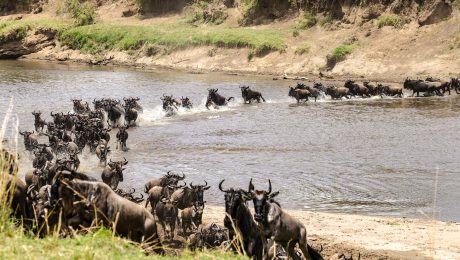
Masai Mara Safari: Where the Wild Things Are — and Always Have Been
There is a particular quality of light in the Masai Mara at dawn that does something to a person. It arrives slowly — a pale gold seeping across the horizon before the sun itself appears — and in the moments before full daylight, the entire savannah exists in a kind of suspended animation. The grass holds the dew. The acacia trees are dark silhouettes. And somewhere out there, in the blue-grey distance, a lion is finishing the night’s work while a million wildebeest are beginning the day’s journey.
You are sitting in a open-sided vehicle. Your coffee is still warm. Your guide is listening.
This is the Masai Mara — and there is nowhere else on earth quite like it.
Kenya’s most celebrated national reserve covers 1,510 square kilometres of southwestern Kenya’s Rift Valley — a vast, open, rolling grassland ecosystem that forms the northern extension of the Serengeti-Mara system, one of the last great intact wildlife areas remaining on earth. Together, the Masai Mara National Reserve and its surrounding network of private conservancies protect a landscape of extraordinary ecological richness: home to more than 95 mammal species, over 570 bird species, and the annual spectacle of the Great Wildebeest Migration — a movement of over 1.5 million animals that is, by any measure, the greatest wildlife event on the planet.
But the Masai Mara is more than a destination. It is an argument — one that wildlife, landscape, and human culture make together, in different ways on every visit — for why wild places matter and why their protection is one of the most important undertakings of our time.
A Masai Mara safari with Ntungo Wildlife Safaris puts you inside that argument. And it will change the way you think about the world.
The Landscape: Understanding What You Are Looking At
Before the wildlife, there is the land — and understanding the Masai Mara’s landscape is the first step toward understanding why it produces the wildlife encounters it does.
The reserve sits on the floor and eastern escarpment of the Great Rift Valley at an elevation of approximately 1,500 metres above sea level. This elevation gives the Mara its distinctive climate — warm by day, cool at night, with a reliable seasonal rainfall pattern that drives the vegetation cycles upon which the entire ecosystem depends. The long rains of March to May and the short rains of October to November transform the landscape from golden brown to vivid green, triggering grass growth that pulls the migration herds northward and southward across the ecosystem in their ancient, rain-following circuit.
The terrain itself is deceptively varied. The open grassland plains of the central and southern Mara — the landscape most associated with the Mara in photographs and documentaries — are in fact just one of several distinct habitat types. The Mara River and its tributary the Talek River cut through the reserve from east to west, their banks lined with dense riverine forest of fig, croton, acacia, and yellow fever tree that provides critical habitat for leopards, olive baboons, and an extraordinary concentration of forest birds. The Siria Escarpment in the reserve’s western section — a dramatic wall of rock and forest rising above the Mara Triangle — creates its own microclimate and wildlife community. The Oloololo Gate area in the northwest holds some of the Mara’s finest predator territories, while the Musiara Marsh in the north — the home of the famous Marsh Pride — is one of Africa’s most consistently productive lion viewing areas.
And beyond the national reserve boundary, the private conservancies — established on Maasai community land through conservation agreements that pay landowners directly — add a further vast area of protected habitat in which exclusive, low-density safari experiences with night drives, off-road driving, and bush walks are available to guests of the conservancy camps.
Understanding these different zones and their respective wildlife communities is what separates an expert-guided Masai Mara safari from a basic game drive. Your Ntungo guide knows where the lion prides are denning this week, which section of the Mara River the hippos are currently defending, where the cheetah coalition was seen hunting yesterday morning, and which conservancy track is most likely to produce a leopard sighting at dawn. That knowledge — accumulated through years of guiding in this specific landscape — is what the Masai Mara experience is ultimately built on.
The Great Migration: Nature’s Most Ambitious Journey
The Great Wildebeest Migration is the reason many people come to the Masai Mara — and it is, without qualification or exaggeration, the greatest wildlife spectacle on earth.
The migration is a continuous, year-round movement of approximately 1.5 million wildebeest, 400,000 zebra, and 200,000 Thomson’s gazelle around the Serengeti-Mara ecosystem — a clockwise annual circuit covering over 3,000 kilometres that is driven by a single, relentless imperative: the search for fresh grazing grass, which grows only where and when it has recently rained. The herds follow the rain with an instinct refined over millions of years of evolutionary pressure, and the result is one of the most spectacular and most ancient natural phenomena on earth — a movement of animals so vast that it shapes the entire ecology of the ecosystem it passes through.
The Masai Mara receives the migration at the dramatic northern apex of this circuit — typically between July and October — when the vast northward-moving herds encounter the obstacle that has made the migration world-famous: the Mara River.
The Mara River Crossings
The Mara River is approximately 30 to 50 metres wide at its principal crossing points — a muscular, fast-flowing, brown-watered river fringed by dense riparian forest and harbouring some of the largest Nile crocodiles in East Africa. During the dry season, when the river is at its lowest and most crossable, the migration herds press northward from Tanzania and arrive at the southern bank in their hundreds of thousands.
What happens next is not predictable, not schedulable, and not something that any description fully prepares you for.
The herd masses on the bank. The animals at the front press forward under the weight of those behind, then suddenly reverse, causing a wave of panic that ripples back through the crowd. Crocodiles position themselves in the water with an intelligence that seems almost tactical — holding in the deeper channels where the crossing animals are most vulnerable. And then, with a logic that belongs entirely to the collective and not to any individual, the herd commits.
The crossing begins as a trickle and becomes, within seconds, an avalanche. Thousands of animals launch themselves off the bank simultaneously, the river churning white with their passage. Crocodiles strike from below the surface with explosive speed. Animals lose their footing on the far bank’s steep, slippery clay walls and are swept downstream. The noise — hooves on rock, the churning water, the panicked calling of separated animals — is extraordinary and continuous. And the smell, the dust, the spray, the sheer overwhelming physicality of being present at a Mara River crossing is something that no wildlife film has ever fully communicated.
Crossings can last from three minutes to three hours. A single river section may see multiple crossings in a single day during peak season, or go ten days without any crossing at all. The unpredictability is both the frustration and the glory of the experience — the wildebeest cross on their own terms, in their own time, and the role of the observer is simply to be present and ready.
Your Ntungo guide’s knowledge of the herd’s current position, the river’s recent crossing history, and the local ranger network’s real-time intelligence maximises the time spent at the most productive crossing points — giving you the best possible chance of witnessing this extraordinary spectacle in its full, unedited drama.
The Migration Beyond the Crossings
The Mara River crossings are the migration’s most dramatic single moment — but the migration’s presence in the Masai Mara transforms the entire ecosystem experience for the months it is here, not just at the river.
When the herds are in the Mara — typically July through October, though this varies with the rains — the reserve’s open grassland plains are transformed. The horizon is not empty savannah. It is wildebeest, from one edge of vision to the other, their movement and their calling creating a living landscape of extraordinary scale and energy. Predator activity increases dramatically as lions, cheetahs, leopards, hyenas, and wild dogs capitalise on the abundance. Vultures spiral above kills in their hundreds. The entire ecosystem operates at an intensity and a productivity that is qualitatively different from any other time of year.
And between crossings — during the periods when the herd is resting, grazing, or building toward the next river commitment — the behaviour of the assembled animals is itself endlessly compelling to observe: the complex social dynamics of mixed wildebeest and zebra herds, the alarm systems that ripple through a thousand animals simultaneously when a predator is spotted, the extraordinary patience of the crocodiles holding station in the river as the herd masses above them.
The Big Five in the Masai Mara
The Big Five — lion, elephant, Cape buffalo, leopard, and rhinoceros — are all present in and around the Masai Mara ecosystem, though rhino sightings require specific knowledge of the populations present in the Mara’s private conservancies and the Ol Pejeta Conservancy further north.
Lion
The Masai Mara supports one of the highest concentrations of lions (Panthera leo) of any protected area in Africa. The reserve and its adjacent conservancies are home to multiple well-documented prides, and lion sightings on the Mara are among the most reliable and most intimate in East Africa — the lions’ long habituation to safari vehicles allows an extraordinary quality of close observation that simply is not available in less visited wildlife areas.
The Marsh Pride — resident in the Musiara Marsh area and made internationally famous through decades of BBC wildlife filming — is the Mara’s most celebrated lion family, and their descendants continue to hold territory in the northern section of the reserve. Other major prides hold territories across the Mara Triangle, the Sekenani area, and the private conservancies — your guide’s up-to-date knowledge of current pride locations and dynamics is essential for maximising lion encounters.
Lion behaviour in the Mara is varied and endlessly compelling: coalition males patrolling territory boundaries with the focused intensity of animals whose social position depends on constant vigilance, prides with young cubs providing extraordinary scenes of family interaction and play, and the full drama of a Mara lion hunt — typically conducted at dawn or dusk, often targeting wildebeest or zebra, and occasionally resulting in kills visible from the vehicle at close range — is among the most powerful wildlife experiences in East Africa.
Leopard
The leopard (Panthera pardus) is the Masai Mara’s most consistently elusive big cat — and for that reason, the most satisfying to find. The Mara’s riverine forest along the Mara and Talek rivers provides ideal leopard habitat, and the reserve’s several well-known individual leopards — particularly the females with dependent cubs that use the riverine fig trees as both resting sites and cub-raising platforms — are encountered with increasing frequency by experienced guides who know their home ranges and daily patterns.
Dawn and dusk drives along the river corridors are the most productive approach — leopards are most active in the low light of morning and evening, and their eye-shine in the vehicle’s spotlight on a night drive (available in the private conservancies) dramatically increases encounter frequency. A leopard in full daylight, draped with characteristic elegance across a fig tree branch above the river, with a kill cached in the branches above it, is one of the Masai Mara’s most photographic and most coveted wildlife moments.
Cheetah
The cheetah (Acinonyx jubatus) is perhaps the Mara’s most reliably and most easily observed big cat — the open grassland terrain of the reserve’s central plains provides ideal cheetah habitat, excellent visibility for spotting them, and the full unobstructed view of a cheetah hunt that is impossible in denser bush environments.
The Mara’s several well-known cheetah coalitions — groups of two to five males that hunt cooperatively and hold shared territories across the open plains — are encountered regularly on morning game drives, particularly in the Olare Motorogi and Naboisho conservancy areas. Coalition hunting is more powerful and more frequently successful than solitary hunting, and witnessing a coalition bring down a Thomson’s gazelle in a coordinated pursuit across the open grassland — the acceleration, the teamwork, the explosive conclusion — is one of the Mara’s most electrifying wildlife encounters.
Female cheetahs with cubs are equally compelling to observe — the demands of raising cubs in a landscape full of competing predators that will kill cheetah cubs given the opportunity creates a constant, visible tension in a mother cheetah’s behaviour that is fascinating to watch over an extended observation period.
Elephant
African elephants (Loxodonta africana) move through the Masai Mara in family groups, feeding across the woodland margins, open grassland, and riverine forest with the measured, purposeful dignity of animals that have inhabited this landscape for hundreds of thousands of years. The Mara’s elephant population is not as large as those of parks like Amboseli or Tsavo, but encounters with family groups — particularly at the Mara River margins where elephants drink and occasionally swim — are consistently excellent and often extended.
The interaction between elephants and the migration herds is one of the Mara’s more unexpected wildlife dynamics — elephants moving calmly through wildebeest aggregations of thousands of animals, the herds parting to allow passage and closing again behind, a demonstration of the complex social signalling between species that characterises a mature, intact ecosystem.
Buffalo
Cape buffalo (Syncerus caffer) are among the Masai Mara’s most abundant large mammals — enormous bachelor herds and mixed breeding herds move across the grassland plains in aggregations that can number in the hundreds, and their interactions with the Mara’s lion prides are some of the most dramatic predator-prey encounters in the reserve. A buffalo herd that turns on pursuing lions — the roles of predator and prey suddenly, violently reversed — is one of the African savannah’s most extraordinary wildlife reversals, and it is not uncommon in the Mara where buffalo herds are large enough and bold enough to mount effective collective defence.
The Masai Mara Private Conservancies
For many experienced safari travellers, the private conservancies adjoining the Masai Mara National Reserve represent the finest safari experience in Kenya — combining the wildlife richness of the broader Mara ecosystem with the exclusivity, intimacy, and experiential depth that the national reserve itself cannot fully provide.
The conservancies were established through agreements between Maasai landowners, conservation organisations, and safari operators that provide direct, meaningful financial payments to landowners in exchange for wildlife-friendly land use. The model is one of conservation’s most successful examples of aligning community economic interests with wildlife protection, and the results — both for wildlife and for the quality of safari experience — are extraordinary.
Within the conservancies, guests of the resident camps benefit from:
Night game drives — conducted after dark with spotlights, revealing the nocturnal world of leopards, servals, civets, genets, honey badgers, porcupines, and the various owl species that make the Mara night a rich and completely different wildlife environment from the day.
Off-road driving — the ability to leave the established tracks and follow wildlife across open terrain, allowing precise positioning for photography and sustained observation of animal behaviour that is impossible when constrained to a fixed track.
Bush walks — guided on foot through the conservancy, with an armed ranger and experienced guide, providing a perspective on the ecosystem — its smaller details, its sounds, its smells, its tracks and signs — that no vehicle-based safari can replicate.
Exclusive access — conservancy camps typically host very few guests, and the conservancy land itself is accessed only by those guests. The experience of a game drive with no other vehicles, no queue at a lion sighting, no competition for position at the river — is increasingly rare in popular safari destinations and is one of the conservancy’s most valued attributes.
The principal conservancies adjacent to the Masai Mara include Naboisho (the largest, at over 50,000 acres), Olare Motorogi, Mara North, Ol Kinyei, Lemek, and Mara Nyika — each with its own character, terrain, and wildlife community.
Hot Air Balloon Safari: The Mara from Above
The Masai Mara hot air balloon safari is one of East Africa’s most iconic and most sought-after experiences — a dawn flight above the plains that offers a perspective on the ecosystem available in no other way and creates memories of extraordinary vividness and beauty.
The experience begins in the darkness before dawn, when guests are collected from their camp and driven to the launch site. The balloon’s inflation — a 20-minute process of controlled gas and enormous fabric — is itself a spectacle, the envelope glowing in the dark like a small second sun. As the balloon becomes airborne and the burner’s roar settles into silence, the Mara plains emerge from darkness below: gold and grey in the pre-sunrise light, vast and quiet and alive.
The flight typically lasts 60 to 90 minutes, drifting at the mercy of the wind between 50 and 300 metres above the plains. From this altitude, the scale of the Mara becomes viscerally apparent — the vast grassland stretching to every horizon, the Mara River a dark ribbon through the centre, the distant escarpment of the Siria hills catching the first direct light of the day. Below the basket, wildlife moves in its morning patterns: elephant families processing toward water, a lion pride resting after a night’s hunting, wildebeest herds streaming across the golden grass in their ancient, purposeful way.
Landing is wherever the wind takes you — typically in the open grassland, where a ground crew awaits with the balloon’s transport vehicle and the famous champagne bush breakfast: tables laid in the field, silver cutlery, fresh fruit and eggs and coffee, with the savannah on all sides and the morning’s memories still vivid and warm. It is one of the most civilised and most perfectly placed meals in Africa.
Maasai Culture: The People Who Made the Mara
The Maasai have inhabited the Rift Valley grasslands of Kenya and Tanzania for centuries — and their presence in and around the Masai Mara is not merely a cultural backdrop to the wildlife experience. It is a fundamental part of what the Mara is and how it came to be.
The traditional Maasai pastoral economy — centred on the keeping of large cattle herds as the primary measure of wealth, status, and identity — created the open grassland landscape that the Mara’s wildlife depends on. The Maasai did not farm the land, did not cultivate it, and did not eliminate its wildlife. They grazed it, moved across it seasonally, and in doing so maintained the open savannah ecosystem that supports the migration and its associated predator community.
Today, the relationship between the Maasai and the Mara’s wildlife is evolving — from one of competition (lions that killed cattle were hunted; elephants that damaged crops were driven off) toward one of increasing collaboration, as the conservancy model demonstrates to Maasai landowners that wildlife-based tourism generates more reliable income per acre than any alternative land use. The conservancies are paying landowners directly, employing community members as guides, rangers, and camp staff, and funding education and healthcare in surrounding villages — creating the economic foundation for a genuinely sustainable human-wildlife coexistence.
A visit to a Maasai manyatta (traditional village) through Ntungo Wildlife Safaris is conducted with genuine respect for and benefit to the community involved. The adumu jumping ceremony, the explanation of the age-set warrior system, the extraordinary ecological knowledge embedded in generations of Maasai pastoralism, and the warmth of a community that has maintained its cultural identity while navigating extraordinary historical change — all of this adds an irreplaceable human dimension to the wildlife experience of the Mara.
When to Visit the Masai Mara
The Masai Mara rewards visitors in every month of the year — but different seasons offer genuinely different experiences, and matching your travel timing to your specific wildlife priorities is important.
July — October: Peak Migration Season
The Mara River crossings are at their most frequent and most dramatic. The plains carry enormous wildebeest herds. Predator activity is at its annual peak. This is the busiest and most expensive season — book accommodation 6 to 12 months in advance for the best properties, and consider a conservancy stay to escape the vehicle concentrations at crossing points within the national reserve.
January — March: Calving Season & Short Dry Season
The migration herds are on the southern Serengeti plains for the calving season — a different kind of spectacle, not visible from the Mara itself, but the reserve’s resident wildlife is excellent and visitor numbers are significantly lower than peak season. The short dry season of January to February produces very good game viewing conditions with shorter grass and reliable weather.
June & November: Transitional Months
June marks the beginning of the migration’s northward movement and offers the first arriving herds in the Mara alongside excellent year-round resident wildlife. November sees the herds beginning their return southward after the short rains. Both months offer good wildlife, reasonable value, and moderate visitor numbers.
April — May: The Green Season
The long rains transform the Mara into a landscape of vivid, luminous green — extraordinarily beautiful and almost entirely empty of visitors. Roads can be challenging, but the wildlife is present and active, the birdlife is at its most diverse with migratory species in residence, and the experience of an almost empty Mara — no vehicle queues, no competition for sightings, just you and your guide and the landscape — is one that experienced safari travellers prize highly. Significant accommodation discounts are typically available during this period.
Getting to the Masai Mara
By Air (Recommended): Daily scheduled flights operate between Nairobi Wilson Airport and multiple Mara airstrips (Keekorok, Ol Kiombo, Mara North, Naboisho, Olare Orok) with flight times of approximately 45 minutes. Airstrip transfers to specific camps are arranged by the accommodation. Flying is strongly recommended — it transforms a 5–6 hour road journey into a 45-minute scenic flight and dramatically extends the time available for wildlife viewing.
By Road: The drive from Nairobi to the Masai Mara takes approximately 5–6 hours via the B3 highway through Narok. The road is partially unpaved in its final section and can be challenging during the rains. Road transfers are typically arranged for travellers combining the Mara with other Kenya destinations accessible by road.
Planning Your Masai Mara Safari with Ntungo Wildlife Safaris
Every Masai Mara safari we design at Ntungo Wildlife Safaris begins with a conversation — about your travel dates, your wildlife priorities, your experience level, your accommodation preferences, and what you most want to take home from the Mara. From that conversation, we build an itinerary that is genuinely tailored to you: the right camps, the right guides, the right balance of national reserve and conservancy, and the right timing within the season to maximise your specific experience.
We work across all accommodation tiers — from comfortable midrange tented camps that deliver an authentic Mara experience without the premium price point, to the most exclusive and award-winning luxury conservancy camps in the ecosystem. We manage all flights, ground transfers, park fees, and logistics — so that your attention, from the moment you arrive at Wilson Airport to the moment you leave, is entirely on the experience in front of you.
The Masai Mara is not a destination you visit once and cross off a list. It is a place that calls people back — again and again, in different seasons, from different camps, with different guides revealing different layers of the same extraordinary landscape.
Come for the migration. Stay for everything else.
Accommodation Options
Midrange
Mara Intrepids Tented Camp — A well-established camp on the Talek River with comfortable tented accommodation, excellent guiding, and a strong wildlife programme. Ideal for first-time Mara visitors seeking a reliable, full-service experience at a reasonable price point.
Mara Serena Safari Lodge — A landmark Mara property on a kopje overlooking the plains, offering good facilities, reliable wildlife access, and competitive pricing for a mid-level Mara experience.
Fig Tree Camp — A characterful camp on the Talek River offering comfortable tented rooms, good food, and excellent access to the central Mara wildlife areas.
Midrange Masai Mara safari from USD 1,200 per person for 3 nights, including accommodation, guiding, park fees, and airstrip transfers.
Luxury
Angama Mara — Perched on the edge of the Oloololo Escarpment with the most dramatic view over the Mara of any camp in the ecosystem, Angama Mara is widely regarded as one of the finest safari properties in Africa. Two separate camps of 15 tents each, extraordinary food, outstanding guiding, and a location that produces some of the most memorable game drives in the Mara.
Mahali Mzuri — Sir Richard Branson’s Virgin Limited Edition property in the Olare Motorogi Conservancy — 12 tented suites with private decks overlooking the conservancy plains, exclusive access, night drives, and exceptional food and service.
&Beyond Bateleur Camp — A classic, intimate camp of 9 tents in a private concession bordering the national reserve, with a long history and a reputation for exceptional guiding and wildlife access.
Sanctuary Olonana — On the banks of the Mara River in the private Mara North Conservancy, offering exclusive access, night drives, and the full conservancy experience alongside the Mara River’s extraordinary wildlife.
Luxury Masai Mara safari from USD 3,500 per person for 3 nights, including accommodation, guiding, park fees, conservancy fees, airstrip transfers, and balloon safari.
To begin planning your Masai Mara safari, contact Ntungo Wildlife Safaris. We are available by email, phone, or WhatsApp and will respond to all enquiries within 24 hours with a personalised itinerary proposal.
📩 info@ntungosafaris.com 🌐 www.ntungosafaris.com 📞 +256 771 399299 / +256 706 772990
Peak season accommodation in the Masai Mara sells out 6–12 months in advance. Early booking is strongly recommended for travel between July and October.
- Published in Destinations, National Parks, Wildlife Safaris
Kidepo Valley National Park
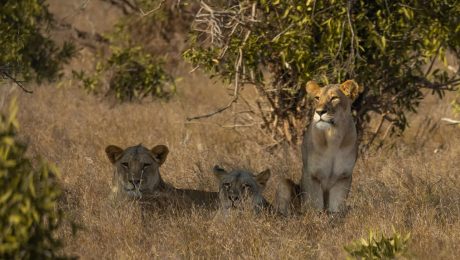
Guide to Kidepo Valley National Park: Uganda’s Untamed Wilderness
Hidden in the far northeastern corner of Uganda, bordering South Sudan and Kenya, lies one of Africa’s most untouched and spectacular safari destinations—Kidepo Valley National Park. Remote, rugged, and incredibly beautiful, Kidepo is often described as Uganda’s best-kept secret.
Unlike the more visited parks in the country, Kidepo offers a raw and authentic wilderness experience. Vast open plains stretch to the horizon, dramatic mountain ranges frame the landscape, and wildlife roams freely with little human interference. For travelers seeking solitude, adventure, and a true connection with nature, Kidepo Valley National Park is unmatched.
Introduction to Kidepo Valley National Park
Established in 1962, Kidepo Valley National Park covers approximately 1,442 square kilometers of semi-arid savannah, rocky outcrops, and seasonal rivers. It is one of the most isolated national parks in East Africa, which has helped preserve its pristine condition and unique ecosystem.
The park is named after the seasonal Kidepo River, which flows through the northern valley, creating a dramatic dry riverbed during most of the year. Another key feature is the Narus Valley, a permanent water source that attracts large concentrations of wildlife.
Kidepo’s remoteness is part of its charm—it offers an exclusive safari experience far from the crowds.
Location and How to Get There
Kidepo Valley National Park is located in the Karamoja region of northeastern Uganda, one of the most culturally rich and least explored parts of the country.
By Road
The journey from Kampala takes approximately 10–12 hours, passing through Gulu or Moroto. Though long, the drive offers a fascinating glimpse into rural Uganda and the unique Karamoja landscape.
By Air
Domestic flights from Entebbe to Apoka Airstrip provide a quicker and more comfortable option, with stunning aerial views of the terrain.
Landscape and Scenery
Kidepo Valley National Park is widely regarded as one of the most scenic parks in Africa.
The park is framed by rugged mountain ranges, including the Morungole Mountains, which rise dramatically above the plains. The vast savannah is dotted with acacia trees, rocky kopjes, and seasonal rivers.
During the dry season, the Kidepo River transforms into a dry, sandy riverbed lined with palm trees—a striking and almost surreal landscape.
In contrast, the Narus Valley remains green year-round, attracting wildlife and providing excellent game viewing opportunities.
Wildlife in Kidepo Valley National Park
Kidepo boasts one of the richest wildlife populations in Uganda, including species not commonly found in other parts of the country.
Key Wildlife Highlights:
- Lions, often seen resting on الصخور or hunting in the plains
- Leopards and cheetahs (rare elsewhere in Uganda)
- Elephants and buffaloes
- Giraffes and zebras
- Ostriches, unique to this region in Uganda
- Hyenas, jackals, and various antelope species
The park is home to over 75 mammal species, making it a top destination for wildlife enthusiasts.
Game Drives in Kidepo
Game drives are the primary way to explore the park, particularly in the Narus Valley where animals gather around water sources.
Best Game Drive Times:
- Early morning for predators
- Late afternoon for general wildlife viewing
Because of the park’s low visitor numbers, game drives in Kidepo feel exclusive and intimate. You may go hours without seeing another vehicle, enhancing the sense of wilderness.
Birdwatching in Kidepo
Kidepo Valley National Park is also a paradise for birdwatchers, with over 470 recorded bird species.
Notable Birds:
- Ostriches
- Secretary birds
- Kori bustards
- Abyssinian ground hornbills
The park’s diverse habitats—from savannah to river valleys—support a wide variety of birdlife.
Cultural Encounters with the Karamojong
A visit to Kidepo is not complete without experiencing the culture of the Karamojong people, one of Uganda’s most traditional communities.
Cultural Experiences Include:
- Visiting traditional manyattas (homesteads)
- Learning about pastoral lifestyles
- Traditional dances and storytelling
The nearby Ik people, living in the Morungole Mountains, offer another unique cultural experience, providing insight into one of Uganda’s smallest ethnic groups.
Best Time to Visit
Kidepo Valley National Park can be visited year-round, but the best time is during the dry seasons:
- September to March
During this period, wildlife gathers around water sources, making it easier to spot animals.
The wet season, while more challenging for travel, brings lush greenery and dramatic skies.
Accommodation Options
Despite its remote location, Kidepo offers a range of accommodations:
Luxury Lodges
- Stunning views of the savannah
- High-end comfort in the wilderness
Mid-Range Lodges
- Comfortable and well-located
- Ideal for most travelers
Budget Options
- Campsites and basic bandas
Most accommodations are located near Apoka, the park’s main tourism hub.
Why Visit Kidepo Valley National Park?
Kidepo stands out for its authenticity and untouched beauty. It offers:
- A true off-the-beaten-path safari
- Unique wildlife not found elsewhere in Uganda
- Stunning and dramatic landscapes
- Rich cultural experiences
It is a destination for travelers who want more than just a safari—it is for those seeking adventure and discovery.
Combining Kidepo with Other Destinations
While remote, Kidepo can be combined with other Ugandan destinations:
- Murchison Falls National Park for classic wildlife and waterfalls
- Bwindi Impenetrable National Park for gorilla trekking
- Queen Elizabeth National Park for diverse ecosystems
This creates a comprehensive safari itinerary across Uganda.
- Published in Destinations, National Parks
Bwindi Impenetrable National Park
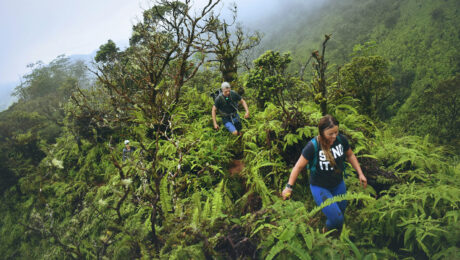
Guide to Bwindi Impenetrable National Park
Deep in the southwestern corner of Uganda lies one of Africa’s most extraordinary natural treasures—Bwindi Impenetrable National Park. Renowned worldwide for its mountain gorillas, this UNESCO World Heritage Site offers an unparalleled wildlife experience, combining ancient rainforest, rich biodiversity, and life-changing encounters with one of humanity’s closest relatives.
If you are dreaming of an authentic African safari that goes beyond traditional game drives, Bwindi is a destination that delivers adventure, conservation, and deep connection with nature.
Introduction to Bwindi Impenetrable National Park
Bwindi Impenetrable National Park covers approximately 331 square kilometers of dense tropical rainforest, making it one of the oldest ecosystems in Africa, estimated to be over 25,000 years old. The park’s name “impenetrable” reflects its thick vegetation, steep ridges, and tangled undergrowth, which once made it extremely difficult to explore.
Today, Bwindi stands as a global conservation success story, protecting nearly half of the world’s remaining mountain gorilla population. These gentle giants are the main attraction, drawing visitors from across the globe for a rare and intimate wildlife experience.
Location and How to Get There
Bwindi is located in southwestern Uganda, near the borders of Rwanda and the Democratic Republic of Congo. The park is divided into four main sectors: Buhoma, Ruhija, Rushaga, and Nkuringo, each offering unique trekking experiences.
By Road
Traveling from Kampala or Entebbe takes approximately 8–10 hours, depending on the sector. Many travelers combine this journey with a stop at Lake Mburo National Park or Queen Elizabeth National Park.
By Air
Domestic flights from Entebbe International Airport to nearby airstrips such as Kihihi or Kisoro significantly reduce travel time, followed by a short road transfer to your lodge.
Why Bwindi Is Famous Worldwide
The global fame of Bwindi stems from its population of mountain gorillas, one of the rarest primates on Earth. Gorilla trekking here is not just a wildlife activity—it is a once-in-a-lifetime experience.
Meeting a gorilla family in their natural habitat is both humbling and emotional. Watching them feed, groom, and interact offers a profound glimpse into their social structure and intelligence.
Gorilla Trekking Experience
What Is Gorilla Trekking?
Gorilla trekking involves hiking through dense forest terrain in search of a habituated gorilla family. Each trek is led by experienced guides and trackers who locate the gorillas based on their movements.
The trek can last anywhere from 2 to 8 hours depending on the location of the gorillas, but the reward is extraordinary: one full hour spent in close proximity to these magnificent creatures.
What to Expect
The experience begins early in the morning with a briefing at the park headquarters. Visitors are grouped into small teams and assigned a specific gorilla family.
As you hike through the forest, you will encounter diverse flora and fauna, hear birds calling overhead, and feel the thrill of tracking wildlife. Once the gorillas are located, you will have one hour to observe and photograph them while maintaining a safe distance.
Gorilla Trekking Rules
To ensure the safety of both visitors and gorillas, strict guidelines are followed:
- Maintain a distance of at least 7 meters
- Do not visit if you are sick
- Avoid sudden movements or loud noises
- Follow your guide’s instructions at all times
Gorilla Habituation Experience
For travelers seeking a deeper encounter, Bwindi offers the Gorilla Habituation Experience, available mainly in the Rushaga sector. This allows visitors to spend up to four hours with a semi-habituated gorilla family, observing researchers as they gradually acclimate the gorillas to human presence.
This experience is more immersive and ideal for photographers, researchers, and wildlife enthusiasts.
Biodiversity Beyond Gorillas
While gorillas are the highlight, Bwindi is incredibly rich in biodiversity and is often referred to as the “Place of Darkness” due to its dense canopy.
Wildlife
- Over 120 mammal species including forest elephants and duikers
- Several primates such as black-and-white colobus monkeys and L’Hoest’s monkeys
Birdlife
Bwindi is a birdwatcher’s paradise, hosting over 350 bird species, including 23 Albertine Rift endemics such as:
- African green broadbill
- Shelley’s crimsonwing
- Grauer’s warbler
Flora
The forest contains more than 1,000 flowering plant species, including ferns, vines, and towering hardwood trees.
Best Time to Visit Bwindi
Bwindi Impenetrable National Park can be visited year-round, but the best times are during the dry seasons:
- June to August
- December to February
During these months, trails are less slippery and trekking conditions are more manageable. However, the rainforest climate means rain is possible at any time.
Accommodation Options
Bwindi offers a wide range of accommodations across its four sectors, catering to all budgets:
Luxury Lodges
High-end lodges provide exceptional comfort, stunning forest views, and personalized service.
Mid-Range Lodges
Comfortable and well-equipped, these lodges offer great value and proximity to trekking starting points.
Budget Options
Affordable guesthouses and campsites are available for budget-conscious travelers.
Cultural Experiences Around Bwindi
Beyond wildlife, Bwindi is surrounded by vibrant communities that offer enriching cultural experiences.
Batwa Cultural Experience
The Batwa people, also known as the “forest keepers,” were the original inhabitants of the Bwindi forest. Cultural tours provide insight into their traditional lifestyle, hunting techniques, and deep connection to the forest.
Community Visits
Visitors can explore local villages, schools, and craft centers, supporting community-based tourism initiatives.
Conservation and Sustainability
Bwindi Impenetrable National Park plays a critical role in global conservation efforts. Revenue from tourism directly supports gorilla protection, anti-poaching initiatives, and community development.
The increase in gorilla populations over the years is a testament to the success of these efforts, making Bwindi a model for conservation worldwide.
What to Pack for Bwindi
Preparing properly ensures a comfortable trekking experience:
- Waterproof hiking boots
- Long-sleeved shirts and trousers
- Rain jacket
- Gardening gloves (for gripping vegetation)
- Insect repellent
- Camera with extra batteries
Combining Bwindi with Other Destinations
Many travelers combine Bwindi with other iconic Ugandan destinations:
- Queen Elizabeth National Park for classic game drives
- Lake Bunyonyi for relaxation after trekking
- Lake Mburo National Park for a short safari
This combination offers a well-rounded safari experience, blending primate encounters with savannah wildlife and scenic landscapes.
Why Bwindi Should Be on Your Bucket List
Bwindi Impenetrable National Park is not just a destination—it is an experience that stays with you forever. The opportunity to stand just meters away from a mountain gorilla, in the heart of an ancient forest, is both humbling and unforgettable.
It offers:
- A rare chance to see endangered mountain gorillas
- Rich biodiversity and stunning natural beauty
- Cultural interactions with local communities
- A meaningful contribution to conservation
- Published in Destinations
Murchison Falls National Park

Murchison Falls National Park: Where the Nile Meets the Wild
There is a place in northern Uganda where the entire volume of the world’s longest river is forced, by a geological accident of extraordinary violence, through a gap in the rock just seven metres wide.
The Victoria Nile — carrying the combined drainage of Lake Victoria, the Rwenzori Mountains, and the vast catchment of the East African plateau — arrives at this point with the unhurried momentum of a river that has been building for thousands of kilometres. And then the rock closes in. The gap narrows. The water has nowhere to go but through — and the result is one of the most powerful, most dramatic, and most awe-inspiring waterfall experiences on earth.
The water drops 45 metres. The spray rises hundreds of metres into the air. The sound is felt as much as heard — a continuous, bone-deep percussion that you carry in your chest for the rest of the day. And on the rocks below the falls, where the water finally releases its extraordinary compressed energy into the pool beneath, Nile crocodiles the size of small boats bask with the prehistoric indifference of animals that have occupied this exact spot for millions of years.
This is Murchison Falls — and it is, by the reckoning of many who have seen it, the most spectacular waterfall in Africa.
But Murchison Falls National Park is considerably more than its namesake waterfall. Uganda’s largest national park — covering approximately 3,893 square kilometres of savannah, woodland, riverine forest, and wetland across the country’s northwestern region — is one of East Africa’s most complete and most rewarding safari destinations: home to the Big Five, an extraordinary Victoria Nile boat safari that is among the finest waterway wildlife experiences on the continent, a significant shoebill stork population, some of the finest chimpanzee tracking in Uganda at the adjacent Budongo Forest, and a landscape of such dramatic, ancient beauty that every visit produces a quality of experience that the word safari barely begins to contain.
A Murchison Falls safari with Ntungo Wildlife Safaris is a journey into one of Africa’s most powerful and most primal landscapes — where the continent’s greatest river carves its way through ancient rock, where elephants and lions and giraffes and hippos exist in numbers and concentrations that remind you what Africa looked like before human pressure began to diminish it, and where the particular quality of wildness that defines the finest safari destinations is present in abundance.
This is Uganda’s crown jewel. And it deserves to be known as such.
The Setting: Uganda’s Ancient North
Murchison Falls National Park occupies the northwestern corner of Uganda’s Albertine Rift — the western branch of Africa’s Great Rift Valley — in a landscape shaped by millions of years of geological drama: the rifting of the continental crust, the volcanic activity of the surrounding highlands, the carving power of the Victoria Nile, and the extraordinary ecological diversity that has developed in the resulting patchwork of habitats.
The park straddles the Victoria Nile — the section of the Nile system that flows from Lake Victoria northward through Lake Kyoga and into Lake Albert — which cuts through the park’s heart from east to west, dividing it into the north bank and the south bank sectors. The river is not merely a geographical feature: it is the park’s ecological spine, the source of the permanent water that sustains the extraordinary concentrations of wildlife during the dry season, the habitat of the park’s famous hippo and crocodile populations, and the setting for the boat safari that is Murchison’s most celebrated visitor experience.
The north bank — the larger and more wildlife-rich of the two sectors — is a mosaic of open savannah grassland, acacia and combretum woodland, and the dense riverine forest along the Nile’s banks. This is the primary big game viewing area: elephants, lions, giraffes, buffaloes, and Uganda kob in extraordinary concentrations, the open terrain allowing long-range visibility and the river providing a permanent wildlife magnet that draws animals from across the surrounding landscape.
The south bank — smaller, more forested, and less visited — encompasses the Rabongo Forest and the approach to the falls themselves, and provides access to the chimp tracking experience at Kaniyo Pabidi and the extraordinary falls viewpoint trail that brings visitors to the dramatic overlook above the thundering narrows.
The Budongo Forest Reserve — a vast mahogany and ironwood forest immediately south of the park — is technically outside the national park boundary but is managed in close conjunction with it and provides one of Uganda’s finest chimpanzee tracking experiences alongside extraordinary forest birding.
Together, these different components of the greater Murchison landscape create a safari destination of remarkable completeness — one that combines the open savannah game drives of the classic East African safari with the river wildlife spectacle of the Nile boat cruise, the forest adventure of chimp tracking, and the geological drama of one of the world’s most powerful waterfalls.
Murchison Falls: The Power of the Nile Constrained
To understand the emotional and physical impact of Murchison Falls, you need to understand the scale of what is happening.
The Victoria Nile is a substantial river by any standard — at the point where it enters the Murchison Gorge, it is carrying an average flow of approximately 300 cubic metres of water per second. This is not a small river encountering a modest drop. This is an enormous body of moving water meeting an obstacle of extraordinary geological violence.
The gorge that creates the falls is a narrow crack in the ancient Precambrian crystalline basement rock of the East African plateau — rock formed over a billion years ago, harder than almost anything in the geological record, and resistant to the erosive power of the river in ways that the softer sedimentary rock of other waterfall systems is not. The result is that the river, instead of gradually widening and lowering its channel over geological time (as most rivers do), has been forced to maintain its passage through an essentially fixed, extremely narrow gap — seven metres at its narrowest point — creating a hydraulic situation of almost incomprehensible energy.
The water does not fall gently. It does not cascade in the broad, spreading curtain of a Victoria Falls or the graceful arc of a Kaieteur. It erupts — forced through the narrows with a pressure that transforms the river’s surface from coherent water to a churning, aerated white mass that moves with terrifying speed, drops 45 metres into the pool below, and explodes upward in a spray cloud that on windless days rises hundreds of metres above the gorge and can be seen from kilometres away.
The sound of Murchison Falls is as extraordinary as the sight — not the roar of a waterfall in the conventional sense but something deeper and more physical, a continuous percussion that resonates in the chest cavity and that at close range makes conversation impossible without shouting. First-time visitors consistently report that the sound is as affecting as the visual spectacle — in some ways more so, because its physicality makes the sheer energy of the event undeniable in a way that even the most dramatic visual impression sometimes does not.
The Falls from Below: The Boat Safari Approach
The Victoria Nile boat safari — described in full below — approaches the falls from downstream, bringing visitors progressively closer to the gorge as the boat moves upstream toward the narrows. The approach from below provides a completely different perspective from the viewpoint above: the falls appearing gradually as the boat rounds the final bend, the spray visible first as a white cloud above the treeline, then the sound becoming increasingly audible, then the white water itself visible through the gorge walls, and finally the full spectacle of the falls opening as the boat positions itself in the pool below.
Viewing Murchison Falls from the boat below — the walls of the gorge rising on either side, the falls thundering into the pool just metres ahead, the spray drenching the boat’s upper deck, and the crocodiles basking on the exposed rocks in the falls’ immediate shadow — is one of the most extraordinary waterfall experiences available anywhere in Africa.
The Falls from Above: The Viewpoint Trail
The trail from the top of the falls viewpoint — accessible from the south bank road and involving a short, moderately strenuous walk to the gorge’s edge — provides the aerial perspective that complements the boat approach. From above, the scale of the hydraulic event below is extraordinary: looking down into the narrow crack of the gorge from directly above the falls, watching the entire river’s volume being forced through the gap seven metres wide, and seeing the spray and mist rising from the pool below creates a perspective on the falls’ power that the boat approach, for all its visceral immediacy, cannot provide.
The viewpoint trail also passes smaller waterfalls and rapid sections upstream of the main falls — the river breaking over exposed rock in a series of rapids and cascades that would be significant waterfall events in their own right in any other landscape, but that in the shadow of the main falls appear almost modest by comparison.
A complete Murchison Falls experience involves both the boat approach from below and the viewpoint trail from above — the two perspectives complementing each other and together providing a full understanding of what is happening at this extraordinary geological feature.
The Victoria Nile Boat Safari: Africa’s Finest River Wildlife Experience
If Murchison Falls is the park’s most dramatic single experience, the Victoria Nile boat safari is its most comprehensive and most consistently rewarding — a two to three hour journey upstream from the Paraa ferry crossing toward the base of the falls that provides some of the finest waterway wildlife viewing in East Africa.
The boat safari is conducted on a comfortable craft — typically a double-decked vessel with covered lower deck and open upper viewing deck — that moves upstream along the southern bank of the Nile, the north bank vegetation visible across the river’s 200-metre width, and the wildlife of both banks accessible from the boat’s elevated viewing deck.
Hippopotamus
The Victoria Nile between Paraa and the falls is home to one of the largest and most accessible hippopotamus populations in Uganda — estimates suggest 3,000 to 5,000 hippos in the river system within the park, making encounters not merely likely but essentially continuous throughout the boat safari.
The hippos of the Murchison Nile are encountered in pods of various sizes — from pairs of individuals in the river’s quieter backwaters to aggregations of 50 or more in the deeper pools below the falls, their combined bulk creating an impression of extraordinary biological abundance. From the boat, at water level, the hippos’ interactions — territorial disputes between adult males, mothers with calves staying at the group’s margins, the endlessly entertaining spectacle of hippos yawning at close range and revealing their extraordinary dentition — are observable with a proximity and a detail that shore-based observation cannot provide.
The early morning boat safari — departing before sunrise and moving upstream as the light gradually strengthens — provides the most atmospheric and most photographically productive conditions: the mist lying over the river in the cool pre-dawn air, the hippos most active and most vocal in the low-light conditions before the sun rises, and the quality of light on the water and the vegetation creating a visual environment of extraordinary beauty.
Nile Crocodile
The Nile crocodile (Crocodylus niloticus) is the Murchison Nile’s other defining large resident — and the crocodiles of this section of the river are among the largest in Uganda, some individuals clearly exceeding four metres in length and carrying the particular quality of ancient authority that very large crocodiles accumulate over decades of undisturbed existence.
The crocodiles bask on every exposed sandbank, rock, and low-lying bank along the river — their motionless, sun-warmed forms easily mistaken from a distance for logs or exposed sediment until the boat’s approach causes a head to raise slightly in acknowledgement. At close range, the detail of a large crocodile — the texture of the scales, the extraordinary structure of the jaw, the alert, intelligent quality of the eyes — is revealed with a clarity that shore-based observation rarely achieves.
The falls pool — the deep, turbulent water immediately below Murchison Falls where the river’s compressed energy finally releases — is the most remarkable single crocodile viewing site in the park. Large crocodiles bask on the exposed rocks within the spray zone of the falls themselves — apparently entirely indifferent to the thundering water metres above them — creating one of the most dramatic and most unexpected wildlife compositions available anywhere in East Africa: prehistoric reptiles resting in the immediate shadow of one of Africa’s most powerful waterfalls.
Elephants, Buffaloes & Savannah Wildlife Along the Banks
The north bank of the Victoria Nile along the boat safari route is not merely a riparian habitat — it is one of the most wildlife-rich sections of savannah in the entire park, and the boat provides a unique opportunity to observe savannah mammals from the water in ways that complement the land-based game drive experience.
African elephants come to the river to drink and bathe throughout the day, and encounters with family groups — sometimes including very young calves — at the water’s edge from a boat at close range are among the most intimate and most moving elephant experiences available in Uganda. The combination of the river setting, the close proximity from the boat, and the relaxed, unhurried quality of elephants engaged in drinking and bathing creates wildlife photography opportunities of exceptional quality.
Cape buffalo gather in large herds along the north bank’s grassland margins, moving between the woodland and the river in the morning and evening drinking cycles that define the daily rhythm of large herbivores in a dry-season landscape. Waterbuck — their distinctive white ring marking visible at considerable distance — graze the lakeshore grassland. Ugandan kob — one of Uganda’s most abundant and most emblematic antelope species — are present in large numbers along the bank grassland throughout the safari.
Giraffes — the Nubian giraffe (Giraffa camelopardalis camelopardalis), a subspecies found in Uganda and South Sudan — browse the acacia canopy along the bank with the effortless reach that makes them simultaneously the most visible and most graceful large mammals in the Murchison landscape. The sight of a giraffe feeding from a tall acacia on the river bank, its neck extended to the canopy and the Nile flowing behind it, is one of Murchison’s most characteristic and most beautiful wildlife compositions.
Birdlife on the Boat Safari
The Victoria Nile boat safari is one of Uganda’s finest birding experiences — the combination of permanent water, diverse bankside habitat, and the boat’s slow movement providing observation conditions of exceptional quality for the river’s extraordinary bird community.
African fish eagle — its call the definitive sound of African wilderness — calls from the overhanging trees along both banks throughout the safari, and the frequency of sightings makes every boat passenger’s day a rich fish eagle experience regardless of prior birdwatching interest.
Pied kingfisher — hovering above the river surface in its characteristic helicopter-like suspension before plunging — is present in extraordinary numbers along the Murchison Nile, its abundance making it one of the most consistently visible and most entertaining bird species on the safari. During the dry season, aggregations of dozens of pied kingfishers can be observed at single productive fishing locations along the bank.
Goliath heron — the world’s largest heron, standing nearly 150 centimetres tall — wades in the shallows with the stately deliberation of a bird entirely at ease with its own extraordinary size. The Murchison Nile supports a significant goliath heron population and multiple individuals are typically observed on a single boat safari.
Rock pratincole (Glareola nuchalis) — one of Uganda’s most distinctive and most sought-after waterway birds — nests on exposed midstream rocks and boulders throughout the Murchison Nile, its habit of sitting in the spray zone of the falls and rapids creating some of the most dramatic bird photography compositions available anywhere in East Africa. The rock pratincole’s combination of elegant form, dramatic setting, and relative rarity in comparable accessibility make it one of the boat safari’s most prized bird encounters.
African skimmer (Rynchops flavirostris) — one of Africa’s most graceful waterbirds, hunting by skimming its elongated lower mandible through the water’s surface — nests on the Nile’s sandbanks and is regularly observed in flight along the river, its extraordinary aerobatic hunting technique one of the most beautiful sights in African birding.
Shoebill stork — described in detail below — is the boat safari’s most sought-after bird encounter, encountered in the papyrus marshes of the Nile Delta where the river enters Lake Albert.
The Big Five at Murchison Falls
Murchison Falls National Park is one of Uganda’s only destinations where all five members of the Big Five — lion, elephant, Cape buffalo, leopard, and rhinoceros — can potentially be encountered, making it one of the most complete safari destinations in the country.
Lion
The park’s lion population is concentrated primarily on the north bank savannah — the open grassland and acacia woodland of the Pakwach and Kasenyi Plains providing the combination of prey abundance and habitat structure that lion prides require. Murchison’s lions are well-habituated to vehicle presence and are encountered with considerable regularity on morning and afternoon game drives — resting in shade during the midday heat, hunting in the open grassland at dawn and dusk, and occasionally visible in the trees of the riverine forest along the Nile’s north bank.
The north bank lion population has benefited significantly from the park’s recovery over the past two decades — following a period of severe decline in the 1970s and 1980s when the park’s wildlife was devastated by the combined effects of Idi Amin’s regime, civil war, and rampant poaching, the recovery of prey populations (particularly Uganda kob and buffalo) has driven a corresponding recovery in the lion population that has produced one of Uganda’s most significant predator communities.
Elephant
African elephants are one of Murchison’s most abundant and most consistently encountered large mammals — the park supports a population of approximately 1,500 elephants that move across both the north and south bank sectors, concentrating along the Nile margins during the dry season and dispersing more widely across the park during the rains.
North bank elephant encounters are among Uganda’s finest — the open savannah terrain allows extended observation at close range, the elephants’ habituation to vehicles is excellent, and the combination of family groups, bachelor herds, and the enormous solitary bulls that roam the north bank’s woodland margins creates a diversity of elephant social situations that rewards extended observation.
The riverine forest along the Nile’s north bank is particularly productive for elephant encounters in the early morning — family groups that have spent the night in the forest’s cover emerging onto the open bank to drink and bathe as the sun rises, creating wildlife photography opportunities of exceptional quality in the extraordinary morning light of the Murchison Nile.
Rothschild’s Giraffe
The Rothschild’s giraffe (Giraffa camelopardalis rothschildi) — one of the world’s most endangered giraffe subspecies, with fewer than 2,000 individuals remaining in the wild — is the form of giraffe present at Murchison Falls National Park, and the park’s population is one of the most important remaining wild populations of this critically threatened subspecies.
Distinguished from other giraffe subspecies by its paler, more clearly defined coat pattern, its lack of markings below the knee (the characteristic white stockings that make it immediately recognisable), and the presence of five ossicones (the horn-like protrusions on the head), the Rothschild’s giraffe is a conservation priority of the highest order and its presence at Murchison adds a significant conservation dimension to the wildlife experience.
Giraffes are encountered throughout the north bank savannah — browsing the acacia canopy, moving in characteristic slow-motion gait between feeding areas, and occasionally coming to the river bank to drink in the extraordinarily awkward, vulnerable splayed-leg posture that is the price these extraordinary animals pay for having evolved the longest neck in the animal kingdom. The sight of a Rothschild’s giraffe at the Nile bank — its extraordinary neck extended to reach the water, its improbably long legs splayed wide — is one of Murchison’s most characteristic and most photographic wildlife moments.
Cape Buffalo
Cape buffalo are abundant throughout the north bank savannah — large herds of hundreds moving across the open grassland in the classic formation of a species that relies on collective vigilance for survival in a landscape with significant lion pressure. The north bank’s buffalo herds are among Uganda’s largest and most consistently visible, and their interactions with the park’s lion prides — played out regularly in the open savannah — provide some of the most dramatic predator-prey encounters in the country.
Leopard
The leopard inhabits the north bank’s woodland and the riverine forest along the Nile — present throughout the park but, as always, the most challenging of the Big Five to locate reliably. North bank leopard sightings are most productive on dawn game drives along the forest-woodland transition zones, where leopards are occasionally encountered in the trees or moving through the undergrowth in the last hour before they withdraw to their daytime resting sites.
Rhinoceros
The rhinoceros at Murchison Falls is not a wild population — the Ziwa Rhino and Wildlife Ranch, located approximately 170 kilometres south of the park on the Kampala-Gulu highway and typically visited as an en-route stop on the drive to Murchison, is the only location in Uganda where wild rhinoceros can be seen. The ranch’s southern white rhinoceros population — introduced as part of Uganda’s national rhino reintroduction programme — is the cornerstone of the country’s effort to restore this species to its former Ugandan range, and a guided rhino tracking walk at Ziwa (typically taking 1 to 2 hours on foot) completes the Big Five experience for visitors travelling between Kampala and Murchison by road.
The Shoebill Stork: Murchison’s Most Sought-After Bird
The shoebill stork (Balaeniceps rex) is one of Africa’s most extraordinary, most prehistoric-looking, and most sought-after birds — and Murchison Falls National Park and its surrounding wetland habitats are among the most reliable sites in Uganda for encountering this remarkable species.
The shoebill is a bird of almost surreal appearance: standing up to 145 centimetres tall, with a massive, hook-tipped bill of extraordinary width (up to 20 centimetres at the base), slate-grey plumage, and enormous yellow eyes that fix the observer with an expression of unblinking, ancient authority. It is a solitary hunter of papyrus swamp and shallow marsh environments — specialising in lungfish, catfish, and other large aquatic prey that it captures with an explosive lunge from a motionless stalking position, the bill closing with a force and speed that is startling to witness at close range.
The shoebill is found in Murchison’s papyrus swamps — particularly in the vast wetland complex of the Nile Delta where the Victoria Nile broadens and slows before entering Lake Albert, and in the papyrus margins of the river’s quieter backwater sections accessible from the boat safari. The Nile Delta wetlands — accessible by boat extension from the standard Paraa to falls route — are one of Uganda’s most important shoebill habitats, and the flat, open papyrus landscape of the delta provides viewing conditions of exceptional clarity when the birds are located.
Shoebill encounters at Murchison are most reliably achieved in the early morning hours when the birds are most active and most visible before the midday heat drives them into the denser papyrus. The boat safari’s upstream journey provides the most consistent access to the shoebill’s preferred habitat, and your guide’s knowledge of the birds’ current locations — gathered from daily ranger reports and personal experience of the river’s shoebill population — maximises the probability of encounter.
Game Drives: The North Bank Savannah
The north bank savannah game drive is Murchison Falls’ classic big game experience — a circuit of tracks through the park’s most wildlife-rich terrain that, at dawn and dusk when wildlife activity is at its peak, is among the finest game driving environments in Uganda.
The north bank’s Buligi Circuit — the most productive game drive route in the park — passes through a mosaic of open grassland, acacia and combretum woodland, and the dense riverine forest along the Nile’s northern bank, accessing the full range of the park’s savannah wildlife in a single extended loop. Uganda kob in their thousands graze the open grassland. Oribi — small, delicate antelope — move in pairs and small groups through the shorter grass sections. Warthogs kneel to graze with the cheerful indignity of animals that have made complete peace with their own appearance. And in the woodland margins, the Rothschild’s giraffes browse the acacia canopy with the effortless reach that makes them the most visually distinctive inhabitants of the north bank landscape.
Dawn game drives — departing at or before sunrise — are the most productive for predator sightings: lions active from overnight hunts, leopards occasionally visible in the last moments before they withdraw to their daytime resting sites, and the extraordinary quality of the early morning light on the savannah creating photographic conditions of exceptional beauty.
Evening game drives — departing approximately two hours before sunset — provide a second window of predator activity and the opportunity to witness the dramatic quality of Murchison’s late afternoon light: the long, warm shadows of the acacia canopy, the golden grass of the open savannah, and the distant shimmer of the Nile catching the last direct sunlight of the day.
Budongo Forest: Chimpanzees at Murchison’s Edge
Immediately south of Murchison Falls National Park, the vast Budongo Forest Reserve — covering approximately 793 square kilometres of mature mahogany, ironwood, and mixed tropical forest — is one of Uganda’s most important forest conservation areas and home to one of the country’s finest chimpanzee tracking experiences.
Budongo’s chimpanzee population is estimated at approximately 800 individuals — one of the largest remaining chimpanzee populations in Uganda — organised into communities that have been studied by researchers at the Budongo Conservation Field Station since 1990, making Budongo one of the longest-running chimpanzee research sites in Africa and the source of important insights into chimpanzee behaviour, ecology, and social organisation.
The Royal Mile — Budongo’s most famous birding trail, a historically managed forest road through spectacular mature mahogany forest — is also the primary access route for chimpanzee tracking and forest birding. The combination of the trail’s relatively open forest structure, the chimpanzee community’s high degree of habituation (the product of over three decades of daily research contact), and the exceptional forest bird community — including the rare Puvel’s illadopsis, Ituri batis, yellow-footed flycatcher, and the much sought nahan’s francolin — makes the Royal Mile one of Uganda’s most productive single wildlife walking experiences.
Chimpanzee tracking at Budongo is typically offered as a morning or afternoon activity combining with the Murchison game drives and boat safari into a comprehensive Murchison experience that covers both the open savannah and the forest ecosystem.
Birdwatching at Murchison Falls
With over 450 recorded bird species, Murchison Falls National Park is one of Uganda’s most important and most rewarding birding destinations — a park whose combination of Nile riverway, open savannah, tropical woodland, and riverine forest creates conditions of exceptional avian diversity across a range of habitats accessible in a single visit.
Savannah and Woodland Birds
The north bank savannah supports an outstanding community of open-country and woodland birds: the Abyssinian ground hornbill — one of Africa’s most extraordinary birds, a large, turkey-sized hornbill that stalks the open savannah in small groups — is regularly encountered on north bank game drives, its vivid red and blue facial skin and deep, booming call making it one of the most dramatic and most immediately recognisable birds in the park.
Northern red-billed hornbill, African grey hornbill, and Hemprich’s hornbill are all present in the woodland. Northern carmine bee-eater — one of Africa’s most spectacular birds — is a seasonal visitor (September–November) that nests in erosion banks along the Nile and is present in extraordinary numbers during its breeding season, their vivid carmine and turquoise plumage creating one of the most visually spectacular bird concentrations available anywhere in Uganda.
Standard-winged nightjar (Caprimulgus longipennis) — one of Africa’s most extraordinary birds in breeding plumage, the male carrying elongated inner primary feathers that extend to 38 centimetres beyond the wingtip and are displayed in an extraordinary undulating flight — is a seasonal presence in the north bank grassland and is one of the most sought-after species on any Murchison birding list.
Waterway and Wetland Birds
Beyond the species described in the boat safari section above, the Murchison Nile and its associated wetlands support an extraordinary diversity of waterbirds: saddle-billed stork — one of Africa’s most beautiful large birds, its combination of black and white plumage, enormous red and yellow bill, and extraordinary upright bearing making it immediately unmistakeable — is regularly encountered along the river margins. Yellow-billed stork, African openbill stork, marabou stork, woolly-necked stork, and Abdim’s stork (seasonal) complete an outstanding stork community.
Whale-headed stork (shoebill) in the papyrus, African darter perching with wings spread in the sun on exposed branches above the river, long-tailed cormorant diving in the river’s deeper sections, and the extraordinary African finfoot — one of Uganda’s most localised and most secretive waterway birds — in the quieter, vegetated backwaters complete the waterway bird picture.
Accommodation at Murchison Falls
Midrange
Paraa Safari Lodge — The most established and most strategically positioned lodge in Murchison Falls National Park, situated directly on the Nile bank at Paraa — the ferry crossing point and boat safari departure location. The lodge’s position provides immediate access to both the north bank game drives (via the ferry) and the south bank boat safari departure, making it the most logistically convenient base for experiencing the full range of Murchison’s wildlife activities.
Nile Safari Lodge — A comfortable lodge on the south bank of the Nile below the falls, with beautiful views across the river and excellent access to both the boat safari and the south bank wildlife areas.
Baker’s Lodge — A well-appointed lodge on the south bank named after the British explorer Samuel Baker, who first documented the falls in 1864 and named them after the then-President of the Royal Geographical Society. Baker’s Lodge offers comfortable accommodation, good food, and a connection to the park’s remarkable exploration history.
Midrange Murchison Falls safari from USD 700 per person for 2 nights, including accommodation, boat safari, north bank game drives, and park entrance fees.
Luxury
Chobe Safari Lodge — One of Murchison’s finest luxury properties, situated on the north bank of the Nile with extraordinary river views and direct access to the north bank game drive circuit. Chobe offers outstanding accommodation, exceptional food, and the most comprehensive wildlife guiding programme of any luxury property in the park.
Wildwaters Lodge — Built on a private island in the Nile itself — accessible only by boat — Wildwaters offers a genuinely unique accommodation experience: the river flowing around the island on all sides, the sounds of the water and the surrounding wildlife creating a constant natural soundtrack, and the lodge’s extraordinary position making it perhaps the most immersively situated property in Uganda. The lodge offers exceptional guiding, superb food, and the extraordinary privilege of sleeping literally on the Victoria Nile.
Apoka Safari Lodge — In Kidepo Valley National Park, Uganda’s most remote and most spectacular national park in the far northeast, Apoka represents the apex of Uganda’s luxury lodge landscape — but for visitors specifically focused on Murchison, the lodges above represent the finest available options within the park.
Luxury Murchison Falls safari from USD 1,600 per person for 2 nights at Chobe Safari Lodge or Wildwaters Lodge, including accommodation, private guiding, boat safari, north bank game drives, and all park fees.
Samuel Baker and the Discovery of Murchison Falls
The history of Murchison Falls is inseparable from the story of Sir Samuel Baker — the British explorer, hunter, and geographer who became the first European to document both the falls and Lake Albert in 1864, during an extraordinary expedition that he undertook with his wife Florence through the then-unknown territories of central Africa.
Baker arrived at the falls after months of gruelling travel through disease, political obstruction, and physical hardship that had claimed the lives of several expedition members and brought both him and Florence to the brink of death on multiple occasions. His description of the falls — which he named after Sir Roderick Murchison, then-President of the Royal Geographical Society — was the first written account of the feature that gives the park its name, and his broader documentation of the Nile’s course through this region contributed significantly to the resolution of the great Victorian geographical controversy over the Nile’s source.
Baker’s account of arriving at the falls — the sound heard first from kilometres away, the spray visible above the trees, the gradual revelation of the full spectacle as he approached on foot through dense vegetation — reads today as a description of an experience that has changed very little in the 160 years since he first made it. The falls are exactly as he found them: unchanged, unchanging, and as overwhelming to the first-time visitor today as they were to the Victorian explorer who gave them their European name.
A visit to Baker’s Track on the south bank — the historical route that Baker and Florence followed to the falls viewpoint — adds a layer of historical and human significance to the geological and natural drama of the falls experience that rewards the visitor with an awareness of the extraordinary human story woven into this landscape.
The Conservation Story: Murchison’s Recovery
The current abundance and diversity of wildlife at Murchison Falls National Park is not inevitable. It is the product of remarkable conservation effort following a period of catastrophic decline that came within a generation of eliminating the park’s wildlife almost entirely.
During the regime of Idi Amin (1971–1979) and the subsequent civil war and instability of the 1980s, Murchison Falls National Park was devastated. The park’s infrastructure was destroyed. The ranger force collapsed. Poaching — by military units, by armed civilians, and by communities desperate for food and income in a collapsing economy — reduced wildlife populations across the park to a fraction of their former levels. The elephant population — estimated at over 14,000 individuals in the early 1970s — was reduced to approximately 250 animals by the late 1980s. Lions, leopards, and most other predator species were dramatically reduced. Buffalo herds that had numbered in the tens of thousands were shot out across large sections of the park.
The recovery — driven by sustained investment in ranger training and equipment, anti-poaching enforcement, community benefit-sharing programmes, and the gradual return of political stability to Uganda — has been one of the most remarkable conservation success stories in East African history. The elephant population has recovered from 250 to over 1,500. Buffalo herds number in the thousands. Lions, leopards, and cheetahs have all returned to significant population levels. And the Uganda Wildlife Authority’s management of the park today — while facing ongoing challenges from encroachment, human-wildlife conflict, and the economic pressures of the surrounding communities — represents a genuine commitment to maintaining and expanding the recovery that the past three decades have achieved.
Visiting Murchison Falls today — witnessing the abundance of the north bank savannah, the extraordinary concentration of hippos in the river, the return of the lions to the open grassland — is to witness the rewards of that commitment. And every visitor’s conservation fee, every permit purchased, and every night spent in a park lodge contributes directly to the ongoing work of maintaining it.
Practical Information
Getting There:
By Road: Murchison Falls National Park is approximately 305 kilometres north of Kampala — a journey of 4 to 5 hours via the Kampala-Gulu highway, passing through Ziwa Rhino and Wildlife Ranch (strongly recommended as an en-route stop for rhino tracking). The road is good tarmac to the park boundary and reasonable graded track within the park. A 4WD vehicle is recommended for game drives within the park.
By Air: Pakuba Airstrip within the park and Bugungu Airstrip at the park’s western boundary both receive scheduled and charter light aircraft flights from Entebbe International Airport — flight time approximately 1 hour 15 minutes. Flying to Murchison is strongly recommended for visitors with limited time and is the most efficient way to maximise time in the field.
Best Time to Visit: Murchison Falls can be visited year-round. The dry seasons (June–September and December–February) offer the most concentrated wildlife viewing and the most reliable game drive conditions. The wet seasons (March–May and October–November) bring lush green landscapes, excellent birdlife including migratory species, and fewer visitors — the park at its most peaceful and most atmospheric.
Duration: A minimum of 2 nights (allowing one full day with morning game drive, afternoon boat safari, and optional falls walk) provides a satisfying introduction to the park. 3 nights allows more comprehensive coverage including a Budongo Forest chimpanzee tracking excursion and a full second day of north bank game drives.
Park Fees: Uganda Wildlife Authority park fees and boat safari fees are included in all Ntungo Wildlife Safaris Murchison Falls packages.
Why Murchison Falls Belongs at the Heart of Every Uganda Safari
There is a temptation in planning a Uganda safari to focus exclusively on the gorillas of Bwindi, the chimpanzees of Kibale, and the tree-climbing lions of Queen Elizabeth — the headline experiences that have made Uganda famous in the global safari market.
These are extraordinary experiences. They belong in any Uganda itinerary.
But Murchison Falls National Park offers something that none of Uganda’s other parks can provide: the combination of the Nile — the world’s longest river, carrying the drainage of a continent through a landscape of ancient savannah — with the most powerful waterfall in Africa, an extraordinary boat safari of three hours along one of the finest waterway wildlife corridors on the continent, and a savannah big game experience of genuine world-class quality.
The falls are unlike anything else in Uganda. The boat safari is unlike anything else in East Africa. The north bank game drives — the giraffes browsing the acacia canopy, the elephants drinking at the river, the lions resting in the woodland shade — are among Uganda’s finest wildlife experiences.
Murchison Falls is not a compromise destination. It is not a second-tier experience for visitors who cannot reach the gorillas. It is one of the great safari destinations of East Africa — a park of extraordinary scale, extraordinary wildlife, and extraordinary natural drama that deserves to be known, visited, and celebrated as the crown jewel of Uganda’s wildlife heritage that it genuinely is.
The Nile is waiting. The falls are thundering. The hippos are in the river.
Come and witness it.
Contact Ntungo Wildlife Safaris to plan your Murchison Falls National Park safari — as a standalone experience, combined with Kibale, Bwindi, and Queen Elizabeth on a complete Uganda circuit, or extended with a Rwanda gorilla trekking addition. We offer itineraries across all accommodation tiers with private guiding, light aircraft transfers, and seamless logistics from Entebbe to departure.
📩 info@ntungosafaris.com 🌐 www.ntungosafaris.com 📞 +256 771 399299 / +256 706 772990
Light aircraft seats to Murchison Falls during peak season (June–September) book up in advance. Early reservation is strongly recommended for preferred travel dates.
- Published in Destinations, National Parks
- 1
- 2