
Queen Elizabeth National Park
Queen Elizabeth National Park: Uganda’s Most Diverse Safari Destination
Located in western Uganda, stretching across the districts of Kasese, Rubirizi, and Kamwenge, lies one of Africa’s most iconic wildlife destinations—Queen Elizabeth National Park. Known for its incredible biodiversity, scenic landscapes, and unique wildlife encounters, this park offers one of the most rewarding safari experiences in East Africa.
From tree-climbing lions to boat cruises on the Kazinga Channel, Queen Elizabeth National Park combines classic savannah safaris with stunning water-based wildlife viewing and volcanic scenery.
Introduction to Queen Elizabeth National Park
Queen Elizabeth National Park is Uganda’s second-largest national park, covering approximately 1,978 square kilometers. Established in 1952, it was originally named Kazinga National Park before being renamed in honor of Queen Elizabeth II’s visit to Uganda.
The park is uniquely positioned between Lake Edward and Lake George, connected by the famous Kazinga Channel, which forms the heart of its ecosystem.
This rich combination of savannah, wetlands, crater lakes, and forests makes it one of the most biologically diverse parks in Africa.
Location and How to Get There
Queen Elizabeth National Park is located about 6–7 hours’ drive from Kampala via the Masaka–Mbarara highway.
By Road
The journey is scenic, passing through rolling hills, tea plantations, and traditional villages. Many travelers combine this route with stops at Lake Mburo National Park.
By Air
Domestic flights from Entebbe to Kasese or Mweya airstrips offer a faster and more comfortable alternative.
Wildlife in Queen Elizabeth National Park
Queen Elizabeth National Park is home to over 95 mammal species, making it one of Uganda’s richest wildlife areas.
Key Wildlife Highlights:
- Tree-climbing lions in the Ishasha sector
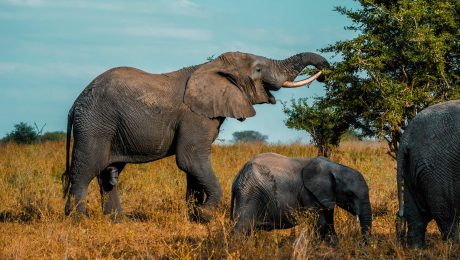
- African elephants roaming freely across savannah plains
- Buffaloes, Uganda kobs, and waterbucks
- Leopards and hyenas
- Hippos and crocodiles along the Kazinga Channel
The park also supports chimpanzees in Kyambura Gorge, a lush forested ravine often referred to as the “Valley of Apes.”
The Famous Tree-Climbing Lions of Ishasha
One of the most unique attractions in Queen Elizabeth National Park is the population of tree-climbing lions found in the Ishasha sector.
Unlike typical lions, these predators are often seen resting on fig tree branches during hot afternoons. Scientists believe they climb trees to escape heat and biting insects, although it remains one of Africa’s most fascinating wildlife behaviors.
This rare sighting makes Ishasha one of the most sought-after safari experiences in Uganda.
Boat Safari on the Kazinga Channel
The Kazinga Channel is a natural waterway connecting Lake Edward and Lake George, and it is one of the best places in Africa for a boat safari.
What You’ll See:
- Massive hippo pods in the water
- Nile crocodiles basking on the shores
- Elephants and buffaloes drinking at the banks
- Abundant birdlife including kingfishers and fish eagles
The boat cruise offers close-range wildlife viewing and incredible photography opportunities.
Crater Lakes and Scenic Landscapes
Queen Elizabeth National Park is famous for its stunning volcanic crater lakes, especially in the Kasenyi and Katwe areas.
These crater lakes were formed by ancient volcanic activity and now create breathtaking landscapes surrounded by rolling hills and savannah plains.
The Katwe Salt Lake is particularly famous for traditional salt mining activities that have been practiced for centuries.
Game Drives in Queen Elizabeth National Park
Game drives are best conducted in the Kasenyi plains and Ishasha sector.
Best Times:
- Early morning for predator sightings
- Evening for grazing herbivores
During game drives, visitors often encounter large herds of Uganda kobs, elephants, and buffaloes, as well as predators like lions and leopards.
Chimpanzee Tracking in Kyambura Gorge
Kyambura Gorge offers a completely different ecosystem within the park.
This underground forest is home to a small population of chimpanzees, along with other primates and bird species. The gorge’s lush vegetation and dramatic landscape make chimpanzee tracking here a unique experience.
Birdwatching Paradise
Queen Elizabeth National Park is one of the best birding destinations in Africa, with over 600 recorded bird species—the highest of any national park in Uganda.
Notable Birds:
- African fish eagle
- Saddle-billed stork
- Flamingos in crater lakes
- Martial eagle
- Pelicans and kingfishers
The diversity of habitats makes it a year-round birdwatching hotspot.
Best Time to Visit
The best time to visit Queen Elizabeth National Park is during the dry seasons:
- June to September
- December to February
These months offer easier game viewing and better road conditions.
However, the wet season brings lush greenery and excellent birding opportunities.
Accommodation Options
Queen Elizabeth National Park offers a wide range of accommodations:
Luxury Lodges
- Located along the Kazinga Channel
- Offer panoramic views and premium services
Mid-Range Lodges
- Comfortable and affordable options near key sectors
Budget Camps
- Simple lodges and campsites for budget travelers
Why Visit Queen Elizabeth National Park?
Queen Elizabeth National Park stands out because it offers:
- Tree-climbing lions in Ishasha
- Boat safaris on the Kazinga Channel
- Rich biodiversity and varied ecosystems
- Chimpanzee tracking in Kyambura Gorge
- Scenic crater lakes and volcanic landscapes
It is one of the most complete safari destinations in Uganda.
Combining Queen Elizabeth with Other Parks
Many travelers include Queen Elizabeth in longer safari circuits such as:
- Bwindi Impenetrable National Park for gorilla trekking
- Lake Mburo National Park for short safaris
- Murchison Falls National Park for waterfalls and savannah wildlife
This combination offers a full Ugandan safari experience.
- Published in National Parks, Wildlife Safaris
Kibale Forest National Park
Guide to Kibale Forest National Park: The Primate Capital of the World
In the heart of western Uganda lies one of Africa’s most remarkable rainforest ecosystems—Kibale National Park. Known as the “Primate Capital of the World,” this lush tropical forest is home to the highest concentration of primates in East Africa, making it one of the best destinations for chimpanzee tracking.
From the moment you step into Kibale’s dense forest, you are immersed in a world of towering trees, vibrant birdlife, and the distant calls of chimpanzees echoing through the canopy. Whether you are a wildlife enthusiast, a nature lover, or an adventure seeker, Kibale offers an experience that is both thrilling and deeply enriching.
Introduction to Kibale National Park
Kibale National Park covers approximately 795 square kilometers of tropical rainforest, stretching across districts such as Kabarole and Kamwenge. The park is part of a larger ecosystem that includes Queen Elizabeth National Park, forming a wildlife corridor that supports diverse species.
The forest itself is ancient, with some areas believed to have existed for thousands of years. Its dense vegetation includes hardwood trees, swampy areas, and open grasslands, creating a rich and varied habitat for wildlife.
However, what truly sets Kibale apart is its primate population.
Why Kibale Is Famous
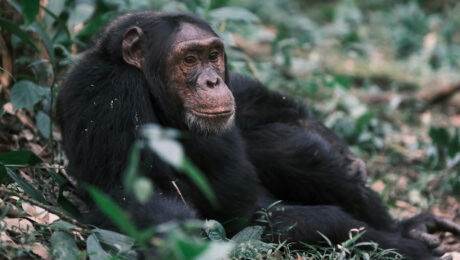
Kibale National Park is best known for its large population of chimpanzees, with over 1,500 individuals living in the forest. In addition, the park hosts 12 other primate species, including:
Red colobus monkeys
Black-and-white colobus monkeys
L’Hoest’s monkeys
Grey-cheeked mangabeys
Olive baboons
This incredible diversity makes Kibale one of the top primate tracking destinations in the world.
Chimpanzee Tracking in Kibale
What Is Chimpanzee Tracking?
Chimpanzee tracking is the highlight of any visit to Kibale National Park. It involves guided treks through the forest in search of habituated chimpanzee groups.
How the Experience Works
Your day begins early with a briefing at the park headquarters. Experienced guides explain the rules and what to expect before assigning you to a group.
Once inside the forest, the adventure begins. You walk along narrow trails, listening carefully for chimpanzee calls and watching for signs such as nests or broken branches.
The trek can take anywhere from 1 to 4 hours, depending on the location of the chimps.
The Encounter
When you finally find them, the experience is unforgettable.
Chimpanzees are highly active and social animals. You may see them:
Swinging through trees
Feeding on fruits
Grooming each other
Communicating with loud calls
Visitors are allowed one hour with the chimpanzees, during which you can observe and photograph their behavior.
Chimpanzee Habituation Experience
For those seeking a deeper experience, Kibale offers a chimpanzee habituation experience.
Unlike standard tracking, this allows you to spend up to four hours with chimpanzees that are still getting used to human presence. You will join researchers and trackers, gaining insight into chimpanzee behavior and conservation.
Other Activities in Kibale National Park
Kibale is not just about chimpanzees—it offers a variety of activities that showcase its rich biodiversity.
- Guided Nature Walks
Nature walks provide an opportunity to explore the forest at a slower pace. Accompanied by a guide, you will learn about:
Medicinal plants
Forest ecology
Animal tracks and signs
These walks are perfect for those interested in botany and conservation.
- Bigodi Wetland Sanctuary
Located just outside the park, the Bigodi Wetland Sanctuary is a must-visit.
This community-run conservation area is famous for:
Birdwatching (over 200 species)
Primates such as colobus monkeys
Scenic boardwalk trails
It also offers a chance to support local communities through tourism.
- Birdwatching
Kibale National Park is a paradise for bird lovers, with over 375 bird species recorded.
Notable Birds:
African pitta
Green-breasted pitta
Great blue turaco
Hornbills and kingfishers
The forest’s diverse habitats make it ideal for year-round birdwatching.
- Cultural Experiences
Visitors can engage with local communities around Kibale to learn about traditional lifestyles.
Activities include:
Visiting local farms
Traditional dances and storytelling
Craft-making demonstrations
These experiences add cultural depth to your safari.
Wildlife and Biodiversity
Beyond primates, Kibale is home to a variety of wildlife.
Mammals:
Forest elephants
Bush pigs
Duikers
Though less commonly seen, these animals contribute to the park’s ecological richness.
Best Time to Visit Kibale
Kibale National Park can be visited year-round, but the best time for chimpanzee tracking is during the dry seasons:
June to September
December to February
During these months, trails are less muddy and trekking is easier.
However, the wet season offers lush scenery and excellent birdwatching opportunities.
Accommodation Options
Kibale offers a range of accommodations to suit all budgets:
Luxury Lodges
Forest lodges with premium amenities
Stunning views and personalized service
Mid-Range Lodges
Comfortable and well-located
Great value for money
Budget Options
Guesthouses and campsites
Most lodges are located near the park entrance for easy access to activities.
Combining Kibale with Other Destinations
Kibale is often included in longer safari itineraries, combined with:
Queen Elizabeth National Park for wildlife safaris
Bwindi Impenetrable National Park for gorilla trekking
Murchison Falls National Park for waterfalls and game drives
This creates a diverse and enriching Uganda safari experience.
Why Visit Kibale National Park?
Kibale stands out as one of the best destinations in Uganda because of:
Exceptional chimpanzee tracking experiences
High concentration of primates
Rich biodiversity and forest ecosystems
Variety of activities beyond trekking
Easy combination with other parks
It offers a unique blend of adventure, education, and conservation.
For travelers exploring Uganda, Kibale National Park is an essential destination—one that offers not just memories, but a deeper appreciation of the natural world.
- Published in Destinations, National Parks
Lake Manyara National Park
Lake Manyara National Park: Tanzania’s Most Surprising Safari Destination
There is a particular pleasure in being surprised by a place you thought you already understood.
Most travellers who include Lake Manyara National Park in their Tanzania northern circuit itinerary do so almost as an afterthought — a pleasant half-day stop between Arusha and the crater highlands on the way to the Ngorongoro and the Serengeti. The park is small, the conventional wisdom goes. It is overshadowed by its more famous neighbours. It is a warm-up act for the main event.
Then they arrive. They drive into the groundwater forest and find themselves in a cathedral of ancient trees, olive baboons moving through the canopy overhead, the calls of hornbills and turacos filling the air. They emerge from the forest onto the open floodplain and find elephants crossing in family procession a hundred metres ahead. They reach the lakeshore and find it pink — a shimmering, shifting, extraordinary band of flamingos extending along the alkaline margins for as far as the eye can see. And then, in the afternoon, their guide stops the vehicle beneath an acacia tree and points upward. In the branches, three metres above the ground, a lion is lying with its legs draped over either side of a bough, watching the approaching vehicle with an expression of complete, magnificent indifference.
And they stop thinking of Lake Manyara as a warm-up act.
Lake Manyara National Park is one of Tanzania’s most underestimated and most rewarding wildlife destinations — a compact, extraordinarily diverse, and consistently surprising park that packs five distinct ecological habitats, one of East Africa’s finest waterbird concentrations, a famous tree-climbing lion population, outstanding elephant viewing, and over 400 recorded bird species into just 325 square kilometres of Rift Valley landscape. It is the park that converts sceptics — the place that visitors who expected little consistently describe as one of the finest surprises of their entire Tanzania safari.
This is Lake Manyara. And it deserves far more credit than it typically receives.
The Setting: A Rift Valley Masterpiece
Lake Manyara National Park occupies a narrow strip of land between the dramatic western escarpment of the Great Rift Valley and the alkaline expanse of Lake Manyara itself, approximately 120 kilometres southwest of Arusha and 35 kilometres north of the Ngorongoro Conservation Area boundary.
The park’s geography is defined by two dominant forces: the escarpment and the lake. The escarpment — a dramatic wall of rock and forest rising steeply to approximately 600 metres above the valley floor — forms the park’s western boundary and creates a rain shadow effect that drives the groundwater seeping down through the escarpment’s geology to emerge as springs along the valley floor. These springs feed the groundwater forest at the park’s northern entrance — one of the most distinctive and most beautiful habitats in Tanzania — and maintain the year-round water availability that makes Manyara’s remarkable biodiversity possible even in the dry season.
The lake — a shallow, alkaline body of water covering between 200 and 600 square kilometres depending on seasonal rainfall — occupies the eastern portion of the park and gives it both its name and its most iconic visual element. Lake Manyara is one of the East African Rift Valley soda lakes — a chain of alkaline lakes running from northern Kenya through Tanzania whose unique chemistry, driven by volcanic minerals leaching from the surrounding geology, creates conditions of extraordinary productivity for the blue-green algae that feeds the lake’s famous flamingo populations.
Between the escarpment springs and the alkaline lake, the park transitions through five distinct ecological habitats in the space of just a few kilometres — a compression of ecological diversity that is almost without parallel in East African wildlife areas and that creates the park’s remarkable species richness within its compact boundaries.
Five Habitats, One Small Park: Understanding Manyara’s Diversity
The Groundwater Forest: Cathedral of the Valley Floor
The groundwater forest at Lake Manyara’s northern entrance is the park’s most immediately striking and most distinctive habitat — a dense, ancient forest of mahogany, fig, and wild mango fed not by rainfall but by the underground springs that seep continuously from the escarpment above, creating a permanently moist soil environment that supports forest vegetation of extraordinary exuberance in a landscape that would otherwise be semi-arid savannah.
Entering the groundwater forest from the park gate is one of the most dramatic habitat transitions in Tanzania — within metres of the entrance, the open, sun-baked landscape of the Rift Valley floor gives way to a world of deep shade, towering trees, and the enclosed, cathedral-like atmosphere of a mature tropical forest. The canopy closes overhead, the temperature drops noticeably, and the air fills with the calls of forest birds and the social chatter of primate troops moving through the vegetation.
Olive baboons are the groundwater forest’s most visible and most behaviourally entertaining residents — large troops of up to 200 individuals move through the canopy and across the forest floor with the organised chaos of a highly social community whose interactions are endlessly compelling to observe. Dominance displays, grooming sessions, infant play, and the constant background negotiation of a complex social hierarchy are all on continuous display in the forest’s relatively open understorey.
Blue monkeys (Cercopithecus mitis) move through the middle canopy in smaller, quieter groups — their blue-grey colouring and white chest patches making them considerably more elegant in appearance than their baboon neighbours, though equally entertaining in their arboreal social interactions. Vervet monkeys occupy the forest edge and the transition zone between forest and open woodland, their bold, opportunistic character making them the most human-habituated of the three primate species.
The forest’s birdlife is exceptional — dozens of species inhabit the groundwater forest’s different canopy levels, from the dramatic silvery-cheeked hornbill calling from the emergent treetops to the tiny African pygmy kingfisher hunting insects in the dense understorey. The trumpeter hornbill, African green pigeon, Ross’s turaco, Narina trogon, African broadbill, and the extraordinary African paradise flycatcher — trailing its remarkable long tail feathers through the dappled light — are all regularly encountered in the groundwater forest and provide outstanding opportunities for forest birding even for visitors primarily focused on mammal wildlife.
The Acacia Woodland: Classic East African Savannah
Emerging from the groundwater forest, the park transitions into acacia woodland — the classic East African savannah vegetation of flat-topped umbrella acacias, yellow fever trees, and scattered wild fig and sausage trees that provides habitat for the open-country wildlife community familiar from the Serengeti and Queen Elizabeth.
This is where Lake Manyara’s famous tree-climbing lions are most frequently encountered — in the branches of the large acacias and sausage trees that offer shade, cooling breezes, and an elevated vantage point that the lions appear to value for multiple purposes. The tree-climbing behaviour is one of the park’s most distinctive and most discussed wildlife phenomena, and its explanation has occupied researchers for decades without producing a fully satisfying consensus. Whatever its cause, the sight of a lion — or better still, several members of a pride — resting in the branches of an acacia with the casual ease of animals entirely at home in a habitat that lions elsewhere would never consider — is one of East Africa’s most memorable and most photographed wildlife moments.
The woodland also provides excellent habitat for elephants, which move through the acacia canopy feeding on leaves, bark, and the fallen fruits of various woodland trees. Giraffes browse the acacia canopy with the effortless reach of animals whose evolutionary history has been shaped by exactly this food source. Impalas move in mixed herds of females and juveniles with attendant territorial males — the males’ extraordinary vocal and physical displays during the rutting season one of the woodland’s most dramatic wildlife behaviours.
The Open Floodplain: Big Mammal Country
Between the woodland and the lakeshore, open floodplain grassland provides some of Manyara’s finest big mammal viewing — a flat, open terrain that allows long-range visibility and unobstructed observation of the large herbivore community that gravitates toward this zone for its combination of permanent water proximity and productive grazing.
African elephants are perhaps the most consistently impressive residents of the floodplain — family groups of remarkable size move across the open ground between the woodland and the lakeshore, the matriarch’s authority visible in the purposeful direction of the entire family’s movement, young calves staying close to their mothers’ sides while older juveniles test their independence in brief excursions to the group’s margins. Manyara’s elephant population is one of the most studied in Tanzania — long-term research on the park’s elephant families has produced important insights into elephant social behaviour, communication, and the matrilineal social structure that organises elephant family life.
Cape buffalo gather in large herds on the open floodplain, particularly in the early morning and late afternoon when they move between the woodland and the lakeshore to drink. Zebra graze the open ground in herds that sometimes number in the hundreds during the dry season when they concentrate around the permanent water. Waterbuck — their distinctive white ring marking visible at considerable distance — graze the lakeshore grassland with the deliberate composure of animals that rely on the water proximity as their primary anti-predator strategy.
Warthogs trot across the floodplain with their characteristic upright tail posture and their cheerful, slightly absurd gait. Common reedbuck inhabit the wetland margins at the floodplain’s lakeward edge. And the hippopotamus — present in permanent pods in the deeper pools where streams meet the lake — provides the floodplain’s most sonorous contribution to the wildlife experience, their territorial grunting and yawning audible from considerable distance in the early morning calm.
The Lake Margins: Flamingos, Pelicans & the Alkaline World
The lakeshore of Lake Manyara is the park’s most visually spectacular habitat — the point where the terrestrial savannah world meets the alkaline aquatic world of the Rift Valley soda lake, and where the wildlife encounter shifts from the familiar savannah species of East African game drives to the extraordinary waterbird concentrations that make Lake Manyara one of the finest birding destinations in Tanzania.
The lake’s alkalinity varies seasonally — rising during the dry season as evaporation concentrates the dissolved minerals, and dropping during the wet season as rainfall dilutes the lake’s chemistry. This seasonal variation drives corresponding fluctuations in the flamingo population, which responds to changes in the lake’s algal productivity with remarkable sensitivity — concentrating at Manyara when conditions are optimal and dispersing to other Rift Valley soda lakes (Natron, Bogoria, Nakuru) when they are not.
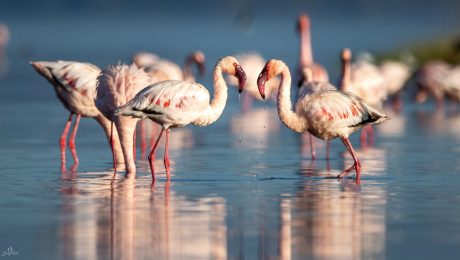
At its most productive, Lake Manyara’s flamingo concentrations — lesser flamingos in their tens or hundreds of thousands, standing in the shallow alkaline margin and feeding with the mechanical efficiency of animals whose entire anatomy has been refined over millions of years for exactly this feeding behaviour — are one of Tanzania’s most extraordinary natural spectacles. The sheer scale of the aggregation, the extraordinary colour of the birds’ plumage, and the constant movement and calling of the flock create an experience of biological abundance that has few equivalents in East African wildlife travel.
Great white pelicans are permanent residents of the lake — their breeding colonies on the lake’s islands and exposed sandbanks producing some of the most spectacular colonial nesting scenes available in Tanzania. The pelicans’ cooperative fishing behaviour — in which groups of birds herd fish into shallow water by swimming in coordinated semicircular formations and scooping simultaneously — is one of the lake’s most impressive and most instructive wildlife behaviours, a demonstration of collective intelligence in a species not generally credited with great cognitive sophistication.
Yellow-billed storks wade in elegant slow motion through the shallows, their sensitive bill tips detecting fish and invertebrates by touch in the turbid water. African spoonbills sweep their extraordinary spatula-shaped bills in wide arcs through the surface water, straining small crustaceans and invertebrates with a feeding technique of remarkable specialisation. Marabou storks — their bare-headed, hunched, funereal appearance giving them an air of gothic menace quite at odds with their actual role as efficient and ecologically important scavengers — stand in patient attendance at the water’s edge, watching for opportunities with the focused patience of birds that have evolved to exploit exactly the kind of abundant mortality that a large waterbird colony inevitably produces.
The Hot Springs: Geological Drama at the Water’s Edge
At several points along Lake Manyara’s shoreline, hot springs emerge from the volcanic geology beneath the lake floor — bubbling, steaming, minerally rich water that creates microhabitats of unusual ecological character along the lakeshore margins. These springs maintain permanently elevated water temperatures that support distinctive communities of algae, invertebrates, and the birds that feed on them, and they add a dimension of geological drama to the lakeshore experience that serves as a reminder of the volcanic forces that created this entire Rift Valley landscape.
The hot springs are most accessible in the park’s southern sector near the Endabash River mouth, where the combination of spring-fed warm water, river-deposited sediment, and the lake’s alkaline chemistry creates a transitional habitat of exceptional biological productivity.
Tree-Climbing Lions: Manyara’s Most Famous Mystery
The tree-climbing lions of Lake Manyara National Park are the park’s most celebrated and most discussed wildlife phenomenon — and one of the most intriguing and least fully explained behavioural mysteries in African wildlife science.
Lions (Panthera leo) do not, as a general rule, climb trees. Their anatomy — massive, heavily muscled, built for power and endurance at ground level rather than the arboreal agility of leopards or the lighter-bodied cats — makes sustained tree-climbing both physically demanding and apparently unnecessary. Lions throughout most of Africa spend their resting hours on the ground, under shade trees or in the shelter of kopje boulders, and the sight of a lion in a tree is genuinely unusual enough to constitute a significant wildlife event anywhere in East Africa.
Except at Lake Manyara. And at Ishasha in Uganda’s Queen Elizabeth National Park.
At these two locations — separated by over 1,500 kilometres and with no obvious connection in terms of ecology, prey base, or population history — distinct lion populations have independently developed the habit of resting in the branches of trees during the daytime. The behaviour is learned and cultural rather than genetic — cubs learn to climb by following their mothers, and the habit is transmitted through the pride’s social learning across generations.
But why these two populations developed the behaviour in the first place remains genuinely uncertain. The leading hypotheses include:
Thermoregulation: Trees provide elevated, wind-exposed resting positions that are cooler than the ground surface in the midday heat — particularly important in areas where shade vegetation is limited and the ground radiates significant stored heat.
Insect avoidance: The ground-level density of biting flies and other insects in certain habitats — particularly in areas near water or in the post-rain season when insect populations peak — may make elevated resting positions genuinely preferable.
Predator and human avoidance: An elevated position provides an earlier warning system for approaching humans or other disturbances, allowing the lions time to react that a ground-level position would not.
Vantage point for hunting: An elevated position may provide improved visibility over long grass for detecting prey movements, though the lions’ tree-resting behaviour does not appear to be consistently associated with active hunting.
Cultural transmission without clear original cause: The behaviour may have originated with a single individual or small group, been transmitted through social learning across generations, and now persists as a cultural tradition whose original adaptive value may no longer be the primary driver of its maintenance.
Whatever the explanation, the sight of Lake Manyara’s lions in their acacia trees — legs draped over branches, tails hanging, watching approaching vehicles with the magnificent indifference of cats who have decided that the world looks better from up here — is one of East Africa’s most distinctive and most memorable wildlife encounters.
Finding the tree-climbing lions requires local knowledge and patience — they are not always in the trees (they hunt on the ground at night and are not always in the same trees on consecutive days), and the park’s woodland is extensive enough that locating them without guide expertise can be challenging. Your Ntungo guide’s knowledge of the pride territories and their preferred resting trees significantly enhances the probability of a sighting.
Elephants of Lake Manyara: A Long-Term Love Story
The elephants of Lake Manyara have a special place in the history of African wildlife science — and an encounter with them today is enriched by knowing that history.
In the 1960s, the pioneering wildlife biologist Iain Douglas-Hamilton conducted his doctoral research on the social organisation of Lake Manyara’s elephants — research that produced the first comprehensive scientific account of elephant family structure, social bonds, and individual personality, and that fundamentally transformed our understanding of elephant society. Douglas-Hamilton’s Among the Elephants — the book that documented his research — became one of the most important works of popular wildlife science ever written and launched a lifetime of elephant conservation advocacy that continues today.
The families that Douglas-Hamilton studied at Manyara in the 1960s — named and individually identified in his research — are the ancestors of the elephants in the park today. Walking in their footsteps (sometimes almost literally, given the park’s narrow track network) carries a weight of scientific and conservation history that adds a profound dimension of meaning to the wildlife encounter.
Manyara’s elephants today maintain the complex matrilineal family structure that Douglas-Hamilton first documented here — extended family groups led by the eldest and most experienced female, whose accumulated knowledge of the park’s water sources, seasonal movements, and historical threats guides the family’s decision-making in ways that are invisible to the observer but critically important to the family’s survival. Watching a matriarch lead her family across the floodplain toward the water, the younger animals clustering around the older ones in the precise social configuration that defines elephant family life, is an encounter made richer by knowing that the behaviour you are observing was first scientifically described in this exact landscape sixty years ago.
Birdwatching at Lake Manyara: A Complete Avian Experience
With over 400 recorded bird species, Lake Manyara National Park is one of Tanzania’s most productive and most rewarding birding destinations — combining the waterbird spectacle of the lakeshore with outstanding forest, woodland, and open-country birding across the park’s different habitat zones.
Forest Birding Highlights
The groundwater forest produces outstanding forest birding in a relatively compact area — the combination of tall canopy trees, dense understorey, and permanent moisture creates conditions that support a forest bird community more typical of much larger forest blocks. Key forest species include:
African broadbill — a tiny, exquisitely patterned species that performs one of Africa’s most remarkable courtship displays: a rapid circular flight around a horizontal branch accompanied by a mechanical buzzing call produced by the wings rather than the syrinx, creating a sound entirely unlike any other bird in the forest.
Narina trogon — one of Africa’s most beautiful birds: a medium-sized forest species with vivid emerald-green upperparts, crimson breast and belly, and a habit of sitting motionless in the forest midcanopy that makes it simultaneously easy to miss and extraordinarily rewarding to find.
African paradise flycatcher — the forest’s most theatrical resident, the male’s enormously elongated central tail feathers (extending up to 20 centimetres beyond the body) trailing behind it as it pursues insects through the understorey in brief, brilliant aerial sallies.
Ross’s turaco — a vivid forest turaco with deep purple-blue plumage, crimson wing patches visible in flight, and a call that is one of the groundwater forest’s most distinctive sounds — a series of deep, rolling notes that carry surprisingly far through the dense vegetation.
Trumpeter hornbill — a large, noisy, and highly visible hornbill with a distinctive honking call that resembles, with some imagination, a small trumpet. Family groups move through the canopy feeding on fruits and calling continuously, their large casqued bills and bold black-and-white plumage making them one of the forest’s most easily identified species.
Waterbird Highlights
The lakeshore and open water produce the park’s most visually spectacular birding — the flamingo concentrations described above alongside an outstanding diversity of wading, swimming, and soaring waterbird species:
Goliath heron (Ardea goliath) — the world’s largest heron, standing up to 150 centimetres tall and carrying a wingspan of over 2 metres — wades in the deeper shallows with the stately deliberation of a bird that knows it is the largest thing in the water. Its deep, hoarse call — a series of loud, raucous croaks audible at considerable distance — is one of the lakeshore’s most dramatic sounds.
African fish eagle — the most evocative sound in African wildlife, the fish eagle’s call defines the atmosphere of every lakeside and riverside wildlife area in East Africa. At Lake Manyara, fish eagles are present year-round along the lakeshore trees, their white head and chest and rich chestnut body making them unmistakeable even at distance.
Pied kingfisher — one of the most abundant and most entertaining of the lake’s resident species — hovers above the water in a characteristic helicopter-like suspension before plunging to take fish from just below the surface. Manyara’s pied kingfisher population is large and visible throughout the year, and watching a successful dive — the bird entering the water cleanly, surfacing with a fish, and returning to its perch to beat the fish senseless before swallowing it headfirst — is one of the lakeshore’s most consistently available wildlife pleasures.
African skimmer (Rynchops flavirostris) — one of Africa’s most graceful and most aerodynamically extraordinary waterbirds, the skimmer hunts by flying low over the water’s surface with its elongated lower mandible cutting through the water — snapping the bill shut when it contacts a fish in a reflex action so fast that it appears simultaneous with the strike. The skimmer’s flight — low, fast, utterly precise — is one of the most beautiful things in African birding.
Malachite kingfisher — tiny, brilliantly coloured, and extraordinarily jewel-like in its appearance, the malachite kingfisher is the lakeshore’s most photogenic resident — its combination of vivid cobalt-blue and electric-orange plumage catching the light in brief flashes as it moves between reed stems and overhanging branches along the water’s edge.
Raptor Highlights
The escarpment cliffs and thermals above the Rift Valley provide outstanding raptor watching — a diverse community of large raptors uses the escarpment’s uplift for effortless soaring that brings them to eye level with observers on the valley floor:
Augur buzzard — the most abundant large raptor of the Rift Valley escarpment, the augur buzzard’s boldly patterned black, white, and rufous plumage makes it unmistakeable and its habit of soaring on fixed wings above the escarpment edge makes it one of the most easily observed large raptors in Tanzania.
African hawk-eagle — a powerful, large eagle of the woodland margins, the African hawk-eagle hunts medium-sized birds and mammals with explosive power and precision. Its deep, far-carrying call heard from the escarpment forest is one of the Rift Valley’s most atmospheric wildlife sounds.
Verreaux’s eagle — where the escarpment provides suitable rocky habitat and rock hyrax prey, the extraordinary Verreaux’s eagle — predominantly jet-black with distinctive white back patches, with a wingspan of over 2 metres — soars above the cliff faces with a mastery of moving air that is among the most elegant demonstrations of aerial skill in the bird world.
The Lake Manyara Tree Canopy Walkway
One of Lake Manyara’s most distinctive and most rewarding visitor experiences — and one that is less widely known than it deserves to be — is the Lake Manyara Tree Canopy Walkway: a series of suspension bridges and platforms built into the canopy of the groundwater forest at heights of between nine and eighteen metres above the forest floor.
The walkway was constructed to allow visitors to experience the forest’s middle and upper canopy levels — the ecological zone where the majority of the forest’s birds and many of its primates spend most of their time, and which is entirely inaccessible from the ground. From the walkway platforms, the forest’s canopy structure is revealed with extraordinary clarity: the layering of different tree species at different heights, the way the emergent trees rise above the general canopy level and provide perches for the largest birds, and the horizontal complexity of a forest interior that appears impenetrably dense from below but proves, from above, to be a structured and navigable world of interlocking branches and light-filled gaps.
The walkway provides outstanding forest birding from an elevated perspective — species that are extremely difficult to observe from the ground (canopy sunbirds, hornbills, turacos, and the various warblers and flycatchers that inhabit the upper canopy) become accessible and observable in ways that ground-level forest birding cannot provide. Olive baboon troops move through the canopy at eye level, their social interactions visible with a proximity and clarity that ground-level observation rarely achieves.
The walkway experience is available as a guided activity and takes approximately one to two hours depending on the pace of the group and the wildlife encountered. It is strongly recommended for all visitors to Lake Manyara with more than a half-day in the park, and is particularly recommended for dedicated birders and primate enthusiasts.
Night Game Drives: Lake Manyara After Dark
One of Lake Manyara’s most rewarding and most underutilised experiences is the night game drive — conducted after sunset with spotlights in the park’s open woodland and floodplain areas, revealing the nocturnal wildlife community that is entirely hidden during the daylight hours.
Lake Manyara’s nocturnal wildlife is rich and varied: leopards — the most cryptic of the park’s large cats during the day — become considerably more active and occasionally more visible after dark as they begin their nocturnal hunting activity. African civets — large, powerfully built cat-like creatures with beautiful grey and black spotted coats — hunt insects, small vertebrates, and fruit along the woodland tracks. Genets — slender, long-tailed, spotted arboreal carnivores — move through the understorey and lower canopy with extraordinary grace. African bush babies (galagos) cling to branches in the torchlight, their enormous reflective eyes creating the most vivid eye-shine of any nocturnal mammal in the forest.
Porcupines shuffle through the woodland, their extraordinary spine armour rattling softly as they move. Spring hares — large, kangaroo-like rodents that move in bipedal bounds across the open floodplain — are among the most entertaining subjects of the spotlight’s beam. Serval cats hunt in the long grass at the floodplain edge with the extraordinary precision of a species whose oversized ears allow pinpoint acoustic location of prey under the grass surface.
The bird community shifts entirely after dark: the park’s African scops owls, verreaux’s eagle owls, pearl-spotted owlets, and fiery-necked nightjars replace the diurnal species, their calls providing the soundtrack to the nocturnal landscape. The fiery-necked nightjar’s extraordinary song — a clear, melodious series of notes that sounds implausibly musical for a nocturnal bird of cryptic, bark-patterned plumage — is one of the African night’s most evocative sounds.
Night drives at Lake Manyara are conducted with the park’s authorised night drive operators and are available to guests of the park’s lodges and camps.
Accommodation at Lake Manyara
Lake Manyara’s accommodation ranges from well-positioned midrange options in the Mto wa Mbu town area — the gateway community at the park entrance — to outstanding luxury properties on the escarpment above the park with extraordinary views over the lake and the Rift Valley floor.
Midrange
Lake Manyara Kilima Moja — A well-appointed midrange lodge situated between Mto wa Mbu and the park gate, offering comfortable accommodation, reliable food, and convenient access to the park’s main entrance. An excellent value option for visitors combining Manyara with the broader northern circuit.
Kirurumu Manyara Lodge — An eco-friendly lodge on the escarpment above the park, offering comfortable tented accommodation with good views over the Rift Valley and the northern section of the lake. Well-suited to visitors who want to combine Manyara access with the broader escarpment landscape.
Lake Manyara Serena Safari Lodge — A comfortable, well-established property on the escarpment with reliable service, good food, and the attractive infinity pool overlooking the Rift Valley that has made it one of the most popular midrange options in the area.
Midrange Lake Manyara safari from USD 450 per person for 1 night, including accommodation, park entrance fees, guiding, and game drive.
Luxury
Chem Chem Safari Lodge — An intimate, privately managed luxury lodge in the Lake Manyara ecosystem outside the national park boundaries, offering exclusive access to a large private concession, outstanding guiding, night drives, walking safaris, and accommodation of exceptional design and quality. One of northern Tanzania’s finest small luxury lodges.
&Beyond Lake Manyara Tree Lodge — Built within the national park’s groundwater forest itself — the only lodge with this privilege — the Tree Lodge offers nine treehouses elevated into the forest canopy, each with its own private deck overlooking the forest floor below. The experience of waking up in the forest canopy, with baboons moving through the trees at eye level and the sounds of the forest surrounding you, is one of the most immersive and most extraordinary lodge experiences in Tanzania.
The Retreat at Ngorongoro — Positioned above the escarpment near the Manyara-Ngorongoro road junction, The Retreat offers luxury accommodation with sweeping views across the Rift Valley and convenient access to both Lake Manyara and the Ngorongoro Conservation Area.
Luxury Lake Manyara safari from USD 1,200 per person for 1 night at &Beyond Lake Manyara Tree Lodge, including accommodation, park fees, private guiding, and forest tree canopy walkway experience.
Mto wa Mbu: The Gateway Community
The small town of Mto wa Mbu — its name meaning mosquito river in Swahili, a pragmatic toponym that reflects the realities of life beside a year-round water source in the tropics — sits at the park’s northern entrance and serves as the gateway community for Lake Manyara’s visitors. It is also, in its own right, one of the most culturally interesting small towns in northern Tanzania.
Mto wa Mbu is one of Tanzania’s most ethnically diverse small communities — the product of the agricultural richness of the Rift Valley floor and the economic opportunities generated by the tourism traffic passing through it, the town has attracted residents from dozens of Tanzania’s ethnic groups, creating a social fabric of unusual complexity for a community of its size.
The town’s daily market — supplied by the extraordinarily productive agricultural land of the valley floor, which benefits from year-round irrigation from the same groundwater springs that feed the forest — is one of the finest and most authentic small-town markets in northern Tanzania. Bananas in extraordinary variety (Mto wa Mbu is famous throughout Tanzania for its banana cultivation), mangoes, papayas, avocados, sweet potatoes, and a bewildering range of other tropical produce are sold alongside everyday goods in a market scene of genuine colour and energy that rewards a brief exploratory visit before or after the game drive.
A guided community walk through Mto wa Mbu — available through several community tourism initiatives and included in some Ntungo Wildlife Safaris packages — provides an introduction to the town’s remarkable ethnic diversity, its agricultural traditions, its craft production, and the lives of the families who have made this Rift Valley gateway their home. It is a genuinely enriching complement to the wildlife experience of the park itself and one that many visitors find unexpectedly moving in its portrait of community resilience and cultural richness.
Best Time to Visit Lake Manyara
Lake Manyara rewards visitors year-round — the groundwater forest’s permanent moisture means that the forest habitat maintains its character regardless of season, and the lake’s resident wildlife is present throughout the year. Different seasons offer different highlights:
June — October (Dry Season): The most reliable game viewing conditions — shorter grass improves visibility in the woodland and floodplain, wildlife concentrates around permanent water sources including the springs and the lake margins, and the weather is consistently dry and pleasant. Flamingo numbers at the lake can be high in the dry season as the water level drops and alkalinity increases.
November — December (Short Rains): The short rains transform the park into a vivid green landscape of exceptional beauty. Birdlife is at its most diverse — migratory species are present alongside residents, and the woodland and forest species are at their most vocal and most active. Flamingo numbers may decrease as rainfall dilutes the lake’s alkalinity and reduces algal productivity.
January — March (Short Dry Season): One of the best periods for overall game viewing — the grass is shorter after the short rains but the landscape retains its green freshness. Elephant family groups are particularly active and visible on the floodplain. Tree-climbing lion sightings are reliable throughout this period.
April — May (Long Rains): The park is at its most lush and most dramatically beautiful. Visitor numbers are at their lowest — the park can feel almost entirely private. Some tracks may be challenging in wet conditions, but the experienced guide’s knowledge of the park’s drainage patterns ensures that the most productive areas remain accessible.
Combining Lake Manyara with Other Tanzania Destinations
Lake Manyara occupies a natural position in Tanzania’s northern safari circuit — situated between Arusha to the northeast and the Ngorongoro Conservation Area to the southwest, with the Serengeti accessible beyond Ngorongoro. Its compact size makes it ideal as a one or two-night stop that adds extraordinary ecological variety to any northern circuit itinerary without requiring significant additional travel time.
Lake Manyara + Ngorongoro Crater: The most natural pairing — the Rift Valley lake’s ecological diversity followed by the geological wonder of the world’s greatest caldera. Drive time between the park entrance and the Ngorongoro rim is approximately 1.5 to 2 hours on good road.
Lake Manyara + Tarangire + Ngorongoro: A three-park combination of complementary ecosystems — Tarangire’s elephant herds and baobab savannah, Manyara’s diverse habitats and tree-climbing lions, and Ngorongoro’s enclosed Big Five perfection.
Lake Manyara + Ngorongoro + Serengeti: The complete northern circuit, with Manyara providing the ecological introduction to the Rift Valley landscape that contextualises both the crater and the Serengeti’s vast plains.
Lake Manyara + Kilimanjaro: For travellers combining a Tanzania safari with a Kilimanjaro trek, Lake Manyara’s position close to Arusha makes it an ideal pre- or post-trek wildlife experience that requires minimal additional travel and provides maximum wildlife reward in the time available.
Why Lake Manyara Deserves More Than a Half-Day
The instinct to treat Lake Manyara as a half-day stop on the way to Ngorongoro or the Serengeti is understandable — the park is small, the drive is easy, and the neighbouring destinations are more famous. But it is, ultimately, a mistake.
Lake Manyara is not a warm-up. It is not a footnote. It is a destination of genuine, independent wildlife richness that rewards the investment of a full day — or better still, two days and a night — with experiences that are available nowhere else in Tanzania: the groundwater forest with its olive baboon troops and canopy birds, the tree-climbing lions in their acacia branches, the flamingo lakeshore in its pink abundance, the tree canopy walkway suspended above the forest floor, and the night drive that reveals the park’s hidden nocturnal world.
Give Lake Manyara the time it deserves. It will surprise you in ways you did not expect — and the surprises will be among the finest memories of your Tanzania journey.
The trees have lions in them. The lake is pink. The forest is alive.
Come and see it properly.
Contact Ntungo Wildlife Safaris to incorporate Lake Manyara National Park into your Tanzania northern circuit safari. We offer standalone Manyara experiences, combined northern circuit itineraries, and full Tanzania packages connecting Manyara with Tarangire, Ngorongoro Crater, the Serengeti, and Zanzibar — across all accommodation tiers, with private guiding and seamless logistics throughout.
📩 info@ntungosafaris.com 🌐 www.ntungosafaris.com 📞 +256 771 399299 / +256 706 772990
&Beyond Lake Manyara Tree Lodge — the only accommodation within the national park’s groundwater forest — books up significantly in advance. Early reservation is strongly recommended for this property.
- Published in National Parks, Wildlife Safaris
Tarangire National Park
While Serengeti often steals the spotlight, Tarangire National Park offers a quieter yet equally rewarding safari experience. In fact, many seasoned travelers consider it one of Tanzania’s best-kept secrets.
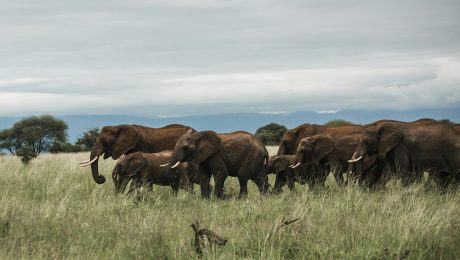
Known for its massive elephant herds and ancient baobab trees, Tarangire combines dramatic landscapes with exceptional wildlife viewing.
Where Is Tarangire National Park?
Tarangire is located in northern Tanzania, approximately 2–3 hours from Arusha. Because of its proximity, it is often included in the Northern Circuit safari route.
Moreover, its accessibility makes it an ideal destination for both short and extended safaris.
Why Visit Tarangire?
To begin with, Tarangire is famous for its elephants. During the dry season, thousands gather near the Tarangire River.
In addition, the park’s baobab trees create a unique and iconic African landscape. These ancient trees not only add beauty but also serve as water storage for wildlife.
Furthermore, Tarangire is less crowded than other parks. Therefore, visitors can enjoy a more peaceful safari experience.
Wildlife in Tarangire
Tarangire’s wildlife is particularly impressive during the dry season.
As water becomes scarce elsewhere, animals migrate into the park. Consequently, wildlife concentrations become incredibly high.
Visitors can expect to see:
- Large elephant herds
- Lions and leopards
- Zebras and wildebeests
- Rare species like kudu
Additionally, over 500 bird species have been recorded, making it a birdwatcher’s paradise.
The Iconic Baobab Trees
One of Tarangire’s defining features is its baobab trees. These massive trees can live for thousands of years.
Because of their unique shape, they are often referred to as “upside-down trees.” Moreover, they create stunning photographic opportunities.
Best Time to Visit Tarangire
Dry Season (June to October)
This is the best time for wildlife viewing. Animals gather around water sources, making sightings easier.
Wet Season (November to May)
Although wildlife is more dispersed, the park becomes lush and green. Additionally, birdwatching is excellent during this time.
Safari Activities
Tarangire offers a variety of safari experiences.
Game Drives
The most popular activity, offering close wildlife encounters.
Night Drives
Unlike many parks, Tarangire allows night safaris.
Walking Safaris
Explore the park on foot for a more immersive experience.
How to Get There
Most visitors travel from Arusha by road. Alternatively, charter flights are available.
Where to Stay
Tarangire offers a range of accommodations, from budget camps to luxury lodges.
Travel Tips
- Visit during the dry season for best wildlife
- Stay at least two nights
- Bring a good camera
In summary, Tarangire National Park is a hidden gem that offers incredible wildlife, stunning landscapes, and fewer crowds.
Therefore, if you are looking for an authentic safari experience, Tarangire should definitely be on your list.
- Published in National Parks, Wildlife Safaris
- 1
- 2