Mombasa: Kenya’s Ancient City of the Indian Ocean
There are cities that accumulate history quietly — layer upon layer of human story deposited over centuries like geological strata, visible only to those who know how to read the signs. And then there are cities like Mombasa, where history announces itself at every turn: in the carved wooden doors of a merchant’s house built four centuries ago, in the cannon-studded walls of a Portuguese fort that has changed hands more times than most countries have changed governments, in the call to prayer rising from a mosque whose foundation stones were laid before Columbus reached the Americas, in the smell of cloves and cardamom drifting from a spice vendor’s stall in a market that has operated continuously for a thousand years.
Mombasa is Kenya’s second city and its oldest — a place of extraordinary historical depth, cultural complexity, and sensory richness that has been drawing traders, travellers, conquerors, and explorers to its shores since at least the 8th century AD. It sits on a coral island connected to the mainland by bridges and a causeway, surrounded by the warm waters of Kilindini Harbour to the west and the open Indian Ocean to the east, and its position at the intersection of the African interior and the maritime world of the Indian Ocean has shaped its character, its architecture, its cuisine, and its people in ways that make it one of the most genuinely cosmopolitan cities in East Africa.
For the safari traveller arriving from the savannah — from the dust and drama of the Masai Mara or the volcanic grandeur of Amboseli — Mombasa offers something entirely different: the cool sea breeze off the Indian Ocean, the shade of ancient coral stone streets, the flavours of a cuisine shaped by a thousand years of maritime trade, and the particular pleasure of a city that wears its history not as a museum exhibit but as a living, breathing, daily reality.
This is Mombasa. And it is unlike anywhere else in Kenya.
A City Built by the Indian Ocean Trade
To understand Mombasa, you must first understand the Indian Ocean trade network — the great maritime web that for over two thousand years connected the coastlines of East Africa, Arabia, Persia, India, Southeast Asia, and China in a continuous exchange of goods, ideas, religions, and peoples that shaped the modern world more profoundly than almost any other historical force.
The monsoon winds of the Indian Ocean — the northeast monsoon (kaskazi) blowing from November to March and the southeast monsoon (kusi) blowing from April to October — created a natural highway that skilled sailors could use to make the crossing between Arabia and East Africa in both directions with extraordinary reliability. Arab and Persian traders began making regular visits to the East African coast at least as early as the 8th century AD, establishing trading relationships with the coastal Bantu communities they found there — exchanging textiles, ceramics, metalwork, and glass beads for ivory, gold, iron, and enslaved people drawn from the African interior.
From these interactions, the Swahili civilisation emerged — a coastal culture that was neither purely African nor purely Arab but a genuine synthesis of both, expressed in the Swahili language (a Bantu language with significant Arabic vocabulary), the Swahili architectural tradition of coral stone construction with carved wooden doors and inner courtyard layouts drawn from the Arab world, and the Swahili Islamic faith that blended the universal requirements of Islam with distinctly African cultural practices.
Mombasa was one of the great nodes of this network — a deep natural harbour on an island that provided both security and strategic position, a freshwater supply from the mainland, and a hinterland rich in the goods that the Indian Ocean world desired. By the 12th century, Mombasa was already a prosperous and significant city. By the 15th century, it was one of the most important ports on the entire East African coast, trading with Arabia, Persia, India, and as far as Ming Dynasty China — whose blue-and-white porcelain has been found in archaeological sites up and down the Swahili coast.
And then, in 1498, the Portuguese arrived — and everything changed.
Fort Jesus: Where Empires Fought Over a Harbour
Standing at the entrance to the Old Port on Mombasa’s northeastern shoreline, the massive coral stone walls of Fort Jesus are the most dramatic physical testament to the centuries of imperial competition that shaped the city’s modern character. Built by the Portuguese between 1593 and 1596 to designs attributed to the Italian military architect Giovanni Battista Cairati, Fort Jesus was conceived as the anchor of Portugal’s East African maritime empire — the fortification from which control of the strategically critical Mombasa harbour could be maintained against the growing power of the Omani Arabs to the north.
The story of Fort Jesus over the following three centuries is one of the most dramatic in the history of East African colonialism — a succession of sieges, occupations, and conquests that reads like a condensed history of Indian Ocean imperial competition. The Portuguese held it (with interruptions) from 1593 to 1698. The Omanis besieged it from 1696 to 1698 — a 33-month siege that is one of the longest in East African history, ending with the fort’s fall and the massacre of its remaining Portuguese and African defenders. The Omanis held it until 1728, when the Portuguese retook it briefly. The Omanis recaptured it in 1729. And it remained under Omani and subsequently Zanzibari Sultanate control until the British arrived in the late 19th century and converted it, with the particular institutional imagination of the colonial administration, into a prison.
Today, Fort Jesus is a UNESCO World Heritage Site — designated in 2011 for its outstanding universal value as a testimony to the interchange of human values across four centuries of Portuguese, Omani, and East African cultural interaction. Its massive walls, built from the coral ragstone quarried from the reef, enclose a museum of extraordinary quality: the Fort Jesus Museum houses one of the finest collections of Swahili coastal archaeology in East Africa, including the remarkable finds recovered from the wreck of the Santo António de Tanná — a Portuguese frigate that sank in the harbour during the Omani siege of 1697 and whose preserved cargo of European weapons, Chinese porcelain, Indian textiles, and African trade goods provides an unparalleled window into the material world of the 17th-century Indian Ocean.
Walking the walls of Fort Jesus — the cannon still pointing over the harbour entrance, the sea glittering below, the old city spread behind — is one of the most evocative historical experiences in Kenya. The scale of the fort, the thickness of its walls, and the layers of inscription and graffiti left by its successive occupants across four centuries create a physical archive of the city’s extraordinary history that no museum display can fully replicate.
Practical information: Fort Jesus is open daily. An experienced local guide is strongly recommended and significantly enhances the experience — the fort’s history is complex and multi-layered, and a knowledgeable guide brings the stones to life in ways that independent exploration cannot. Allow a minimum of 2 hours; a half-day with guide is ideal.
Old Town Mombasa: A Living Museum of Swahili Culture
Adjacent to Fort Jesus and extending northward along the island’s eastern shore, Mombasa’s Old Town is one of the finest surviving examples of Swahili coastal urban culture in East Africa — a dense, organic maze of narrow coral stone streets, overhanging wooden balconies, and the extraordinary carved wooden doors that are the city’s most celebrated and most photographed architectural feature.
The Old Town has been continuously inhabited for at least 600 years, and its street pattern — winding, irregular, designed for pedestrians and donkeys rather than vehicles — reflects the organic growth of a pre-modern city shaped by topography, property boundaries, and the social geography of a community organised around mosques, markets, and the extended family networks of Swahili merchant dynasties. Walking through it today, you are following routes that traders from Arabia and India walked five centuries ago, passing buildings whose foundations were laid before the Portuguese arrived, and breathing air that carries the same mixture of sea salt, spice, and incense that perfumed the city’s streets in the age of the dhow.
The Carved Doors
The carved wooden doors of Mombasa’s Old Town are the city’s most iconic architectural feature and one of the most extraordinary expressions of decorative craft in East Africa. There are hundreds of them — each one unique, each one a statement of the owner’s wealth, status, faith, and cultural identity, expressed through a visual language of carved motifs whose meanings are specific, intentional, and deeply rooted in the Swahili artistic tradition.
The doors are made from teak, mvule, or other hardwoods, carved in shallow or deep relief with patterns drawn from a rich vocabulary of Islamic, Indian, and African decorative sources. Lotus flowers — derived from Indian artistic tradition via the Gujarati merchants who settled on the coast from the 15th century onwards — appear on many of the finest doors. Fish and marine motifs reflect the coastal identity of the culture. Chains and rope patterns suggest security and permanence. Quranic inscriptions invoke divine protection. And brass studs — originally borrowed from the tradition of studding doors in India to deter elephant attacks, but retained in the Swahili context as pure ornament — add a tactile and visual richness to the most elaborate examples.
The finest doors in Mombasa’s Old Town date from the 18th and 19th centuries — the period of greatest prosperity under Omani rule — and several of them are protected as historical monuments. A guided walk through the Old Town with a knowledgeable local guide who can interpret the door motifs transforms what might otherwise be a pleasant architectural stroll into a genuinely illuminating encounter with the visual culture of a civilisation that expressed its values, its connections, and its aspirations in wood and carving.
The Mosques
Mombasa’s Old Town contains numerous historic mosques — some dating back several centuries — that are among the finest examples of Swahili Islamic architecture in Kenya. The Mandhry Mosque, built in 1570 and one of the oldest surviving mosques in Kenya, stands near the waterfront in the heart of the Old Town. The Basheikh Mosque and the Memon Mosque — the latter reflecting the Gujarati Indian Muslim community’s architectural traditions — are among the other significant religious buildings visible from the Old Town streets.
The relationship between Islam and Swahili culture is deep, long-standing, and nuanced — Mombasa has been a Muslim city for over a thousand years, and the call to prayer (adhan) that rises from the Old Town’s minarets five times daily is not a tourist attraction but a living expression of a faith that has shaped the city’s identity, its social organisation, and its artistic traditions across a millennium of continuous practice.
Non-Muslim visitors are welcome to view the exteriors of the mosques and, in some cases with appropriate prior arrangement, the interiors — always with respectful dress (covered shoulders, covered knees, and shoes removed before entering) and the guidance of a local host.
The Old Port
At the northern tip of the Old Town, the Old Port (Mombasa Old Harbour) is one of East Africa’s most evocative historical sites and one of its most undervisited. This is the harbour where the dhows have loaded and unloaded since the city’s earliest trading days — where Arab merchants discharged their cargoes of dates, dried fish, and textiles from Oman and Gujarat, and loaded East African ivory, mangrove poles, and spices for the return journey on the northeast monsoon.
Today, the Old Port remains operational — wooden jahazi dhows from the Kenyan and Tanzanian coast still tie up here, loading and unloading goods with the same manual labour and the same social organisation that characterised the port five centuries ago. The smell of the port — fish, rope, salt water, diesel, and the particular woody scent of old dhow timbers — is one of Mombasa’s most distinctive sensory experiences, and watching the loading and unloading operations from the seawall provides a direct, unmediated connection to the maritime traditions that made the city great.
The annual dhow races — traditional sailing competitions held in the harbour — are one of Mombasa’s most celebrated cultural events and a spectacular expression of the living Swahili maritime tradition.
Mombasa’s Cultural Tapestry: A City of Many Peoples
One of Mombasa’s most distinctive and most rewarding characteristics is the extraordinary cultural diversity of its population — a diversity that reflects the city’s history as a meeting point of the Indian Ocean world and that expresses itself in the city’s food, its architecture, its festivals, its languages, and the daily social life of its streets.
The Swahili
The Swahili people — the indigenous coastal community whose culture and language emerged from the centuries-long interaction between Bantu African and Arab influences — are the city’s founding population and its cultural heart. The Swahili of Mombasa — sometimes called the Twelve Tribes (Wa-Amu wa Mombasa) in reference to the original clans that organised the city’s social structure — have maintained a distinct cultural identity across centuries of foreign rule and immigration, and their traditions, their cuisine, their music, and their extraordinary architectural legacy continue to define the character of the Old Town.
The Arab and Omani Community
The Arab community of Mombasa — predominantly of Omani, Yemeni, and Hadhrami origin — arrived in successive waves from the 17th century onwards, initially as conquerors and administrators of the Omani Sultanate’s East African domain and subsequently as permanent settlers who intermarried with the Swahili population and contributed significantly to the city’s architectural, commercial, and cultural development. The Omani architectural influence is visible throughout the Old Town in the design of the courtyard houses, the style of the carved doors, and the layout of the mosques.
The South Asian Community
The South Asian community of Mombasa — comprising Gujarati Hindu, Bohra Muslim, Ismaili, and other groups — arrived primarily in the 19th and early 20th centuries, initially as traders and subsequently as railway workers, craftsmen, and merchants who built the commercial infrastructure of colonial Mombasa. Their presence is visible throughout the city in the temple architecture of the Hindu community — the Shree Swaminarayan Temple and the Shiva Shakti Mandir among the most visually striking — and in the extraordinary contribution of South Asian culinary traditions to the city’s food culture.
The African Hinterland Communities
Mombasa’s population also includes significant communities from Kenya’s hinterland — Kikuyu, Luo, Kamba, Taita, and others — who arrived during the colonial period and after independence in search of economic opportunity in the port city, and whose presence adds further layers of language, music, and cuisine to the city’s already extraordinary cultural complexity.
This diversity is not merely a historical fact — it is a living daily reality, expressed in the three or four languages that a typical Mombasa resident might use in the course of a single day (Swahili, English, Arabic, Gujarati, and various Kenyan languages all have their place in the city’s social fabric), in the extraordinary range of religious festivals celebrated in the city across the year, and in the food.
Mombasa Cuisine: The Taste of a Thousand Years of Trade
If there is a single experience that most completely captures the essence of Mombasa’s cultural identity, it is the food — a cuisine of extraordinary depth and variety that reflects every layer of the city’s history and every culture that has contributed to its development.
Swahili cooking is the foundation: a cuisine built on the staples of the coastal environment — rice, coconut, fish and seafood, cassava, plantain, and the spices — cloves, cardamom, cinnamon, turmeric, cumin, and chilli — that arrived with the Arab and Indian traders and became so thoroughly incorporated into the coastal culinary tradition that they now feel entirely indigenous.
Signature Dishes
Pilau — fragrant spiced rice cooked with whole spices, meat (typically beef or goat), and aromatics in the one-pot method introduced from the Arabian Peninsula — is perhaps the most important dish in the Swahili culinary repertoire. The spice blend that defines pilau varies by family and by cook, and the quality difference between a great pilau and a mediocre one is immediately apparent.
Biryani — the Indian subcontinent’s great rice dish, arrived on the Swahili coast with the Gujarati merchants and adapted over centuries to incorporate local spices, local seafood, and local flavour preferences — is as important in Mombasa as it is in Mumbai or Hyderabad, and the coastal version has developed a character distinctly its own.
Samaki wa kupaka — fish grilled over charcoal and basted with a rich coconut milk and spice sauce — is the Swahili coast’s most celebrated seafood preparation: the charred exterior and the fragrant, creamy sauce creating a combination of textures and flavours that is wholly characteristic of coastal Kenyan cooking.
Wali wa nazi — rice cooked in coconut milk — is the Swahili coast’s everyday staple, served alongside grilled fish, stewed meat, or vegetable preparations. Its mild sweetness and coconut fragrance are the background flavour of Mombasa’s domestic cooking.
Mahamri — a slightly sweet, cardamom-scented deep-fried dough that is the Swahili coast’s answer to the doughnut — is the definitive Mombasa breakfast, eaten with chai ya tangawizi (ginger tea) from one of the Old Town’s small tea shops in the early morning hours when the city is just waking up and the streets are still cool.
Urojo — Mombasa’s famous street food soup, also known as Mombasa mix — is a tangy, spiced, tamarind-soured broth laden with fried dough fritters, boiled potato, mango pieces, crispy bhajia, and a complex seasoning that varies by vendor. It is sold from pushcarts and small stalls throughout the city and is one of the most distinctive and most discussed street foods in Kenya — locals argue passionately about who makes the best urojo in town, a debate that has no definitive resolution and enormous entertainment value.
Where to Eat
The Old Town’s tea houses and small restaurants — particularly along Ndia Kuu Road and the streets around the Mandhry Mosque — offer the most authentic Swahili cooking in the city. Early morning chai and mahamri in one of the Old Town’s traditional tea shops, sitting on a wooden bench while the city wakes up around you, is one of Mombasa’s most quietly pleasurable experiences.
Forodhani-style waterfront eating — grilled seafood, freshly caught and cooked to order over charcoal on the waterfront in the evening — is available at several locations along the Mombasa waterfront and provides the best possible setting for the freshest possible fish.
The city’s South Asian restaurants — particularly in the area around Digo Road and Biashara Street — offer outstanding Indian and Swahili-Indian fusion cooking, from traditional Bohra Muslim cuisine to the various Gujarati Hindu vegetarian traditions, all reflecting the centuries of South Asian influence on the city’s food culture.
Mombasa’s Beaches: The Indian Ocean on the City’s Doorstep
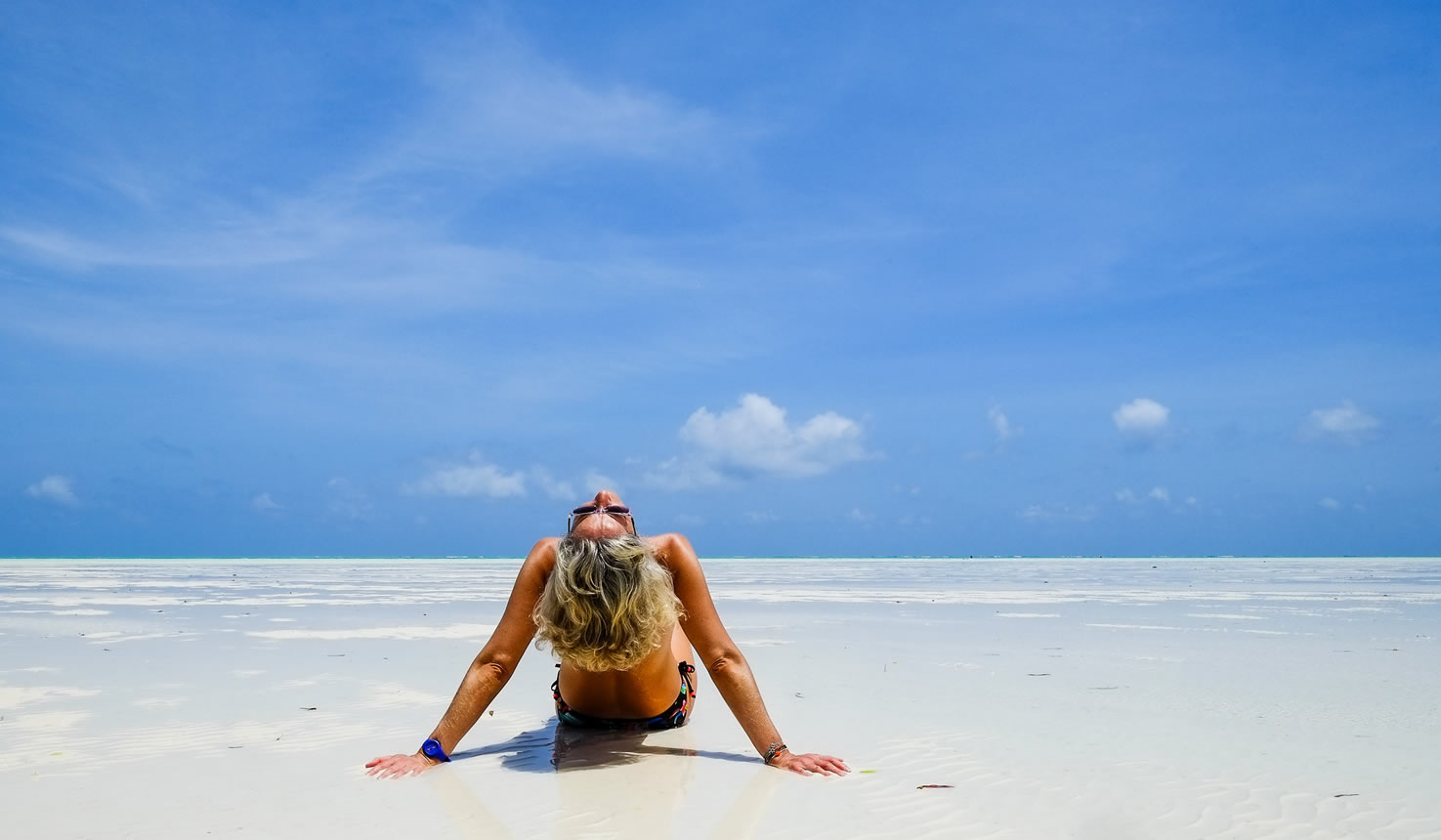
Mombasa is not merely a historical and cultural destination — it is also the gateway to some of the finest beaches in Kenya, with the celebrated South Coast and North Coast beach destinations extending in both directions from the city and accessible within 30 to 60 minutes of the city centre.
South Coast: Diani & Beyond
Diani Beach — approximately 30 kilometres south of Mombasa, reached by road via the Likoni Ferry that connects Mombasa island to the mainland — is Kenya’s most celebrated beach destination: 17 kilometres of uninterrupted white coral sand, a turquoise reef-protected lagoon, and a backing coastal forest that shelters Angolan black and white colobus monkeys, Sykes’ monkeys, and over 200 bird species. The combination of outstanding beach and genuine wildlife presence makes Diani unlike almost any other beach destination in Africa.
The Likoni Ferry — a short, free, continuously operating passenger and vehicle ferry connecting Mombasa island’s southern tip to the mainland — is itself a Mombasa experience: the crossing takes just five minutes, but the scene of hundreds of commuters, vendors, cyclists, and vehicles loading and unloading is a vivid slice of the city’s daily life.
Further south toward the Tanzanian border, Galu Beach, Msambweni, Shimba Hills, and the extraordinary Kisite-Mpunguti Marine National Park — offering outstanding coral reef diving and snorkelling alongside resident dolphin populations, seasonal humpback whales, and whale sharks — extend the South Coast’s appeal well beyond Diani itself.
North Coast: Nyali, Bamburi & Shanzu
The North Coast — accessible via the Nyali Bridge connecting Mombasa island’s northeastern edge to the mainland — offers a different character from the wilder, more spacious South Coast: a succession of resort beaches at Nyali, Bamburi, and Shanzu that are closer to the city, more developed, and more convenient for visitors wanting easy access to Mombasa’s Old Town alongside beach time.
Nyali Beach — the closest north coast beach to the city, approximately 5 kilometres from the Old Town — is a broad, reef-protected stretch of white sand with calm, shallow water ideal for swimming and water sports, and a well-developed infrastructure of hotels, restaurants, and beach facilities. The Haller Park nature reserve near Bamburi — a remarkable rehabilitation project that transformed a degraded coral quarry into a productive wildlife habitat over four decades — offers an unexpected and delightful wildlife experience within minutes of the beach, with giraffes, hippos, crocodiles, bushbuck, and numerous bird species all resident in what was once a barren industrial wasteland.
The Mombasa Tusks: Kenya’s Most Iconic Street Monument
No description of Mombasa is complete without mention of the Mombasa Tusks — the pair of enormous aluminium elephant tusks that arch over Moi Avenue, the city’s main commercial thoroughfare, forming the most photographed landmark in Mombasa and one of the most recognisable images in all of Kenya.
The tusks were erected in 1952 to commemorate the visit of Princess Elizabeth (who became Queen Elizabeth II during the visit, on the death of her father George VI) — four tusks in total forming two pairs of crossing arches over the road, their scale and boldness making them an immediately striking landmark in the urban landscape.
For all their familiarity as a photographic subject, the Mombasa Tusks are a genuinely impressive urban monument — their sweeping aluminium curves catching the light beautifully at different times of day, and their position on Moi Avenue placing them at the symbolic heart of the modern city in a way that connects the contemporary commercial centre with the city’s long identity as a place defined by its relationship with Africa’s wildlife and natural heritage.
Festivals and Events: Mombasa’s Cultural Calendar
Mombasa’s extraordinary cultural diversity finds its most vivid public expression in the city’s rich calendar of festivals and cultural events — celebrations that draw on the Swahili, Arab, Indian, and African traditions woven into the city’s social fabric.
Mombasa Carnival — held annually in November — is Kenya’s largest street carnival, a multi-day celebration of the city’s cultural diversity featuring street processions, live music, traditional dance performances, food festivals, and cultural exhibitions that draw participants and visitors from across Kenya and beyond. The carnival’s processions along Moi Avenue — with costumed performers representing the city’s various cultural communities — are among the most visually spectacular public events in East Africa.
Maulid al-Nabi — the celebration of the Prophet Muhammad’s birthday, observed by Mombasa’s large Muslim community with mosque gatherings, communal meals, and public processions — is one of the most important events in the city’s religious and cultural calendar, and the celebrations in the Old Town’s mosques and streets are among the most atmospheric expressions of Mombasa’s Islamic identity.
Lamu Cultural Festival — while centred on Lamu Island 340 kilometres to the north, this annual celebration of Swahili culture draws significant participation from Mombasa’s Swahili community and provides an opportunity to experience the full richness of coastal Kenyan culture in its most concentrated and most authentic expression.
Getting Around Mombasa
Mombasa is a compact island city whose key attractions are concentrated in the Old Town and Fort Jesus area, making much of the most important sightseeing accessible on foot with a knowledgeable guide.
On foot: The Old Town is best explored on foot — the narrow streets are not accessible by vehicle in many sections, and the detail of the architecture, the doors, the street life, and the small shops and tea houses is only fully experienced at walking pace. A minimum of half a day on foot in the Old Town is recommended; a full day allows comprehensive coverage.
Tuk-tuks: The motorised three-wheeled tuk-tuks that proliferate throughout Mombasa are the most convenient and most entertaining way to move between the Old Town, Fort Jesus, Moi Avenue, and other city-centre attractions. Agree on the fare before departure.
Matatus: Mombasa’s shared minibus taxis operate on fixed routes throughout the island and to the North Coast via the Nyali Bridge, providing an authentic and affordable public transport experience for the adventurous traveller.
Taxis and private vehicles: For transfers to the beaches, to the Likoni Ferry, and for any journey requiring a specific schedule, private taxis and Ntungo Wildlife Safaris’ own ground transport vehicles are the most reliable option.
Combining Mombasa with a Kenya Safari
Mombasa is the natural and most complete finale to a Kenya safari — the transition from the savannah’s dust and drama to the Indian Ocean’s warmth and colour that makes a Kenya journey truly comprehensive.
Masai Mara + Mombasa: Kenya’s two most celebrated destinations in a single itinerary. Typically 3–4 nights in the Mara followed by 3–4 nights in Mombasa and/or Diani — the complete Kenya experience, connecting the continent’s greatest wildlife spectacle with its finest coastal culture and beaches.
Amboseli + Mombasa: Kilimanjaro’s snow-capped peaks and elephant herds followed by the Indian Ocean’s turquoise waters and Swahili culture — a Kenya journey of extraordinary contrasts.
Samburu + Mombasa: The remote, dramatic landscapes of Kenya’s north — with their exclusive northern wildlife species and spectacular desert scenery — followed by the ancient port city and its pristine beaches.
Connections: Daily flights operate between Nairobi Wilson Airport and Mombasa Moi International Airport (flight time approximately 1 hour). Direct flights from Masai Mara airstrips to Mombasa are also available on some routes. Road transfer from Nairobi takes approximately 8–9 hours along the Nairobi–Mombasa highway — a scenic but long journey best considered only when time allows.
Practical Information
Currency: Kenyan Shilling (KES). USD widely accepted in hotels, upmarket restaurants, and tourist facilities. ATMs available throughout the city.
Language: Swahili is the primary language of daily life in Mombasa; English is widely spoken in tourist facilities, hotels, and with educated residents. Basic Swahili phrases are warmly appreciated by residents.
Climate: Mombasa has a tropical climate — warm and humid year-round, with average temperatures between 25°C and 32°C. The long rains (April–June) and short rains (October–November) bring heavy afternoon and evening showers but rarely disrupt morning activities. The dry seasons (July–September and December–March) offer the most reliably sunny beach weather and the calmest Indian Ocean conditions.
Health: Mombasa is a malaria risk area — antimalarial prophylaxis is strongly recommended for all visitors. Yellow fever vaccination is required for entry into Kenya for travellers arriving from yellow fever endemic countries. Consult your travel health clinic before departure.
Safety: Mombasa is generally safe for tourists in the main tourist areas. As in any city, standard precautions are recommended — avoid displaying expensive equipment or jewellery in crowded areas, use reputable transport, and follow your guide’s local knowledge on areas and times to avoid.
Why Mombasa Belongs in Every Kenya Itinerary
Kenya’s greatest mistake would be to visit it for its wildlife alone — extraordinary as that wildlife is. The country’s full story includes the ancient, layered, extraordinary human civilisation of its coast, and Mombasa is where that story is most completely and most compellingly told.
Fort Jesus and the carved doors of the Old Town are not footnotes to a Kenya safari. They are equal chapters in the story of an extraordinary country — one that has been shaped by the Indian Ocean as much as by the savannah, by the dhow as much as by the wildlife, and by a thousand years of maritime trade as much as by the Great Migration.
Come for the safari. Stay for the coast. Leave having experienced Kenya in its complete and magnificent entirety.
The Indian Ocean is waiting. The Old Town is waiting. And the mahamri are freshest in the early morning.
Contact Ntungo Wildlife Safaris to include Mombasa in your Kenya itinerary — as a standalone city and beach experience, as a safari extension, or as part of a complete Kenya journey combining wildlife, culture, and coast. We offer accommodation recommendations, guided Old Town tours, Fort Jesus experiences, beach hotel bookings, and seamless transfers between Mombasa and all Kenya safari destinations.
📩 info@ntungosafaris.com 🌐 www.ntungosafaris.com 📞 +256 771 399299 / +256 706 772990
Peak season accommodation in the Masai Mara sells out 6–12 months in advance. Early booking is strongly recommended for travel between July and October.