Ngorongoro Crater: The World’s Greatest Wildlife Arena
There is a moment — and every person who has experienced it will tell you it arrives without warning, regardless of how many photographs you have seen or how many documentaries you have watched — when you crest the Ngorongoro Crater rim for the first time and the world simply stops.
You have been driving upward through the cool, forested highlands of the Ngorongoro Conservation Area, the road climbing steadily through giant heather and podocarpus trees draped in old man’s beard lichen, the air growing noticeably cooler and cleaner with every hundred metres of altitude gained. And then the forest opens. The road crests. And there it is.
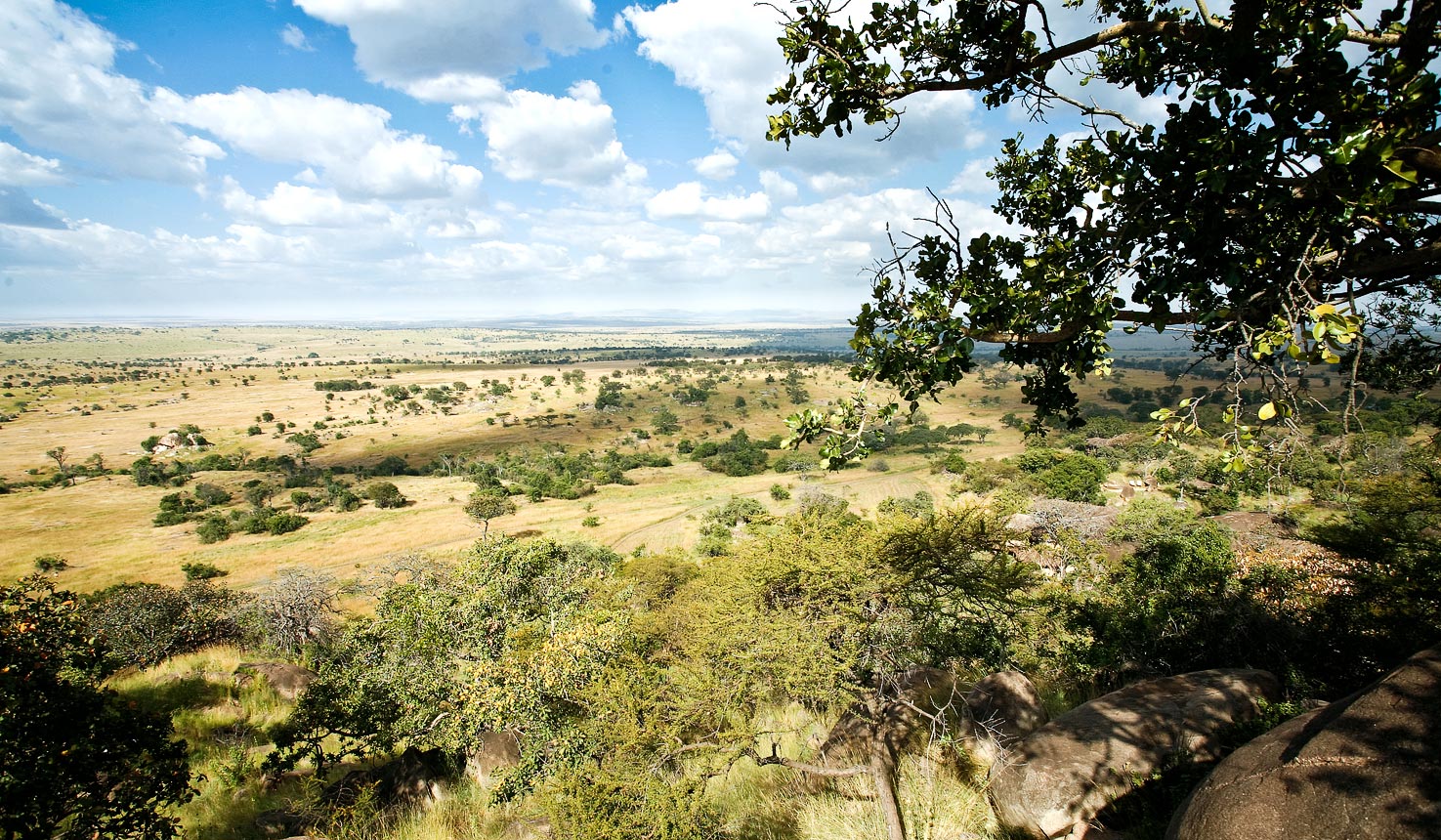
Six hundred metres below you. Nineteen kilometres across. Two hundred and sixty square kilometres of self-contained, perfectly bounded wilderness laid out like a painting in a frame so vast that the eye cannot process it all at once. The grassland floor is gold and green in the morning light. The dark patches of the Lerai Forest and the silvery gleam of Lake Magadi break the surface of the plains. Tiny shapes — wildebeest, zebra, the barely visible movement of a distant herd — confirm that what you are looking at is not a landscape painting but a living ecosystem, operating at this moment exactly as it has operated for two million years.
This is the Ngorongoro Crater. And it is one of the most extraordinary places on the surface of the earth.
What Is the Ngorongoro Crater? The Geology of a Wonder
The Ngorongoro Crater is the world’s largest intact and unflooded volcanic caldera — a distinction that requires a moment’s explanation, because the word crater is technically misleading. This is not a crater in the ordinary sense of a depression formed by impact or simple volcanic eruption. It is a caldera — formed not by explosion outward but by collapse inward.
Between two and three million years ago, a massive volcano occupied this location — a volcanic mountain that geologists estimate stood at approximately 4,500 to 5,800 metres above sea level, making it potentially taller than Kilimanjaro at its peak. Over an extended period, as the volcano’s magma chamber beneath it was drained by successive eruptions, the structural support beneath the volcano’s summit was progressively removed. And then, in a geological event of extraordinary violence, the summit collapsed inward — falling into the evacuated magma chamber below and creating the vast, circular depression that we see today.
The result is a caldera of almost perfect geometry: approximately 19 kilometres in diameter, 610 metres deep from rim to floor, with walls steep enough to contain a largely self-sustaining wildlife ecosystem and to prevent most animal populations from leaving or entering freely. The floor covers approximately 260 square kilometres — an area large enough to support permanent populations of all of East Africa’s major savannah species, including every member of the Big Five.
The Ngorongoro Conservation Area, which encompasses the crater and the surrounding highlands, was designated a UNESCO World Heritage Site in 1979 — one of the first sites in Africa to receive this designation — recognised for its outstanding universal value as both a natural wonder of extraordinary beauty and an archaeological landscape of exceptional importance. The surrounding highlands contain Oldupai Gorge (also known as Olduvai Gorge) — one of the most significant palaeontological sites in the world, where the Leakey family’s excavations in the mid-20th century recovered fossil remains that fundamentally reshaped our understanding of human evolution. Hominid fossils dating back 3.6 million years have been found in the Conservation Area — making this not only one of the world’s great wildlife destinations but one of the most important sites in the story of humanity itself.
Inside the Caldera: A World Entirely Its Own
The Ngorongoro Crater floor is, in the most literal sense, a world within a world — an enclosed ecosystem of approximately 25,000 large mammals that live permanently within the caldera’s boundaries, sustained by the springs, streams, and grassland that the crater’s unique microclimate produces year-round.
The crater floor is not a single, uniform habitat. It comprises several distinct ecological zones, each with its own wildlife community, and understanding these zones is fundamental to appreciating the full richness of a Ngorongoro game drive.
The Open Grassland Plains
The majority of the crater floor is covered by open short-grass and medium-grass savannah — a gently undulating grassland that supports the crater’s enormous populations of grazing herbivores. Wildebeest herds of hundreds move across the plains in constant, purposeful grazing. Zebra graze alongside them in classic Serengeti fashion. Grant’s and Thomson’s gazelles are everywhere — their elegant, fast-moving presence a constant backdrop to the slower movements of the larger herbivores. Eland — the largest of Africa’s antelopes — move in small groups across the more open sections. Warthogs trot comically with their tails held vertically upright, kneeling to graze in the short grass with the cheerful indignity of animals that have made a complete peace with their own appearance.
This is the terrain where the crater’s lion prides operate most visibly — hunting in the open where every pursuit is fully visible from the vehicle, moving between the grassland and the forest edge in the daily rhythm of a predator community that has inhabited this enclosed paradise for generations.
The Lerai Forest
In the southwestern section of the crater floor, the Lerai Forest is one of Ngorongoro’s most beautiful and most biologically important habitats — a grove of yellow fever acacia trees (Vachellia xanthophloea) whose distinctive lime-yellow bark and spreading canopies create an atmosphere of dappled, cathedral-like beauty entirely different from the open grassland of the surrounding plains.
The yellow fever tree’s extraordinary colouring — a vivid, almost fluorescent lime-green and yellow that intensifies in the morning and evening light — gives the Lerai Forest a visual quality unlike any other woodland in East Africa, and the grove provides critical habitat for several of the crater’s most sought-after species.
Leopards inhabit the Lerai Forest’s trees and margins — the dense canopy and the proximity to both forest cover and open hunting ground making it ideal territory for this most cryptic of the big cats. Sightings in the Lerai are more reliable than in most East African parks, particularly in the early morning when leopards are returning from nocturnal hunts and occasionally visible in the lower branches of the acacias.
African elephants — predominantly old bulls of impressive stature and ivory, since the steep crater walls make the journey down less attractive to family groups with young calves — feed in the Lerai Forest with the measured deliberation of animals that have known this grove for decades. The sight of a large-tusked elephant bull feeding in the yellow fever grove, the light filtering through the acacia canopy above him, is one of Ngorongoro’s most magnificent and most photographed wildlife moments.
Hippos inhabit the pools and streams within and adjacent to the Lerai, their presence adding an unexpected dimension of aquatic wildlife to what is primarily a woodland habitat. The hippopotamus pool within the Lerai Forest is one of the crater’s most reliably productive wildlife viewpoints — the hippos’ social interactions, territorial disputes, and the extraordinary sound of their calls at close range providing wildlife entertainment of considerable quality.
Lake Magadi and the Flamingos
In the crater’s southwestern floor, the shallow, alkaline Lake Magadi is one of Ngorongoro’s most visually spectacular features — and during productive periods, one of East Africa’s most extraordinary wildlife spectacles.
The lake’s alkaline chemistry — produced by volcanic minerals leaching into the water from the surrounding geology — supports the growth of the blue-green algae that is the primary food source of the lesser flamingo (Phoeniconaias minor). When conditions are right, tens of thousands of flamingos gather along the lake’s margins, their extraordinary rose-pink plumage reflecting in the shallow alkaline water to create a doubling of the colour that makes the whole scene almost implausibly beautiful.
The flamingo concentrations at Lake Magadi vary significantly with the lake’s water level and chemistry — at their peak they are one of Tanzania’s most spectacular natural phenomena, and even at lower concentrations the presence of flamingos in the crater adds a vivid splash of colour to the already extraordinary landscape.
Beyond the flamingos, Lake Magadi’s margins attract an outstanding diversity of waterbirds: great white pelicans in breeding plumage, yellow-billed storks wading in elegant slow motion, African spoonbills sweeping their extraordinary bills through the shallows, African sacred ibis, hadada ibis, pied avocets, and numerous wading species that use the exposed mud margins during the dry season.
The Ngoitokitok Springs
On the eastern side of the crater floor, the Ngoitokitok Springs — a permanent freshwater source fed by underground springs from the crater wall — create a permanent wetland oasis that attracts and concentrates wildlife from across the crater floor, particularly in the dry season when other water sources become unreliable.
The springs and their associated hippo pool are one of the crater’s most reliably productive wildlife viewpoints — the permanent water attracting not only hippos and waterbirds but also the full complement of the crater’s grassland wildlife coming to drink, and the predators that follow the prey to water. Lions are regularly encountered near the springs, particularly in the early morning when they are still active from overnight hunts in the surrounding grassland.
The springs also support one of the crater’s most important Maasai cultural sites — a traditional livestock watering point that reflects the unique and complex arrangement of the Ngorongoro Conservation Area, where Maasai pastoralists have the right to graze their cattle on the crater floor, creating a human-wildlife coexistence that is simultaneously challenging and extraordinary.
The Big Five in the Ngorongoro Crater
The Ngorongoro Crater is one of very few places in Africa where all five members of the Big Five — lion, elephant, Cape buffalo, leopard, and rhinoceros — can be encountered in a single day’s game drive. This concentration of iconic species within a compact, accessible, and extraordinarily scenic environment is the primary reason the crater is consistently ranked among the world’s top wildlife destinations.
Lion
The crater’s lion population is one of the most studied and most celebrated in Africa — approximately 60 to 70 individuals organised into several prides that hold established territories across the crater floor. The enclosed nature of the caldera means that the lions are permanent residents — unlike the Serengeti’s more wide-ranging prides, Ngorongoro’s lions are unlikely to leave the crater, and their familiarity with both the terrain and with safari vehicles allows an extraordinary quality of close observation that visitors consistently describe as among the finest lion experiences of their lives.
The crater’s lion prides are known for their bold, unhurried behaviour in the presence of vehicles — a characteristic of long-habituated populations that allows the kind of sustained, intimate observation of natural behaviour that wildlife photographers and wildlife lovers travel the world to experience. Watching a pride move across the open grassland in the early morning light, a sub-adult male practising the roar that will one day announce his territorial ambitions, or a lioness beginning a hunt with the focused intensity of an apex predator in full command of her environment — these are experiences of extraordinary richness that the crater’s combination of open terrain and habituated lions provides with rare reliability.
The genetic consequences of the crater’s enclosed population are also of considerable scientific interest: the relative isolation of the crater’s lion gene pool has produced a population with significantly reduced genetic diversity compared to the Serengeti’s lions, and the mane development of Ngorongoro males — some of them carrying the darkest and most impressive manes in East Africa, possibly as a result of the cooler crater temperatures and selective pressures unique to the enclosed population — is itself a wildlife spectacle worth travelling for.
Black Rhinoceros
The black rhinoceros (Diceros bicornis) is the Ngorongoro Crater’s most significant and most conservation-important resident — and an encounter with one of the crater’s rhinos is one of the most profound wildlife experiences available anywhere in Africa.
The global black rhinoceros population was devastated by poaching between the 1960s and 1990s — reduced from an estimated 70,000 individuals to fewer than 2,500 in less than three decades, a catastrophic decline of over 96% driven entirely by the illegal horn trade. Tanzania’s black rhino population suffered particularly severely during this period, and the crater’s population — which once numbered in the tens — was reduced to critically low levels before intensive protection measures stabilised and gradually rebuilt it.
Today, the crater supports approximately 25 to 30 black rhinoceros — a small but slowly recovering population that is among the most intensively monitored and most rigorously protected in Africa. Each individual is known to the conservation team by name, their movements tracked daily, their health monitored closely, and their protection prioritised above almost all other conservation concerns in the crater.
Finding a black rhino on the crater floor requires patience, local knowledge, and a guide who understands the animals’ movement patterns and preferred habitat areas. The rhinos tend to favour the longer grass areas of the western crater margins and the forest edge — their browsing diet of leaves and woody vegetation draws them away from the open short-grass plains preferred by the grazing species. When located, the encounter is extraordinary: the prehistoric bulk of the animal, its distinctive prehensile upper lip, the great horn for which it has been so catastrophically persecuted, and the knowledge that fewer than 6,000 of these animals remain alive anywhere in the world — all combine to create a wildlife moment of deep emotional resonance that goes far beyond the visual spectacle.
A black rhino sighting in the Ngorongoro Crater is not simply a wildlife experience. It is an encounter with the consequences of human greed and the possibilities of human determination — a reminder of what we have almost destroyed and what careful, sustained, committed conservation can protect.
Cape Buffalo
Cape buffalo (Syncerus caffer) are among the crater’s most abundant and most visible large mammals — enormous herds of hundreds move across the open grassland in the classic formation of a species that relies on collective vigilance and collective defence for survival in a landscape full of lions.
The crater’s buffalo herds are a constant and compelling wildlife presence — their dust clouds visible from great distances, their collective sound audible on still mornings as a continuous low rumble of hooves and movement, their interactions with the crater’s lion prides providing some of the most dramatic predator-prey encounters in Ngorongoro. A buffalo herd that turns to defend an attacked individual — the entire herd suddenly reversing direction, the lions scattering before hundreds of tonnes of collective bovine determination — is one of the African savannah’s most extraordinary wildlife reversals, and it occurs regularly enough in the Ngorongoro Crater that any visitor spending a full day on the floor has a reasonable chance of witnessing it.
The crater also supports significant numbers of bachelor buffalo bulls — old, solitary, or small-group males that have left the main herd and spend their days in the forest margins and stream courses of the crater floor. These individuals — often carrying impressive horns and displaying the characteristic scarring and worn hide of an animal that has survived decades of predator pressure and social competition — are among the crater’s most characterful and most photographic wildlife subjects.
Leopard
The leopard (Panthera pardus) is the Ngorongoro Crater’s most elusive Big Five species and consequently the most satisfying to find. The crater’s Lerai Forest, its rocky crater walls, and the dense acacia woodland of the floor’s margins provide ideal leopard habitat — abundant cover, reliable prey, and the vertical dimension of trees and rocky outcrops that this most arboreal of the big cats exploits with extraordinary skill.
The crater’s leopards are resident rather than transient — the enclosed nature of the caldera means that individuals establish permanent territories within specific sections of the floor and walls, and their movements become known over time to experienced guides who work the crater regularly. Female leopards with dependent cubs are the most reliably located — their relatively restricted movement patterns, tied to the security of a specific denning area, make them more predictable than the wider-ranging adult males.
A leopard in the Lerai Forest — resting in the fork of a yellow fever tree in the dappled morning light, or moving purposefully through the undergrowth at dusk with the fluid, boneless grace that makes this the most beautiful of Africa’s large cats — is a Ngorongoro sighting of the highest order.
African Elephant
African elephants in the Ngorongoro Crater are predominantly large adult bulls — the steep, 600-metre crater walls present a physical challenge that families with young calves tend to avoid, meaning that the crater floor’s elephant population is skewed toward the large, long-tusked males that have negotiated the descent and made the crater floor part of their regular range.
These old bulls — some carrying ivory of extraordinary length and mass, a product of decades of uninterrupted growth in a protected environment — are among the most magnificent individual animals in East Africa. The contrast between their enormous size and the delicacy of their movement through the Lerai Forest’s yellow fever acacias, the extraordinary reach of their trunks as they feed in the canopy, and the quality of ancient authority that large old elephant bulls carry in their bearing and their behaviour — all of this creates wildlife encounters of exceptional beauty and power.
Ngorongoro’s Human Story: Maasai, Archaeology & Evolution
The Ngorongoro Conservation Area is unique among African protected areas in that it is not a conventional national park from which human settlement is excluded. It is a multiple land-use area in which the Maasai people — who were displaced from the Serengeti when it was gazetted as a national park in 1959 — retain the right to live and to graze their cattle within the Conservation Area boundaries, including on the crater floor itself.
This arrangement creates both challenges and extraordinary opportunities. The challenges are real: human-wildlife conflict, overgrazing pressure, and the complex management questions that arise whenever livestock and wildlife share the same landscape are all ongoing concerns. But the opportunities are equally real: the Ngorongoro Conservation Area is one of the only protected areas in Africa where visitors can witness the ancient, living coexistence of Maasai pastoralism and wild savannah wildlife in the same landscape — a coexistence that predates the conservation movement by centuries and that represents a genuinely different model of the human-wildlife relationship from the exclusionary approach of the conventional national park.
Oldupai Gorge: The Cradle of Humankind
Approximately 45 kilometres west of the crater rim, accessible as a half-day excursion from the Ngorongoro area, Oldupai Gorge (Olduvai Gorge) is one of the most important archaeological sites in the world — a deep ravine cut by an ancient river through layers of volcanic sediment that have preserved the fossil record of human evolution with extraordinary completeness.
It was here that Louis and Mary Leakey made the discoveries that transformed our understanding of human origins — most significantly, the 1959 discovery of Australopithecus boisei (initially named Zinjanthropus), a hominid skull approximately 1.75 million years old, and the subsequent discovery of Homo habilis — the first species attributed to the genus Homo — from deposits approximately 1.9 million years old. The gorge has also yielded the famous Laetoli footprints — preserved in volcanic ash approximately 3.6 million years old, the oldest known hominid footprints in the world, providing direct evidence that our ancestors walked upright nearly four million years ago.
The Oldupai Gorge Museum and Visitor Centre provides an excellent introduction to the site’s archaeological significance, with displays of fossil casts, geological explanations, and the extraordinary palaeontological context that makes Ngorongoro one of the most important places in the entire story of human evolution. A guided walk along the gorge rim with a knowledgeable local guide brings the landscape’s geological history to life in ways that the museum alone cannot provide.
Visiting Oldupai Gorge in conjunction with a Ngorongoro Crater game drive connects the wildlife experience of the present with the evolutionary story of the deep past — a combination available nowhere else in East Africa and one that gives the Ngorongoro Conservation Area a dimension of significance that extends far beyond the extraordinary wildlife within its boundaries.
The Maasai Cultural Experience
The Maasai communities of the Ngorongoro highlands offer some of the most authentic and most contextually rich cultural experiences available anywhere in Kenya and Tanzania — a living encounter with a pastoral civilisation that has maintained its fundamental character and values across centuries of external pressure and change.
Visits to Maasai manyattas (traditional village enclosures) in the Ngorongoro highlands — arranged respectfully and with direct benefit to the communities involved — provide insight into the age-set system that organises Maasai society from childhood through the moran (warrior) stage to elderhood, the construction and social organisation of the traditional homestead, the extraordinary ecological knowledge embedded in a pastoral people who have read the landscape and its wildlife for generations, and the complex relationship between the Maasai and the conservation system that simultaneously protects their land and restricts their land use options.
The Engikaret Maasai Cultural Boma near the crater rim is one of the more responsibly managed cultural visit sites in the Conservation Area — with transparent benefit-sharing arrangements, community ownership, and a genuine attempt to share cultural knowledge rather than perform it.
Birdwatching in the Ngorongoro Crater
With over 500 recorded bird species across the Ngorongoro Conservation Area as a whole and approximately 350 species recorded specifically on the crater floor, Ngorongoro is a world-class birding destination that adds an extraordinary ornithological dimension to the wildlife experience.
The crater floor’s open grassland supports outstanding large bird diversity: the kori bustard — Africa’s heaviest flying bird — stalks the short grass with prehistoric gravity. The grey crowned crane — Tanzania’s national bird — moves in pairs across the grassland with extraordinary elegance. Secretary birds hunt their snake and lizard prey with characteristic stamping kicks. Ostriches stride across the open plains. Martial eagles and bateleur eagles soar on the thermals above the crater walls with the effortless mastery of birds built for high-altitude soaring.
The lake and wetland margins produce the flamingo concentrations described above, alongside outstanding waterbird diversity: goliath herons, great white pelicans, African spoonbills, yellow-billed storks, sacred ibis, and the remarkable African black-winged stilt in the shallower margins.
The Lerai Forest holds a distinct woodland bird community: the African green pigeon feeds on fig fruits in the canopy, the Ross’s turaco moves through the upper canopy in flashes of crimson and green, the silvery-cheeked hornbill calls noisily from the treetops, and the African paradise flycatcher trails its extraordinary long tail feathers through the dappled woodland light.
The crater rim forest — the montane forest of the crater’s upper slopes — supports a completely different bird community from the floor below: Hartlaub’s turaco, African hill myna, hunter’s cisticola, Kikuyu white-eye, and numerous montane sunbird species all inhabit the cool, misty forest of the crater rim, and a dawn walk along the rim path before descending to the floor is an excellent way to add rim forest species to the day’s list.
The Ngorongoro Crater Rim: Staying Above the Wonder
The accommodation options on the Ngorongoro Crater rim are among the most dramatically positioned in Africa — lodges and camps perched directly above the caldera, with the vast crater spread below and the distant plains of the crater floor visible through the morning mist as it clears with the rising sun.
Midrange
Ngorongoro Sopa Lodge — A well-appointed lodge on the eastern crater rim offering comfortable rooms, reliable food, and good crater views. A solid midrange option for first-time visitors to the Conservation Area.
Ngorongoro Wildlife Lodge — A classic property on the crater rim with good access to the descent road, comfortable accommodation, and outstanding sunset views across the caldera.
Rhino Lodge — A community-owned property operated by the Ngorongoro Conservation Area Authority, offering good value accommodation with genuine crater rim views and direct financial benefit to the local community.
Midrange Ngorongoro safari from USD 800 per person for 2 nights, including accommodation, crater descent fees, guiding, and conservation area fees.
Luxury
Ngorongoro Serena Safari Lodge — Built to blend architecturally with the crater rim’s landscape, Ngorongoro Serena offers exceptional crater views, outstanding food, and comfortable, well-appointed rooms that have established it as one of the Conservation Area’s most respected properties.
Sanctuary Ngorongoro Crater Camp — A beautifully designed tented camp on the western crater rim, Sanctuary Ngorongoro offers an intimate, exclusive experience with exceptional guiding, outstanding views, and the sense of being genuinely embedded in the crater’s wild atmosphere.
&Beyond Ngorongoro Crater Lodge — One of the most architecturally extraordinary safari properties in Africa — a baroque, theatrical lodge of extraordinary opulence positioned on the crater rim above the western wall, with views directly down into the caldera and an interior design that has been described as a cross between a Maasai village and a Venetian palace. The accommodation, food, and service are exceptional, and the experience of having breakfast on your private veranda with the entire crater spread 600 metres below you is one of African safari travel’s most memorable moments.
The Highlands — A luxury tented camp positioned at altitude on the outer slopes of the crater, offering exceptional design, outstanding views, and a walking and 4WD exploration programme that reveals the broader highlands landscape beyond the crater itself.
Luxury Ngorongoro safari from USD 2,500 per person for 2 nights, including accommodation, crater descent fees, private guiding, conservation area fees, and Oldupai Gorge excursion.
Practical Information for Ngorongoro Crater
Crater Descent Hours: Vehicle access to the crater floor is permitted between 06:00 and 18:00. All vehicles must exit the crater by 18:00. The descent road is one-way in the morning (descent) and the ascent road is one-way in the afternoon (ascent) — the two roads are separate, reducing congestion on the steep, narrow tracks.
Vehicle Limits: The Ngorongoro Conservation Area Authority limits the number of vehicles permitted on the crater floor at any one time — typically around 60 vehicles — to reduce congestion and environmental impact. In the high season (July–October), the crater can feel busy around the most popular wildlife sightings, particularly at lion and rhino locations. Arriving at the descent road at opening time (06:00) and spending a full day on the floor generally allows the majority of the day in relatively uncrowded conditions.
Conservation Fees: The Ngorongoro Conservation Area charges a daily conservation fee per person and a crater service fee per vehicle in addition to the standard conservation area entrance fee. These fees are included in all Ntungo Wildlife Safaris packages.
Physical Requirements: The crater descent and ascent roads are steep, unpaved, and require a 4WD vehicle. No hiking on the crater floor is permitted (with the exception of the Ngoitokitok Springs picnic site area). Visitors with mobility concerns should note that game drives on the crater floor involve standard safari vehicle access with no significant physical demands beyond entry and exit from the vehicle.
Best Time to Visit: The Ngorongoro Crater is excellent year-round — its enclosed, self-sustaining ecosystem means that the wildlife is present regardless of season. The dry seasons (June–September and December–February) offer the most reliable weather and the clearest views. The wet seasons (March–May and October–November) bring lush green crater floor vegetation and excellent birdlife but can produce morning mist on the rim and occasionally heavy afternoon rain on the floor.
Duration: A minimum of one full day (2 nights at the rim) is required for a comprehensive crater floor experience. Two full days (3 nights) allows a more relaxed game drive programme and time for an Oldupai Gorge excursion.
Combining Ngorongoro with Other Tanzania Destinations
The Ngorongoro Conservation Area sits at the heart of Tanzania’s northern safari circuit — ideally positioned between the wildlife riches of Tarangire National Park to the southeast and the vast expanse of the Serengeti to the northwest. The standard northern circuit — Tarangire, Ngorongoro, Serengeti — is the most popular and most rewarding multi-destination Tanzania safari itinerary, and Ngorongoro Crater provides the geological and ecological centrepiece of that journey.
Ngorongoro + Serengeti: The most natural and most popular combination — the Serengeti’s vast, open ecosystem and its extraordinary migration spectacle paired with the concentrated, enclosed perfection of the crater. Typically 2 nights at Ngorongoro combined with 3–4 nights in the Serengeti.
Ngorongoro + Tarangire: The crater’s enclosed Big Five experience combined with Tarangire’s elephant herds and ancient baobab landscape — a compelling two-park combination for shorter itineraries.
Ngorongoro + Serengeti + Tarangire + Lake Manyara: The complete northern circuit — typically 7–10 days — covering the full breadth of Tanzania’s northern wildlife destinations with Ngorongoro Crater as the dramatic geological centrepiece.
Ngorongoro + Zanzibar: The crater’s ancient volcanic world followed by Zanzibar’s turquoise Indian Ocean and Spice Island culture — one of the most satisfying complete Tanzania journeys available, combining wildlife, geology, history, and beach in a single seamlessly connected itinerary.
Why the Ngorongoro Crater Stands Apart
In a continent of extraordinary wildlife destinations — the Serengeti’s endless plains, the Masai Mara’s migration drama, the Okavango’s waterworld, the Kruger’s southern grandeur — the Ngorongoro Crater occupies a unique and irreplaceable position.
It is not the largest wildlife area in Africa. It is not the place where you are most likely to see the greatest number of different species. It is not the most remote or the most pristine.
What it is — and what no other place in Africa can replicate — is the most complete wildlife experience in the world: every major savannah species, every major predator, the most significant conservation success story of the past half-century, an archaeological site that reaches back to the dawn of humanity, a living Maasai culture maintaining its ancient relationship with the land, and all of it enclosed within the walls of a geological wonder of such perfect scale and beauty that standing on its rim and looking down produces, in almost everyone who experiences it, a quality of wonder that they carry for the rest of their lives.
The Ngorongoro Crater is not a wildlife destination. It is a place where the earth’s story — geological, evolutionary, ecological, and human — is told in the most concentrated and the most beautiful possible way.
Go down into it. Stay as long as you can. Leave different from how you arrived.
Contact Ntungo Wildlife Safaris to plan your Ngorongoro Crater safari — as a standalone experience, combined with the Serengeti and Tanzania’s northern circuit, or extended with a Zanzibar beach holiday. We offer itineraries across all accommodation tiers with private guiding, expert local knowledge, and seamless logistics from Arusha to departure.
📩 info@ntungosafaris.com 🌐 www.ntungosafaris.com 📞 +256 771 399299 / +256 706 772990
Ngorongoro Crater accommodation — particularly the luxury rim lodges — books up significantly in advance during peak season (July–October and December–February). Early reservation is strongly recommended.